



















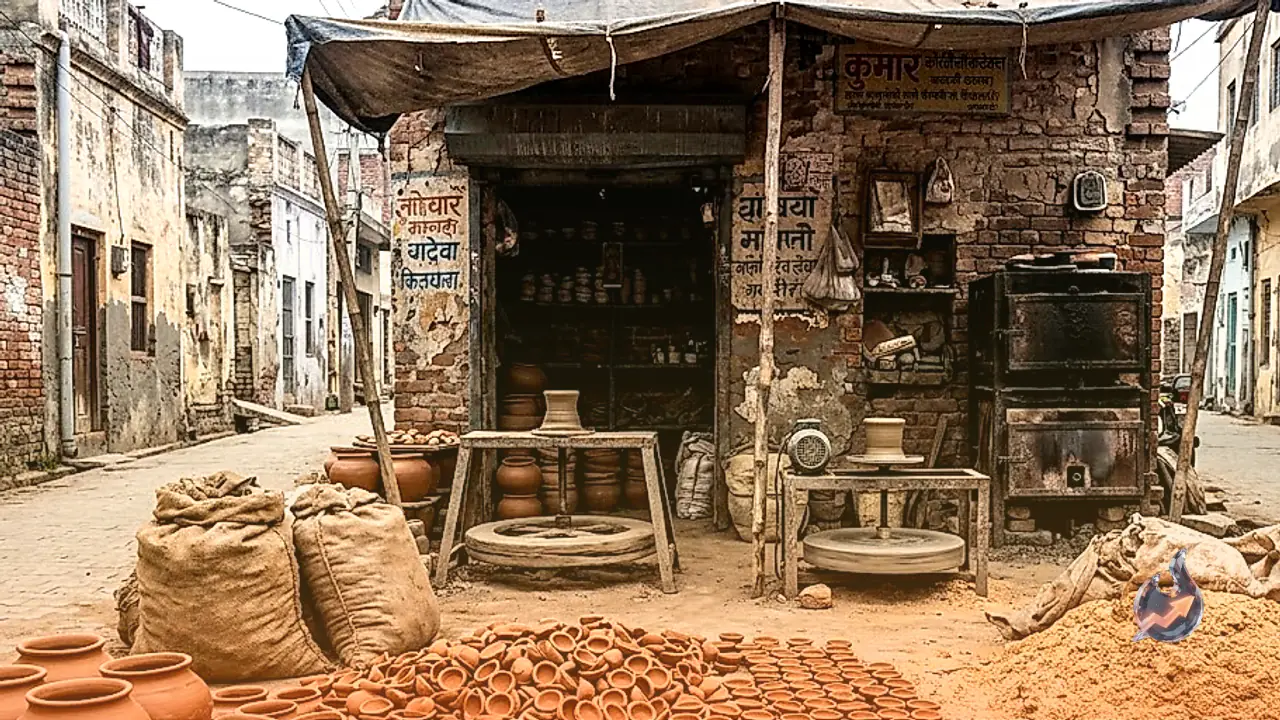

When the festive season of Diwali arrives, the traditional glow of earthen lamps holds a place of deep cultural reverence that electric fairy lights and modern plastic decorations cannot replace. Yet, behind the quiet beauty of these terracotta lamps lies an escalating economic crisis for the craftsmen who shape them. In the long-established Kumhar Mandi of Ambala Cantt, Haryana, sustaining this hereditary craft has turned into a daily battle against financial losses. Squeezed by surging inflation, steep prices for quality clay, acute shortages of baking fuel, and meager returns that fail to match intensive labor, the historic hub is witnessing the slow decline of an ancestral art. A locality once bustling with dozens of artisan households now counts a mere 7 to 10 active practitioners dedicated to the wheel, as younger members increasingly seek more viable livelihoods elsewhere.
The Long Cycle of Clay Preparation Begins in February
Among those still devoted to preserving their ancestral legacy is Rahul Prajapati, a potter in Ambala Cantt whose family has shaped terracotta ware across multiple generations. Preparing for the festive peak is not a matter of a few weeks; Prajapati begins stockpiling clay and crafting items as early as February each year. Over months of relentless effort, his workshop produces an array of small and large diyas, intricate clay shrines, Lakshmi-Ganesh statues, traditional karwas for Karwa Chauth, and other ceremonial artifacts.
The market for these terracotta pieces extends far beyond local borders in Haryana. Wholesale buyers and retailers routinely travel from neighboring Punjab and Himachal Pradesh to secure authentic festive pottery from this market. However, high regional demand has not translated into fair financial compensation for the artisans. Prajapati points out that raw earth has grown increasingly costly, while procuring sawdust, the essential fuel used to fire the kilns, has become both expensive and difficult, sharply elevating production expenses.
The Growing Divide Between Potter Pricing and Retail Profits
A central frustration for the potters is the stark discrepancy between their wholesale prices and final retail figures. Prajapati explains that a large earthen lamp that he sells from his workshop for approximately 5 rupees ends up retailing on city streets for around 15 rupees. The disparity is just as severe for smaller diyas. Potters are compelled to sell a bulk batch of 1,000 small lamps for roughly 600 rupees, only to see retailers resell that same batch to festival shoppers for close to 1,200 rupees.
While the potter carries the entire burden of hauling clay, kneading it, shaping each piece on the wheel, curing them under the sun, and enduring the heat of kiln firing, the bulk of the profit margin is captured further down the supply chain. Breakage during firing and transit adds to the potter's risk, yet the financial reward remains heavily concentrated among middlemen and street vendors.
Four Generations on the Wheel and the Burden of Transport Costs
Mukesh Prajapati, a 40-year-old artisan who has worked with clay since childhood, represents the fourth generation of his family dedicated to terracotta making. To prepare for the autumn festivals, his workshop begins intensive preparations roughly four months prior to Diwali. Day after day, the household labors to produce small and large diyas, statues of deities, and earthen temples.
Mukesh explains that transforming raw soil into finished goods requires several laborious steps. The earth must be purchased, mixed with water, carefully kneaded, molded, and fired. Simply hiring a cart, or rehda, to transport the clay to their workshops costs more than 1,000 rupees per trip. With such high operational overheads and little assurance of fair compensation for backbreaking work, convincing the younger generation to stay in the craft has become nearly impossible. Mukesh expresses deep worry that without intervention, this traditional knowledge will vanish in the coming years. He urges authorities to step forward with supportive policies, particularly by supplying raw clay at subsidized, reasonable rates to keep the heritage alive.
Supporting Street Vendors and Urban Micro-Economies
Beyond supporting the potters, the Kumhar Mandi serves as an essential economic hub for small-scale street traders. Soni Sharma, a vendor from Ambala, has frequented the market for 13 years to purchase earthen lamps, temples, and festive accessories. Ahead of Karwa Chauth, she visited the market to source clay karwas, which she plans to sell from a pushcart in Sadar Bazar to provide for her household.
Sharma notes that the wholesale market offers high-quality terracotta goods at rates that allow micro-vendors to earn a sustainable margin. For instance, an investment of 10,000 rupees in inventory at Kumhar Mandi can yield around 15,000 rupees in gross retail sales at Sadar Bazar. This allows local vendors to generate roughly 5,000 rupees during the festive rush, proving that the potters' output remains vital to the broader local informal economy.
The Fragile Future of an Ancient Heritage
The story of Ambala Cantt's Kumhar Mandi is fundamentally about the hands that have spent lifetimes in smoke and dust to illuminate other people's homes. If skilled potters cannot earn a dignified living and the next generation abandons the wheel, the authentic craft of handmade terracotta faces an existential threat. Choosing traditional earthen lamps over imported plastic lights is not merely a nostalgic gesture; it is an economic lifeline for the families whose labor sustains the essence of India's festival of lights.