



















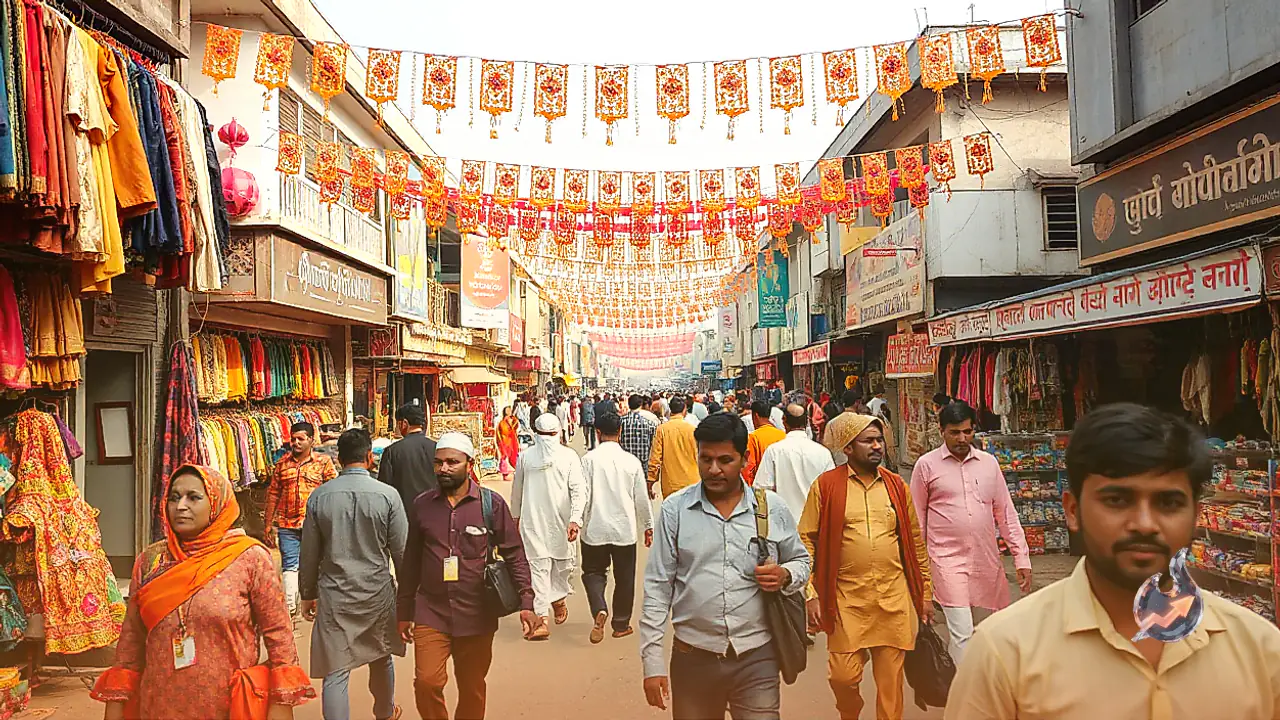

With the auspicious festival of Karwa Chauth approaching, vibrant shopping activity has gripped local marketplaces across the region. On this sacred day, married women observe an austere waterless fast, praying fervently for the longevity, good health, and prosperity of their spouses, adorning themselves in traditional attire and complete festive makeup. The preparation for the fasting rituals inherently involves selecting new festival wear, leading to massive footfall inside the sprawling textile hub of Ambala city, widely recognized as the largest wholesale cloth market in Asia. The seasonal demand reveals a noticeable shift, as buyers move beyond conventional red fabrics to explore varied cuts, artisanal embroidery, and contemporary design trends.
Expanding Color Palettes and Festive Cuts
Consumer preferences this season indicate an appetite for uniqueness, with shoppers seeking out garments that blend traditional roots with contemporary silhouettes. While vibrant red continues to hold pride of place for its ritual significance, deep tones such as rich pink and elegant brown are commanding significant attention. Women preparing to mark their very first Karwa Chauth post-marriage are displaying exceptional excitement for classic deep red ensembles, seeking outfits tailored specifically for ceremonial grandeur.
Spike in Demand for Sharara Sets and Ready-Made Wear
According to textile merchant Prince, customers this festive cycle frequently arrive with specific design inspirations and customized style requirements. The ready-to-wear segment has recorded massive inquiries, dominated by palazzo sets, tiered sharara sets, lehengas, kurtis, festive sarees, and traditional salwar suits. Among suit cuts, Nayra cuts, tailored straight cuts, and flared frock styles are topping festive wish lists. The market accommodates a remarkably wide budget spectrum, with inventory starting at an affordable baseline of Rs 150 and climbing all the way to intricate designer creations valued at Rs 25,000.
Prince highlighted that bridal lehengas and heavily embellished designer suits remain at the center of festive attention. Entry-level bridal lehengas are accessible starting from Rs 1,500. Distinctive craftsmanship such as gota patti work, peacock feather patterns, intricate cutwork borders, and shimmering metallic finishes are receiving strong consumer interest.
Substantial Price Gaps Compared to Metros
Ambala's enduring reputation as an affordable textile center is reflected in the marked differences between local wholesale prices and retail quotes in surrounding urban centers. Designer suits featuring cutwork and shimmer detailing are priced at wholesale rates around Rs 2,250 in Ambala, while similar outfits command upwards of Rs 3,500 in other urban markets. Similarly, Barbarik suits embellished with peacock feather and leaf motifs are available locally at approximately Rs 2,400 wholesale, whereas retail outlets in neighboring cities like Chandigarh price them as high as Rs 5,500. Additionally, bridal suits paired with generous 2.5-meter velvet dupattas and garments bearing innovative 3D digital prints are witnessing elevated seasonal movement.
Regional Styles From Kashmir, Rajasthan, and Beyond
Elaborating on customer selections, cloth merchant Jaswinder pointed out that Kashmiri suits, Rajasthani heritage wear, and high-grade breathable cotton ensembles have emerged as major favorites this season. Regional crafts from different parts of India have found a ready audience, including Kolkata zardozi embroidery dresses, authentic Jaipur prints and needlework, modern Mumbai designer wear, and celebrity-inspired saree collections.
For younger women seeking festive elegance, girlish lehengas featuring delicate hand embroidery, shimmering stones, and elaborate three-tier flares are in high demand. These pieces retail in Ambala for approximately Rs 3,250, compared to roughly Rs 6,000 in larger destination markets. Party wear Punjabi suits range conveniently between Rs 1,000 and Rs 1,500, while half-sleeved long kurtis find buyers in the Rs 2,000 to Rs 3,000 bracket.
Cross-Border Appeal Across Northern States
The defining strength of Ambala's cloth market remains its unmatched sheer variety alongside accessible pricing across multiple tiers. This commercial breadth routinely attracts retail shoppers not only from Haryana, but also across state lines from neighboring Punjab and Himachal Pradesh. Alongside household festive shoppers, retail garment merchants visit the alleys to procure inventory in bulk, while boutique proprietors select distinctive artisan pieces to cater to their exclusive clienteles back home.