




















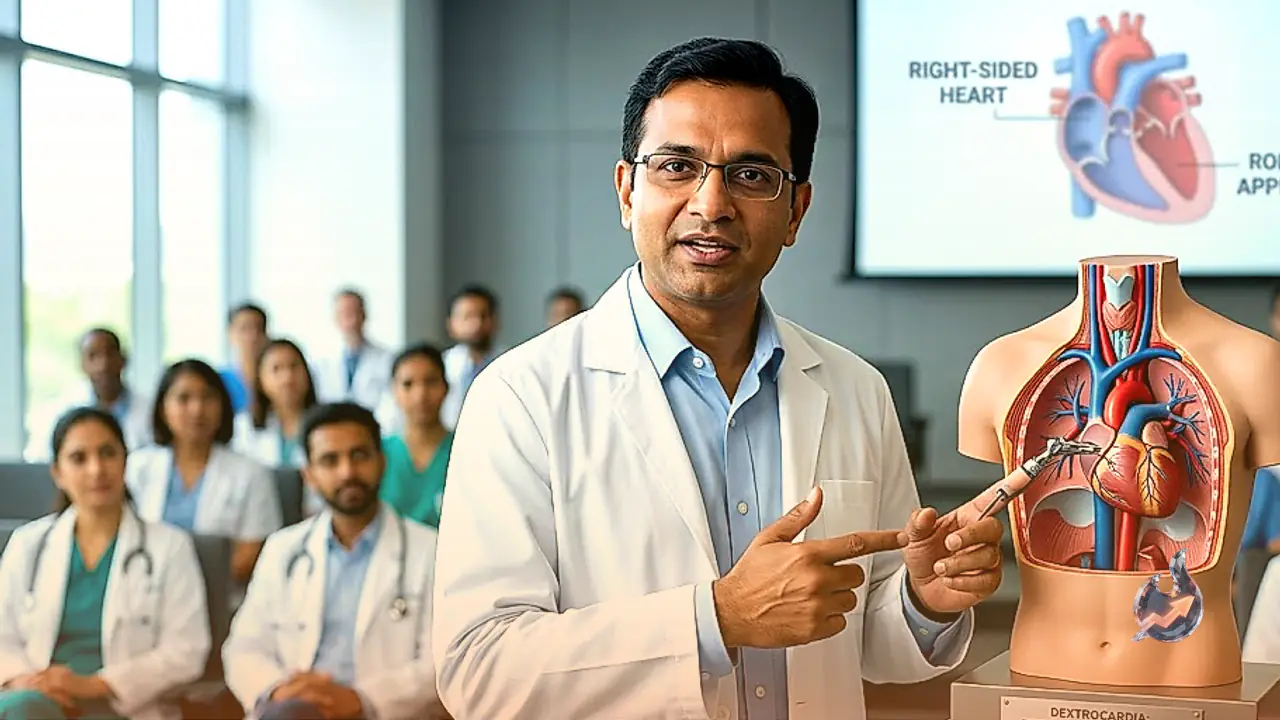

Cardiothoracic and vascular surgeons at Safdarjung Hospital in New Delhi have accomplished an unprecedented medical milestone by successfully completing a world-first robotic heart procedure. The surgical team operated on a patient presenting with an extraordinarily rare combination of two congenital cardiac conditions: a right-sided heart known as dextrocardia and a structural anomaly termed Congenitally Corrected Transposition of the Great Arteries (CCTGA). This landmark intervention marks the first instance globally where a robotic systemic atrioventricular valve replacement was successfully performed under such complex anatomical circumstances.
A Complex Dual Congenital Heart Condition
The clinical case presented formidable obstacles due to the patient's unique internal anatomy. In a healthy individual, the heart rests on the left side of the chest cavity, but in this patient, the condition of dextrocardia positioned the organ entirely on the right side. Simultaneously, CCTGA altered the normal arrangement of the heart's internal chambers and major blood vessels, reversing the typical blood flow pathways and placing immense physiological stress on the systemic ventricle.
Over time, the excessive workload compromised the systemic atrioventricular valve, causing severe valvular regurgitation. As blood leaked backward through the damaged valve, the patient's heart muscle began to deteriorate rapidly. Without a timely surgical intervention to replace the failing valve, the patient faced progressive cardiac failure and life-threatening complications.
Innovative Left-Sided Surgical Approach
The high-risk operation was spearheaded by Dr. Anubhav Gupta, Head of the CTVS Department, along with Dr. Kavita Sharma and their specialized surgical team. Standard cardiac surgical protocol for systemic valve repairs typically dictates accessing the heart through the right side of the patient's chest. However, because this patient's heart was already located on the right side due to dextrocardia, the conventional surgical pathway was unusable. Demonstrating exceptional adaptability, the team made an unprecedented clinical decision to approach the heart from the left side of the chest instead.
To navigate the uncharted anatomy safely, surgeons generated a detailed 3D digital model of the patient's heart prior to entering the operating room. This advanced three-dimensional visualization enabled the team to evaluate the spatial alignment of the cardiac chambers, map out critical blood vessels, and establish a precise surgical plan tailored specifically to the patient's reversed structure.
Robotic Precision and Superior Patient Outcomes
Rather than performing a traditional open-chest procedure requiring a sternotomy—the complete surgical cutting of the breastbone—the medical team executed the entire operation using advanced robotic systems. Small keyhole incisions were made in the chest wall, through which high-definition cameras and flexible robotic instruments were guided into the thoracic cavity. Controlled by the surgeons, the robotic tools allowed for extraordinary precision within the tight spatial constraints of the chest.
By avoiding a sternotomy, the robotic technique yielded substantial clinical advantages. The patient experienced minimal blood loss during surgery, and the risk of post-operative wound infections was significantly reduced. Additionally, post-surgical pain was minimized, enabling a dramatically accelerated recovery process. Following the successful procedure, the patient has achieved a full recovery and continues to demonstrate rapid, healthy progress.
A Global Benchmark for Indian Healthcare
This historic accomplishment at Safdarjung Hospital highlights the rising leadership of Indian healthcare institutions in pioneering robotic cardiac surgery. By mastering a procedure never before attempted anywhere in the world, the surgical team has showcased the potential of public health institutions to resolve the most intricate medical challenges through cutting-edge technology and clinical innovation.