





















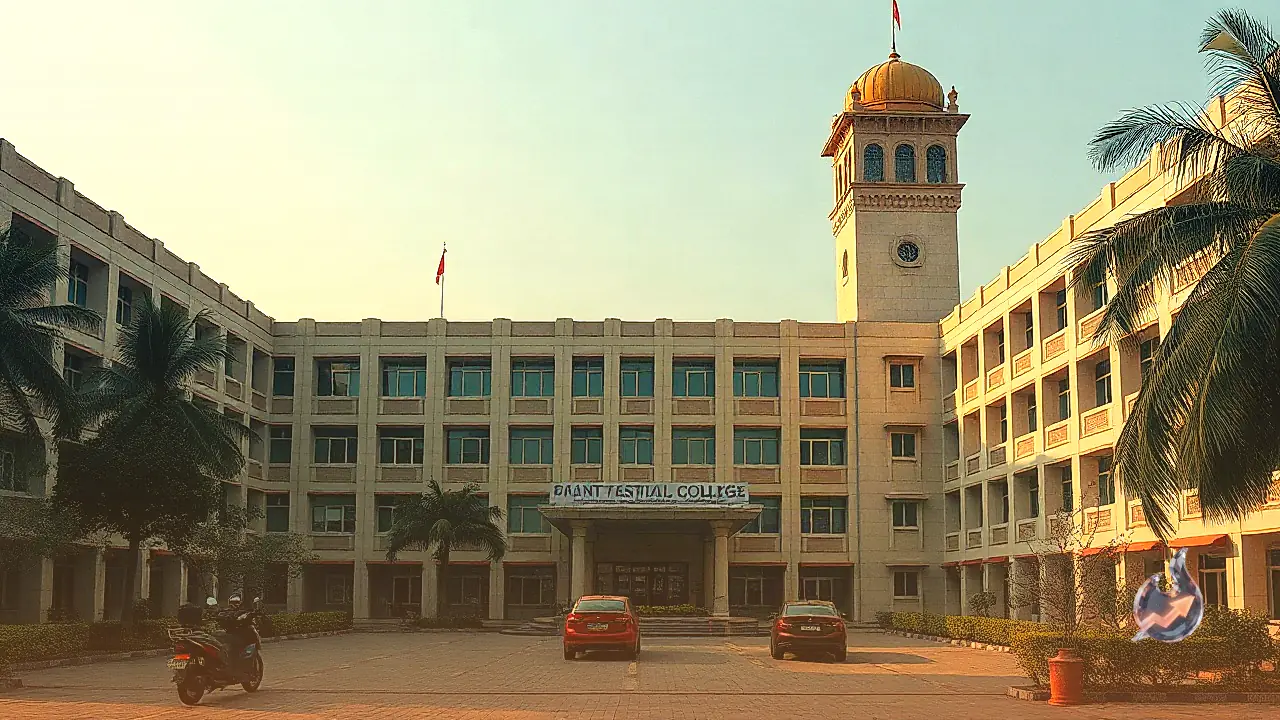

In 1854, during the British colonial era, a modest educational facility named Thomson School was set up in Agra to train medical assistants and supply trained medical staff for the British Indian Army. Surgeon John Murray served as its very first principal, and by 1857, the school graduated its inaugural class of Indian doctors. Over the past 172 years, this small military training center has transformed into one of Northern India's largest tertiary care and medical education institutions, known today as Sarojini Naidu Medical College (SNMC).
Expanding from Military Mandate to Civilian Healthcare
In 1872, the institution opened its doors to civilian students, marking a major shift toward community healthcare. By 1883, dedicated medical training facilities were created specifically for female students. Institutional infrastructure rapidly grew in the late nineteenth century: Hilson Ward was added in 1886, followed by the construction of a dedicated operation theater, an outdoor patient department (OPD), and Willcox Ward in 1892.
A crucial turning point arrived in 1939 when the medical school was officially upgraded to a full degree-granting medical college and granted affiliation with Agra University. Undergraduate MBBS education commenced during this phase, with the first batch of MBBS doctors graduating in 1944. Advanced medical specialization also began around this time, as the institution launched its first postgraduate (PG) medical course in 1942, laying a solid foundation for modern medical education in Western Uttar Pradesh.
Post Independence Renaming and Global Recognition
Following India's independence in 1947, the institution and its attached hospital underwent a historic name change. Thomson School and Thomson Hospital were renamed Sarojini Naidu Medical College and Sarojini Naidu Hospital in honor of Sarojini Naidu, the famed freedom fighter, renowned poet, and the first female Governor of Uttar Pradesh. National and international recognition quickly followed in 1948, when the institution secured official accreditation from both the Medical Council of India (MCI) and the General Medical Council of Great Britain.
Current Infrastructure and Regional Reach
According to local historian Anurag Paliwal and hospital statistics, Sarojini Naidu Medical College now serves as a crucial health lifeline not only for Agra and nearby districts of Western Uttar Pradesh but also for adjoining regions in Rajasthan and Madhya Pradesh. The medical facility currently operates approximately 976 indoor beds, catering to nearly 39,000 admitted indoor patients every year. Furthermore, its outpatient departments handle around 400,000 patient visits annually.
The institution encompasses a wide array of specialized departments, including General Medicine, General Surgery, Pediatrics, Obstetrics and Gynecology, Orthopedics, Ophthalmology, ENT, Dermatology, Psychiatry, Radiology, Pathology, and Emergency Medicine. Beyond basic clinical branches, the college delivers super-specialty medical services across disciplines such as Cardiology, Neurology, Neurosurgery, Nephrology, Medical Gastroenterology, Urology, Onco-Surgery, Cardiothoracic and Vascular Surgery (CTVS), and Critical Care.
Modern ICU Upgrades and Future Infrastructure Expansion
To keep pace with advancing medical technology, the college administration has continuously upgraded its critical care infrastructure. In July 2024, the Critical Care Medicine department launched a modern 32-bed Level-2 and Level-3 ICU unit. This specialized care facility is equipped with advanced life-support apparatus, including high-end ventilators, high-flow nasal oxygen devices, portable ultrasound machines, defibrillators, and dedicated bedside dialysis units. The hospital has also expanded its specialized Burn Unit, upgraded to modular operation theaters, and integrated advanced radiotherapy equipment for oncology care.
Looking ahead, massive multi-story infrastructure projects are currently underway at the SNMC campus. These expansion schemes include a new 200-bed Trauma and Emergency Block, a 300-bed Surgical Allied Block, a 300-bed Medicine Allied Block, and a 100-bed Critical Care Block. Additionally, ongoing works feature a brand-new academic block designed to accommodate an annual intake of 250 MBBS students, alongside a modern central library, expanded student hostels, and updated residential facilities, ensuring the 172-year-old institution remains a cutting-edge center of medical learning and public healthcare.