







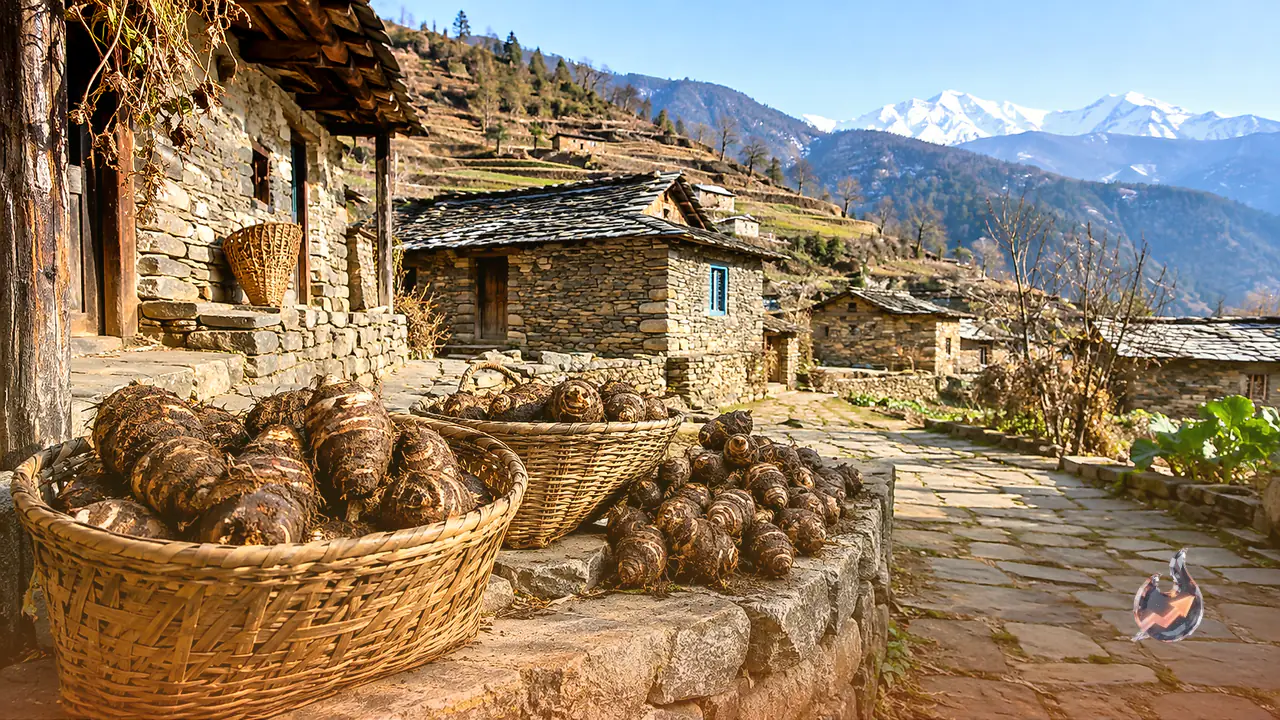















With the onset of the winter season in the mountains, a variety of seasonal vegetables make their way into local kitchens. Among these, gaderi stands out as a traditional favorite that people in the hills relish with great enthusiasm. This vegetable is not only celebrated for its unique flavor profile but is also packed with essential nutrients such as fiber, protein, potassium, vitamin A, vitamin C, iron, and calcium. This rich nutritional profile is precisely why gaderi holds a distinctive place in traditional Pahadi cuisine, offering warmth and nourishment during the colder months.
Diverse Methods Of Preparation
The versatility of gaderi is evident in the multiple ways it can be cooked rather than being restricted to a single recipe. In some households, it is prepared with juicy tomatoes, while in others, it is combined with lai and fenugreek leaves to create a flavorful dry dish. Much like potato wedges, spicy gaderi gutke are also prepared, and some communities even make papad out of it. The dish achieves its signature rich taste through the application of local spices and a tempering of pure ghee.
Surging Demand During Winter
The consumption and popularity of gaderi increase manifold across the hills during winter. Considered to have a warming effect on the body, it is frequently paired with lai or fenugreek. To prepare the dish, the vegetable is first boiled, peeled, and chopped into small pieces. It is then cooked with indigenous spices such as hemp seeds, jakhiya, and garlic, followed by a generous tempering of ghee. Whether prepared as a semi-dry dish or a thick curry, thoroughly cooked gaderi pieces become remarkably soft and creamy. Additionally, some people consume it as a fasting food option during religious observances.
Relation To Pinalu And Major Production Hubs
Similar to gaderi, another tuber known as pinalu is widely consumed in the mountains. While the preparation method is quite comparable, pinalu is known to have a cooling nature. Pinalu gutke are also widely prepared and enjoyed by locals. When it comes to cultivation, gaderi is produced in the highest quantities in the Almora district. In addition to Almora, it is extensively grown in Nainital, Pithoragarh, and Bageshwar. Available in local markets, it typically sells at a price ranging between 40 to 50 rupees per kilo.
Health Benefits And Nutritional Value
Loaded with vital nutrients, gaderi offers notable health benefits. The high fiber content present in the vegetable is exceptionally useful for promoting healthy digestion and supporting an active metabolism. Furthermore, this traditional produce is considered beneficial for individuals managing heart-related conditions, blood pressure concerns, and diabetes. Incorporating it into the seasonal diet helps the body secure essential vitamins while enjoying a deeply comforting meal.