























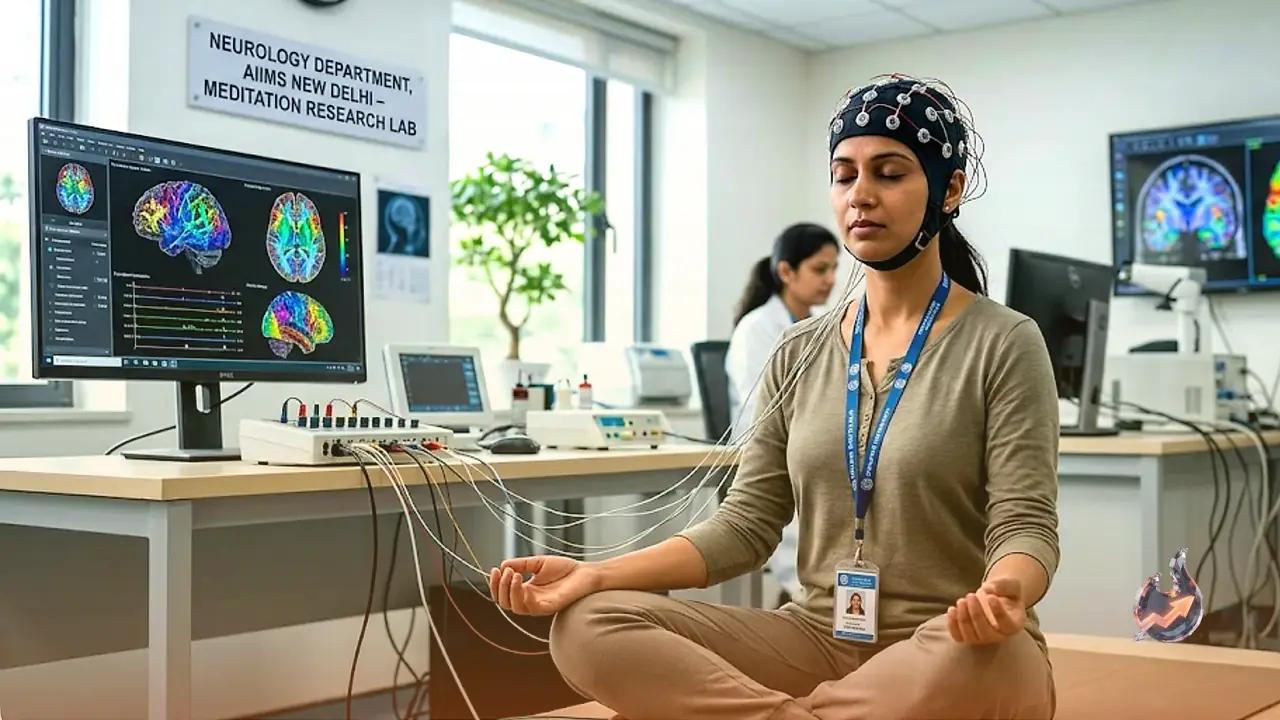

Yoga and meditation have been central to Indian wellness traditions for centuries, yet their scientific basis has frequently faced scrutiny. A new study from the Neurology Department at AIIMS New Delhi now provides clear neurological evidence that regular meditation genuinely strengthens the brain's efficiency, improving focus, attention, and emotional regulation in measurable ways.
Published in SAGE Open Medicine
The research, carried out by the Neurology Department at AIIMS New Delhi, has appeared in the journal SAGE Open Medicine. To capture brain activity during meditation, researchers used Magnetoencephalography (MEG), an advanced brain imaging technology. The study enrolled three distinct groups: long-term advanced meditators, beginners, and individuals who had never practiced meditation. The data showed that those who had maintained a sustained meditation practice demonstrated significantly stronger and more organized communication between different regions of the brain.
Prof. Manjari Tripathi Explains the Science
Prof. Manjari Tripathi, head of the Neurology Department at AIIMS, described the mechanism at work: "The human brain operates through a network of complex connections. Meditation enhances the efficiency of these networks and helps different parts of the brain connect more effectively, enabling the brain to work at its full capacity and potential."
She also elaborated on a specific pattern called the "small-world brain network," which helps the brain maintain a balance between local processing and long-range communication. This balance is precisely what allows complex tasks to be handled faster and more effectively. Prof. Tripathi further noted that better connectivity between brain networks supports attention, emotional regulation, and the management of mental stress.
Three Brain Networks at the Heart of the Research
Researchers focused their analysis on three major brain networks:
- Default Mode Network, linked to self-reflection and internal thought processes.
- Fronto-Parietal Network, responsible for decision-making and cognitive control.
- Attention Network, which plays a central role in sustaining concentration and focus.
Advanced Meditators Show the Most Significant Gains
The results were most striking among experienced meditators. Their Attention Network showed notably higher efficiency, particularly in the beta frequency range, which is associated with alertness and sustained focus. Encouragingly, beginners were not left behind: the Fronto-Parietal Network showed positive shifts even in those who had just started their practice. This suggests that the cognitive benefits of meditation begin to emerge early, well before years of dedicated practice accumulate.
More Than Temporary Calm: Lasting Brain Changes
Researchers are clear that meditation delivers far more than a fleeting sense of relaxation. The practice appears to drive lasting improvements in how the brain functions. The extent of these changes, however, varies depending on how long a person has been practicing, their level of experience, and the specific form of meditation they use.
Against the backdrop of modern life's relentless pace and mounting stress, this study positions meditation as a scientifically validated tool for mental wellness. Researchers suggest that just 10 to 15 minutes of daily meditation, even within a packed schedule, can play a significant role in keeping the brain healthy and operating at its best.