



















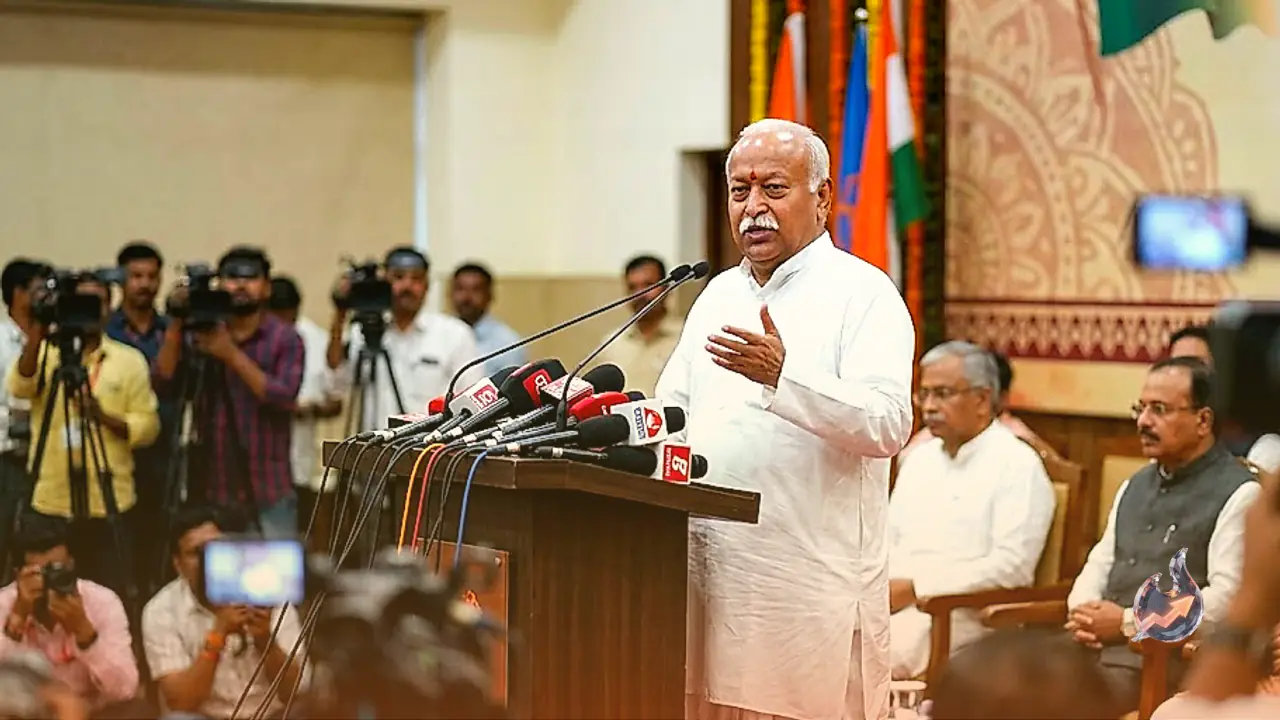

Rashtriya Swayamsevak Sangh (RSS) Chief Dr. Mohan Bhagwat has reiterated his support for affirmative action, stating that reservation remains an indispensable tool for social cohesion as long as discrimination persists in society. Speaking at the I.I.M.U.N. event hosted at the Nita Mukesh Ambani Cultural Centre in Mumbai, the RSS chief articulated the organization's stance on equity, constitutional guarantees, and social harmony. He emphasized that quota policies were originally introduced to foster unity and eliminate long-standing societal divides.
Emphasizing Dr. Ambedkar's Vision
Dr. Bhagwat noted that understanding the core purpose of affirmative action requires a sincere and thorough reading of Dr. Bhimrao Ambedkar's philosophy. According to the RSS chief, reservation was born out of historical social discrimination, and its necessity directly links to the prevalence of that disparity. He underscored that as long as institutional or social inequality continues to impact marginalized communities, the protective cover of reservation must stay intact to ensure fair representation and upliftment.
Call for Generosity Among Beneficiaries
Addressing the evolving dynamics within quota recipient communities, Dr. Bhagwat suggested that individuals and families who have achieved significant social and economic progress through reservation should voluntarily make way for others. He pointed out that discussions are increasingly emerging from within these communities themselves, advocating for priority to be given to the most underprivileged members. This growing consensus regarding targeted benefits has fueled state-level debates on sub-classification, a topic that recently drew notable commentary from the Supreme Court.
RSS Stance on Quota Policies
Reaffirming the long-held position of the RSS, Dr. Bhagwat reiterated that the organization has consistently backed reservation as a legitimate tool to erase social stigma. He made a clear distinction between the policy of reservation itself and the political maneuvering that often surrounds it, highlighting that political exploitation remains the real challenge. Furthermore, he maintained that decisions regarding the duration or restructuring of reservation policies should ultimately rest with the beneficiary communities, who can determine when such support mechanisms are no longer required.