























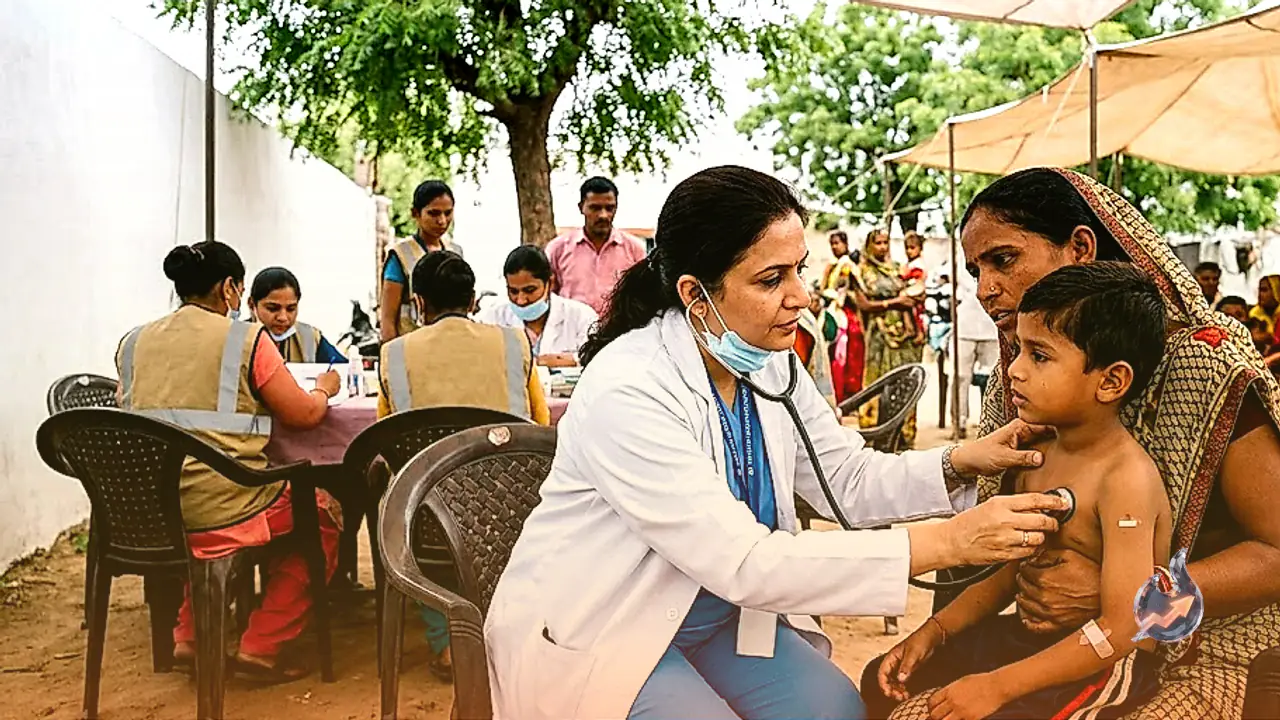

A severe public health situation has unfolded across Gujarat following an outbreak of the Chandipura encephalitis virus, which has tragically claimed the lives of 22 children, all under the age of 15. Official health figures indicate that a total of 184 suspected cases of the viral infection have been identified across various parts of the state so far. Laboratory testing has confirmed 35 positive Chandipura virus cases, while test results for 11 additional patient samples are currently awaited. The rapid appearance of suspected cases has prompted state medical authorities to place hospital networks on high alert.
Hospitalization Details and Healthcare Preparedness
Providing an official update on the public health situation, Health Minister Praful Pansheriya stated that 7 confirmed positive patients are presently undergoing intensive medical treatment in civil hospitals across the state. In a reassuring development, 6 positive patients have been successfully discharged after their medical condition improved significantly. However, the fact that all 22 deceased victims were pediatric patients below 15 years of age has heightened concern among medical professionals and parents.
The Health Minister further explained that specialized medical teams are delivering expert care to admitted pediatric patients at government hospitals in Gandhinagar, Sabarkantha-Himmatnagar, Patan, Rajkot, and Bhavnagar. Authorities have urged members of the public to remain vigilant, strictly adhere to preventative guidelines, and refrain from spreading rumors. Parents have been explicitly advised to seek immediate medical attention at the nearest government healthcare facility if a child exhibits sudden high fever, persistent vomiting, or any other severe symptoms without delay.
Understanding Chandipura Virus and Its Origins
Chandipura encephalitis is a severe infectious disease that primarily spreads to humans through the bites of sandflies and other insects. Classified as an arbovirus, the pathogen resides inside the salivary glands of the tiny sandfly and enters the human bloodstream upon a bite, subsequently causing acute brain inflammation. The virus has also been identified in Aedes mosquitoes, which are otherwise known as vectors for dengue fever. Although insect vectors remain the primary mode of transmission, medical experts continue to monitor all potential environmental factors associated with the pathogen.
Tracing its historical origins, the Chandipura virus was first isolated and identified in 1965 from a patient in Chandipura village, located within the Nagpur district of Maharashtra state. The pathogen was subsequently named after the village where it was first discovered. The tiny sandflies carrying this virus breed in moist soil and structural cracks, making vector control measures critical to containing its spread.
Key Clinical Symptoms of Chandipura Virus
When an individual contracts the Chandipura virus, clinical symptoms tend to manifest rapidly. Health experts emphasize the importance of early recognition to ensure timely medical intervention. Key symptoms reported among affected patients include
- Sudden High Fever: Patients experience a rapid spike in body temperature.
- Persistent Vomiting and Nausea: Continuous episodes of vomiting and nausea are frequently observed.
- Severe Headache and Weakness: Patients suffer from intense headaches accompanied by extreme fatigue and lethargy.
- Altered Consciousness and Seizures: In severe cases, the infection can progress to unresponsiveness, loss of consciousness, or seizures.
- Brain Inflammation: The virus directly attacks central nervous tissue, leading to acute swelling of the brain.
Preventative Protocols and Community Safety Measures
Efforts to control and mitigate Chandipura virus transmission revolve around a two-pronged protection strategy. The first prong emphasizes personal protection, requiring individuals to adopt proactive precautions in their daily routines. People are advised to wear full-sleeved clothing both indoors and outdoors to minimize exposed skin. Applying effective mosquito repellent formulations and sleeping under protective mosquito nets are critical defense measures. Furthermore, households must eliminate stagnant water collections and keep surrounding spaces clean and dry.
The second prong focuses on community level protection, implemented directly by state administration and local municipal bodies. Under community protection programs, health officials are executing widespread pesticide spraying drives to eliminate sandfly and mosquito breeding grounds. Authorities are also clearing accumulated water from public areas to disrupt the life cycle of insect vectors across vulnerable residential neighborhoods.