





















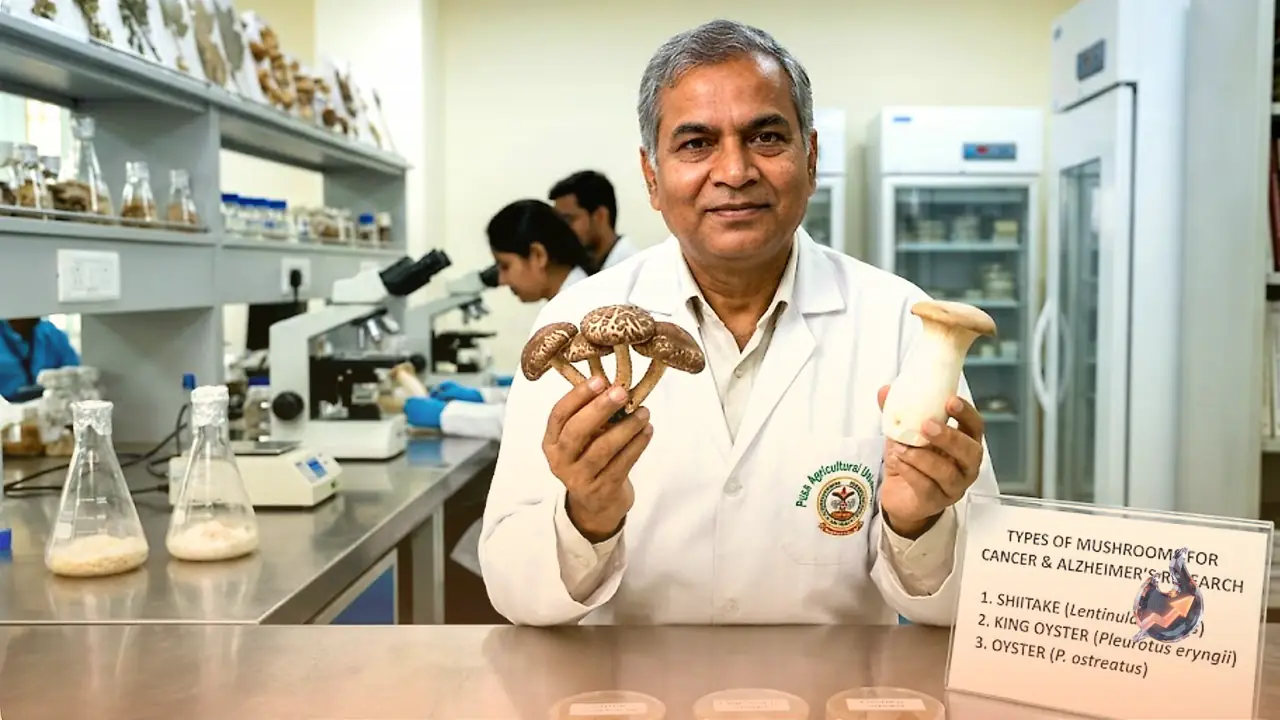

Mushrooms in Bihar may soon do a lot more than season a curry, they could also become part of medicine cabinets. Dr. Daya Ram Singh, a scientist with the mushroom department at Dr. Rajendra Prasad Central Agricultural University, Pusa, in Samastipur, has explained the different varieties of mushrooms and how each one should be used.
Already common practice in Japan and France
According to Dr. Singh, countries like Japan and France have long used mushroom-based medicines. In India, some companies have already begun working in this direction. Bihar's climate is also considered suitable for mushroom farming. One major advantage is that mushrooms can be dried and stored safely for a long period, which makes their use far more convenient.
Three types of mushrooms and why telling them apart matters
Dr. Daya Ram Singh said mushrooms broadly fall into three categories. The first is the ordinary edible mushroom that people use every day in vegetables and other food items. The second type is not fit for consumption and can sometimes even prove harmful to health. The third category is the medicinal mushroom, which is considered extremely beneficial for health. Scientists stress that correctly identifying these three types and understanding how to use them is essential, since eating the wrong kind of mushroom can cause harm.
Shiitake and king oyster mushrooms show real benefits
Dr. Daya Ram Singh said medicinal mushrooms such as shiitake and king oyster are considered beneficial in several serious illnesses. Consuming them strengthens the body's immunity, helping it fight disease more effectively. Scientists have also found these mushrooms beneficial in conditions like cancer, Alzheimer's and tumours.