






















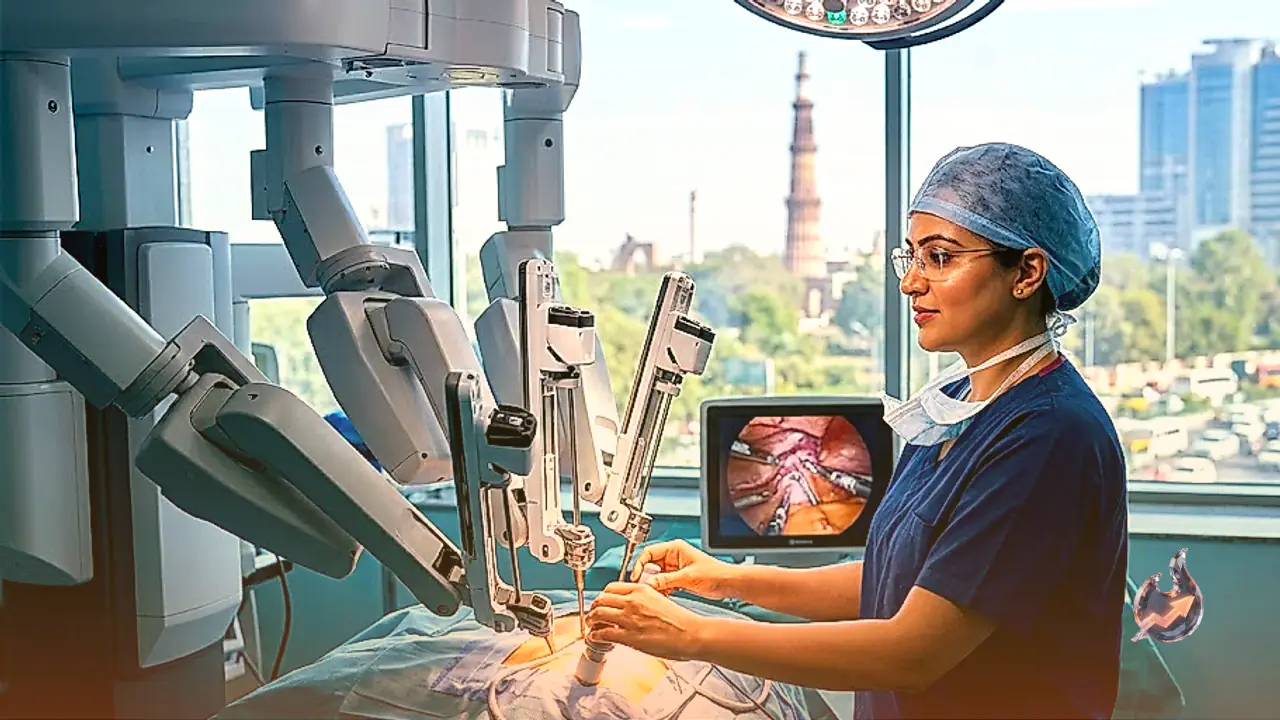

Adoption of robotic-assisted surgical technology is accelerating rapidly across India, with the national capital region leading the shift away from conventional open procedures. Patients increasingly opt for robotic interventions due to precise tissue handling, reduced blood loss, smaller scars, and significantly shorter post-operative hospital stays. These clear clinical advantages have positioned Delhi-NCR at the forefront of the country's surgical modernization drive.
Insights from SRS India 2026 International Conference
Medical experts shared comprehensive operational data during the Society of Robotic Surgery (SRS) India 2026 International Conference held in New Delhi. Prof. Dr. Anup Kumar, Head of the Department of Urology, Robotics, and Renal Transplant at Safdarjung Hospital and Organizing Chairman, stated that the country has reached a defining milestone in adopting automated surgical systems. He emphasized that India is well on track to establish itself as a global leader in robotic surgery by 2030. Medical professionals, however, noted that the application of robotic systems in pregnancy-related delivery cases remains open to further evaluation before standard protocols can be defined.
Fivefold Growth Recorded Across Four Years
Dr. Vivek Bindal, Head of Minimal Access, Bariatric, and Robotic Surgery at Max Hospital and Organizing Chairman of the Society of Robotic Surgery India, highlighted that 39 medical centres across Delhi-NCR are currently equipped with robotic surgical installations, including 11 facilities operating multiple setups. Regional procedural volume expanded from 2,257 cases in 2021 to 3,594 in 2022, climbing further to 5,024 in 2023, 7,595 in 2024, and reaching 10,937 in 2025. This progression reflects nearly a fivefold surge in robotic interventions within Delhi-NCR over a four-year timeline.
Clinical Disciplines Driving Procedure Volumes
Analysis of the 2025 data reveals that benign general surgical cases constituted approximately 33 percent of all robotic procedures performed in Delhi-NCR. Urology followed closely at 30.2 percent, gynaecology accounted for 22.1 percent, and malignant general surgical operations comprised 10 percent. Surgeons also utilized robotic platforms for complex interventions involving the head and neck, thoracic cavity, and cardiac procedures. On a broader scale, total robotic-assisted surgeries nationwide surged from 8,912 in 2021 to 44,857 by 2025, demonstrating strong nationwide momentum across varied medical disciplines.
Telesurgery Expands Specialized Care to Remote Regions
Highlighting the expanding frontiers of digital healthcare, a surgical team from Max Super Speciality Hospital in Vaishali successfully operated a robotic console located approximately 5,000 kilometres away in Chengdu, China. The remote pre-clinical trial demonstrated real-time precision across long distances, establishing a practical blueprint for deploying super-speciality surgical expertise directly to tier-2 and tier-3 healthcare centres without requiring patient travel.