


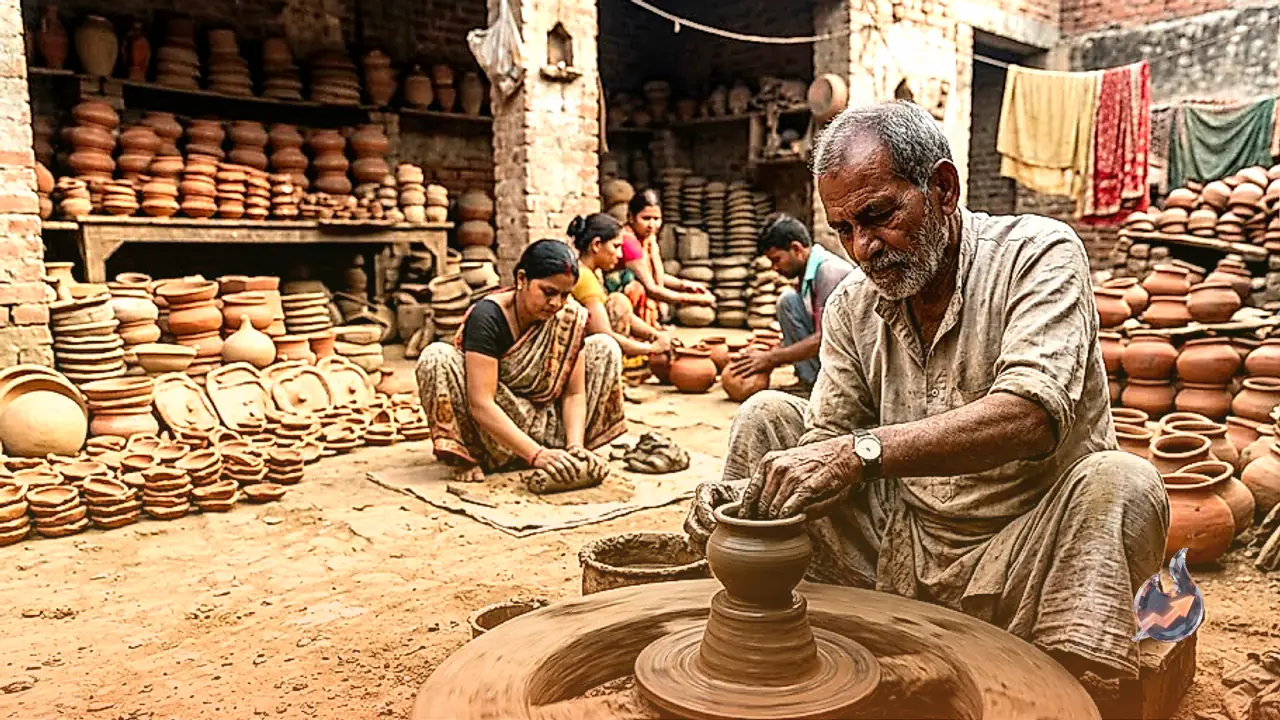














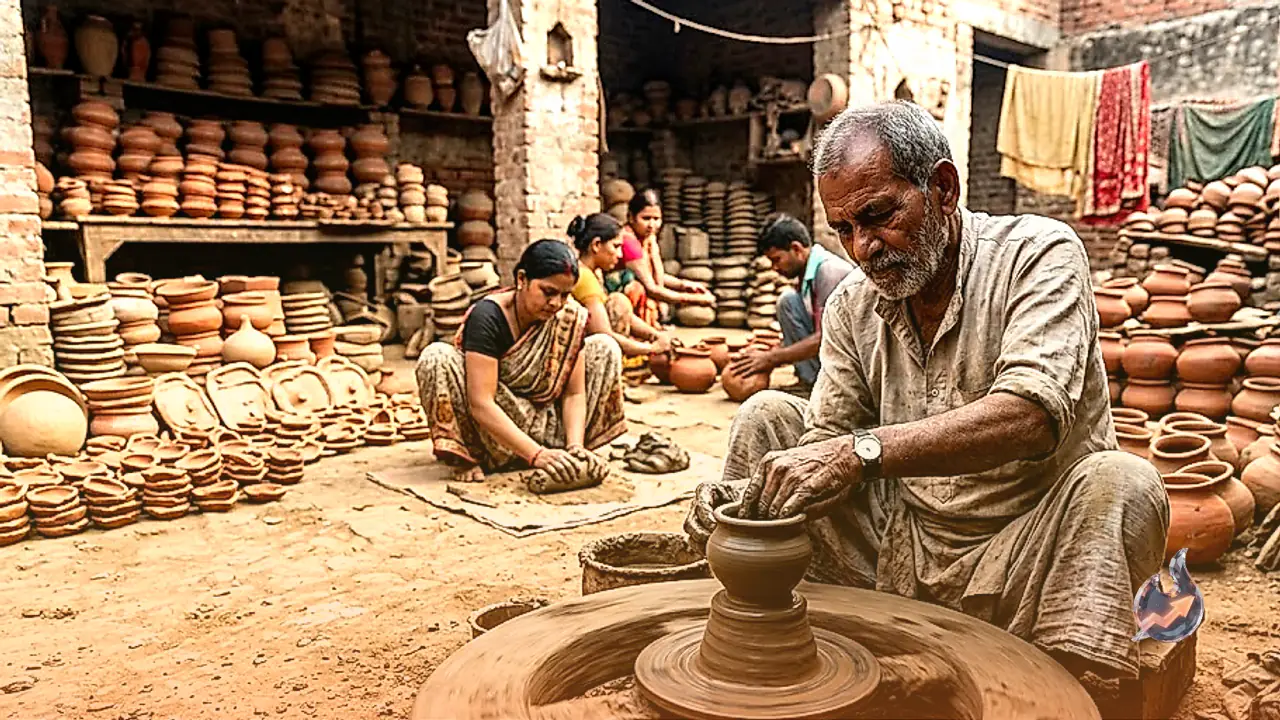

Even as modern cookware has largely replaced earthen vessels across household kitchens, an artisan household in the Kumhar Mohalla locality of Ambala continues to preserve a century-old cultural trade. For this family, clay is neither mere earth nor an obsolete material; it represents their intergenerational identity and everyday sustenance. At 75 years of age, senior artisan Devraj continues to shape raw clay with his own hands every day, flanked by multiple generations of his family who are equally committed to sustaining the craft.
A Century of Ancestral Craftsmanship Passed Across Generations
Pottery has been the foundation of Devraj's household for nearly 100 years. Both his grandfather and father practiced the trade, molding vessels to sustain the family. As a young boy, Devraj watched his father transform lumps of wet clay into intricate everyday items, gradually absorbing the nuances of wheel throwing and firing. He subsequently committed his life to the profession and has now been personally crafting clay goods for roughly 60 years. Although he is now 75, his hands still carry the exact dexterity and command that he developed decades ago.
Diverse Clay Products Ranging from Pitchers to Water Dispensers
Over the decades, Devraj has broadened his craft to include traditional earthen pitchers, cooking vessels, miniature temple shrines, ceremonial lamps, decorative pots known locally as gadbade, and naturally insulated cooling clay campers. In earlier times, demand for clay items was naturally widespread before industrial substitutes emerged. Yet despite the influx of modern metal and plastic utensils into local markets, Devraj never stepped away from the wheel. He maintains that no honest trade is inherently inferior, emphasizing that sincere labor in any vocation provides dignity and progress.
Ten Family Members United Across Production and Supply
The continuation of this heritage rests on an entire collective effort. Devraj's two sons, daughters-in-law, and grandchildren all actively take part in daily operations. Approximately 10 family members handle the end-to-end process, from processing raw soil and throwing pots to baking and distributing finished goods. For Devraj, the deepest personal fulfillment lies in knowing that his ancestral heritage will not conclude with his own lifetime. While acknowledging the modern rush toward consumer alternatives, he believes younger generations carry a responsibility to preserve cultural practices, frequently urging households to reintroduce earthen pots into daily routines.
Distribution Across Regional Borders in Punjab and Himachal Pradesh
Devraj's son Surender explains that the family never looked down upon their traditional occupation. His grandfather laid the groundwork, his father solidified the trade, and now Surender is training his own son on the wheel. Working together as a cohesive family unit has preserved their domestic ties while securing steady economic independence. Demand for their craftsmanship extends well beyond the boundaries of Ambala city. Shipments of finished terracotta products regularly head to Punjab destinations such as Ropar and Rajpura, as well as several districts across Himachal Pradesh and Haryana. In past years, specialized planters shaped by Devraj's father were supplied all the way to Kurukshetra University, where family artisans occasionally traveled in person to manufacture goods directly on site.