



















Giloy, a climbing vine readily visible across Ballia and various other regions, holds immense therapeutic value in traditional Indian medicine. It is a trailing plant that typically uses adjacent trees and shrubs as structural support to grow upwards. While this herb can be found climbing on various host plants, its medicinal efficacy increases significantly when it entwines around a Neem tree. In classical Ayurvedic texts, this specific variety is reverently referred to as Neem Giloy. The plant gained immense public attention and widespread use during the COVID-19 pandemic as a trusted remedy for fortifying immune defenses. Although commercial formulations such as manufactured powders, tablets, and capsules are widely distributed in the market today, traditional methods for preparing fresh extract and decoction at home remain less known to the public. Ayurveda formally designates Giloy as Amrita and Guduchi, titles that reflect its legendary status as an agent of vitality.
Clinical Insights from Dr. Roshni Kumari
Dr. Roshni Kumari, an Ayurvedic practitioner associated with Shanti Ayurvedic Medical College and Hospital with four years of clinical experience, has conducted extensive work on Giloy. Based on her research and clinical observations, she has formulated multiple remedies utilizing this botanical resource. According to Dr. Kumari, categorizing Giloy as Amrita in classical literature is well-justified because it offers comprehensive systemic protection against a broad spectrum of health disorders. During the height of the COVID-19 health crisis, countless individuals incorporated Giloy preparations into their daily routines to build internal resilience against infections.
Liver Detoxification and Relief for Dermatological Conditions
Highlighting its therapeutic spectrum, Dr. Roshni Kumari explained that Giloy plays a crucial role in supporting hepatic function. It acts as a natural cleansing agent that assists in eliminating accumulated metabolic toxins from the liver. Furthermore, individuals suffering from chronic skin disorders, rashes, and persistent itching can experience notable relief by utilizing Giloy preparations. The plant's blood-purifying characteristics help soothe internal inflammation and mitigate underlying causes of cutaneous irritation.
Management of Blood Glucose and Insulin Regulation
For individuals diagnosed with diabetes, Giloy serves as an effective supportive herb. Dr. Kumari emphasized that systematic consumption of Giloy aids in regulating circulating blood glucose levels. Additionally, it plays a supportive role in balancing insulin activity within the body, allowing diabetic patients to maintain better glycemic stability alongside their prescribed healthcare regimens.
Respiratory Support and Digestive Enhancement
The decoction or Kwath derived from Giloy is traditionally administered to alleviate symptoms of upper respiratory tract ailments, including seasonal colds, persistent coughs, running nose, and febrile conditions. Beyond respiratory health, Giloy exerts a positive effect on the digestive tract. It helps strengthen digestive capacity and addresses issues related to diminished appetite by stimulating internal digestive fires and improving metabolic absorption. Preparing a basic decoction requires only plain water and basic heating techniques.
Two Methods for Preparing Giloy Decoction
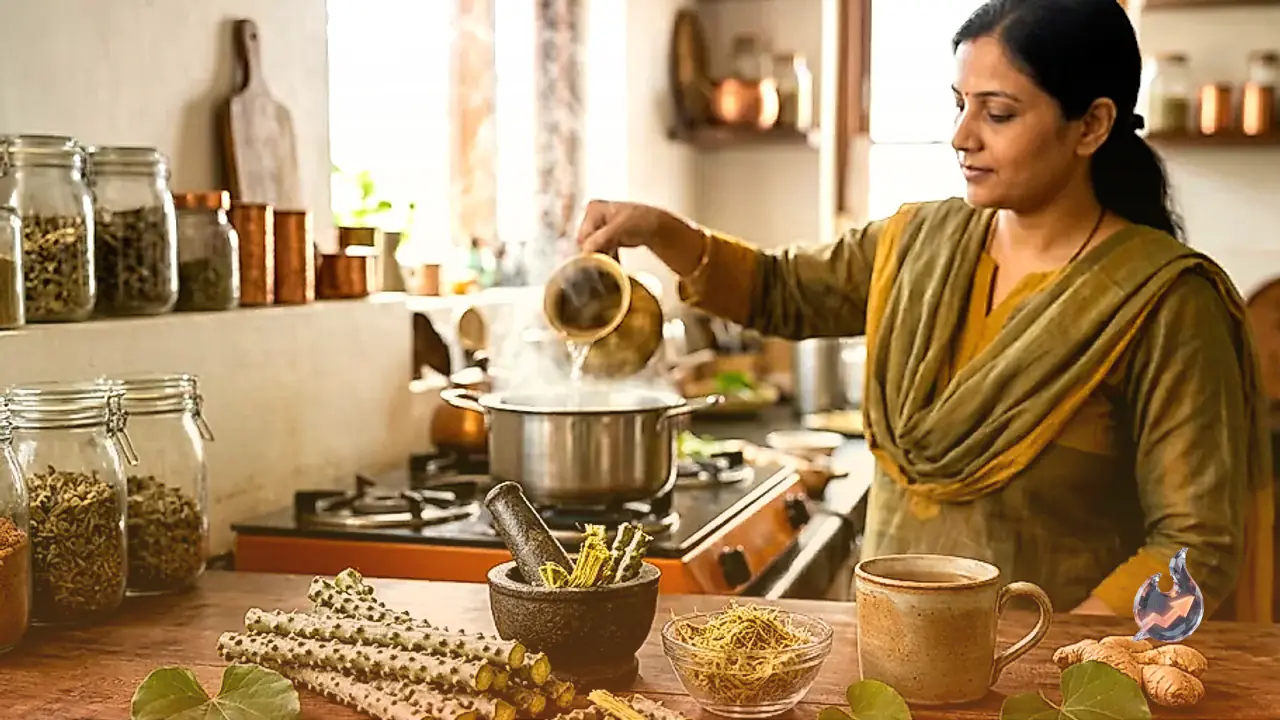
Dr. Roshni Kumari outlined two distinct procedures for formulating Giloy decoctions at home, catering to different volume requirements. For larger batch preparations meant for multiple users, place approximately 10 grams of Giloy in two liters of clean water and simmer over a low flame. Allow the liquid to reduce gradually until about 1.5 liters of liquid remain. Once reduced, filter the solution thoroughly before administration.
For an individual single-dose preparation, take a section of the Giloy stem approximately equal to or slightly smaller than the length of a finger. Crush the stem thoroughly and place it in water over heat. Continue boiling until the water reduces down to one-fourth of its initial volume. Strain the concentrated liquid prior to drinking. Individuals who do not have diabetes may add a small quantity of jaggery to the warm decoction to render its natural bitterness more palatable.
Extraction Technique for Pure Giloy Satva and Powder
Extracting the starch component, known as Giloy Satva, involves a specific traditional settling procedure. The process begins by thoroughly crushing fresh Giloy stems and submerging them in a container filled with water to soak overnight. The following morning, the stems are vigorously massaged in the water to release their inner starch content before the liquid is strained into a separate vessel.
This strained mixture is allowed to stand undisturbed for several hours. Over time, a dense, starch-rich sediment settles at the bottom of the container. The clear supernatant liquid on top is carefully decanted off, leaving behind the concentrated deposit. This collected residue is known as Giloy Satva. Once completely dried, it can be ground into a fine powder and stored for therapeutic application.
Dosage Guidelines and Essential Medical Precautions
Despite the natural origin of Giloy, Dr. Roshni Kumari stresses that administration should strictly follow professional medical advice. The precise dosage of Giloy Satva must be calibrated according to an individual's physical constitution, age, and underlying health condition. Under specific therapeutic guidelines, a dose of two grams of Satva may be prescribed twice daily, taken in the morning and evening with lukewarm water.
However, unguided self-medication can prove counterproductive or harmful in certain medical contexts. Consulting a qualified Ayurvedic practitioner ensures that the quantity and duration of use are tailored appropriately to individual metabolic needs.