























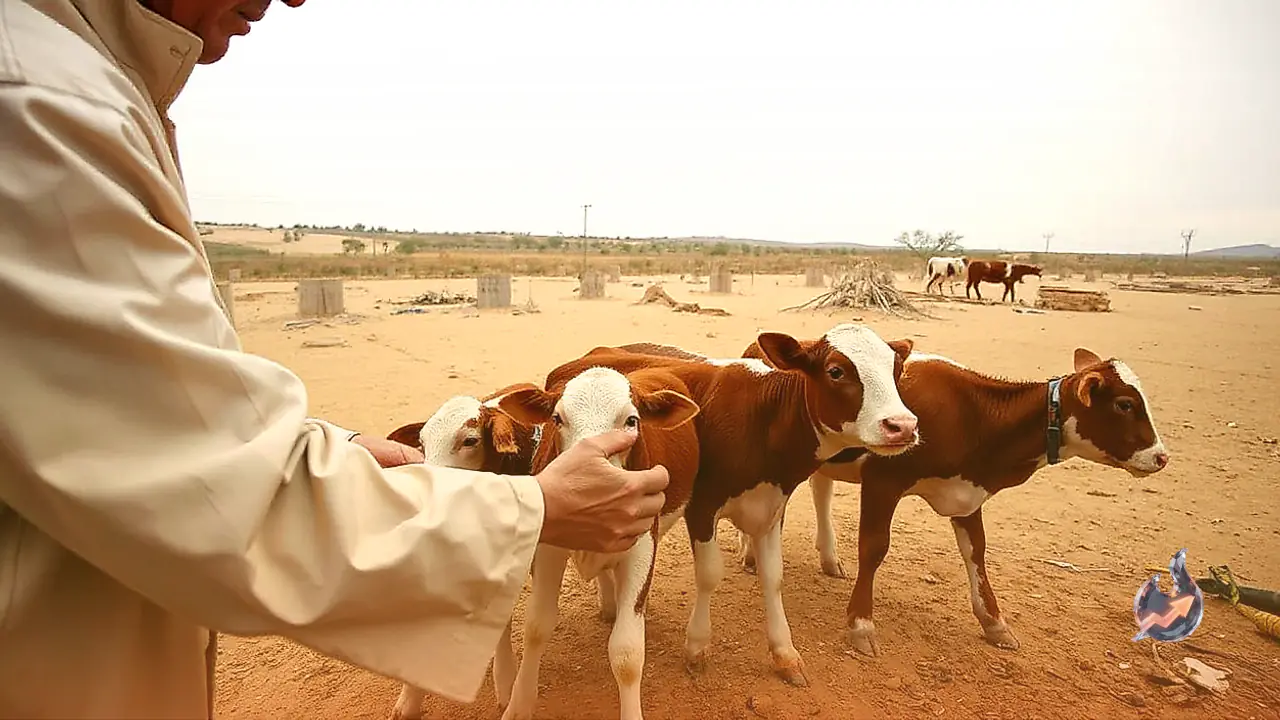

In dairy farming and livestock management, the immediate care provided to a newborn calf following delivery forms the foundation of its long-term health and productivity. According to veterinary expert Dr. Ranjana Sinha, administering colostrum, the first milk produced by the cow or buffalo, plays a transformative role in the calf's early survival and physical growth. The ideal window for this initial feeding is within thirty minutes of birth, with an outside upper limit of no more than two hours. The vital immunoglobulins concentrated in this initial secretion furnish the young animal with an indispensable shield against acute environmental infections.
The Transition From Uterine Nourishment to Biological Protection
Throughout pregnancy, maternal nutrient transfer sustains the developing fetus inside the womb. However, the moment the calf emerges into an environment teeming with pathogens, its naive immune system lacks the capacity to fend off infectious agents on its own. The first milk fills this critical vulnerability by providing passive maternal immunity. Compared to standard whole milk, colostrum contains vastly elevated concentrations of vitamin A, crude protein, metabolizable energy, and immunoglobulins, each serving as an essential building block for rapid tissue synthesis and cellular repair.
Colostrum Composition Dynamics and Gut Permeability Timelines
Livestock keepers must recognize that colostrum undergoes rapid compositional changes within hours of parturition. The initial milking boasts the highest density of protective antibodies. Over the second and third days, the biochemical makeup shifts progressively, transitioning into conventional milk within three to four days. Delaying the initial feed under the mistaken belief that early milk behaves like standard milk squanders its most potent therapeutic components.
This tight window is dictated by the calf's digestive physiology. During the earliest hours following birth, the calf's intestinal lining is uniquely permeable, permitting intact macromolecular immunoglobulins to cross directly into the bloodstream. With each passing hour, this mucosal permeability rapidly declines, a biological process known as gut closure. Once this window closes, even high-quality colostrum passes through the gastrointestinal tract without conveying systemic immunity, leaving the calf permanently vulnerable to diarrheal and respiratory illnesses.
Addressing the Placental Delivery Myth With Science
In many rural communities, a deep-seated belief persists that milking must not commence until the animal has completely discharged the placenta, known locally as jer. Adhering to this unscientific assumption often delays the calf's first nourishment by several hours. Dr. Ranjana Sinha emphasizes that dairy farmers must discard folklore in favor of veterinary guidelines. Waiting for the placenta to detach before harvesting colostrum puts the calf's health at immediate risk, and feeding should proceed regardless of placental progress.
Guarding Against Mastitis and Post-Calving Milk Fever
Managing the maternal animal during the immediate postpartum period requires balanced udder management. The expert suggests expressing only the portion required to feed the newborn rather than fully stripping the udder in one go. If excess milk stagnates inside the quarters, the udder can become congested, swollen, and prone to mastitis, a painful bacterial infection that severely restricts mobility and comfortable recumbency. Furthermore, dairy managers must remain vigilant against milk fever, an acute metabolic crisis caused by rapid systemic calcium depletion following birth.