























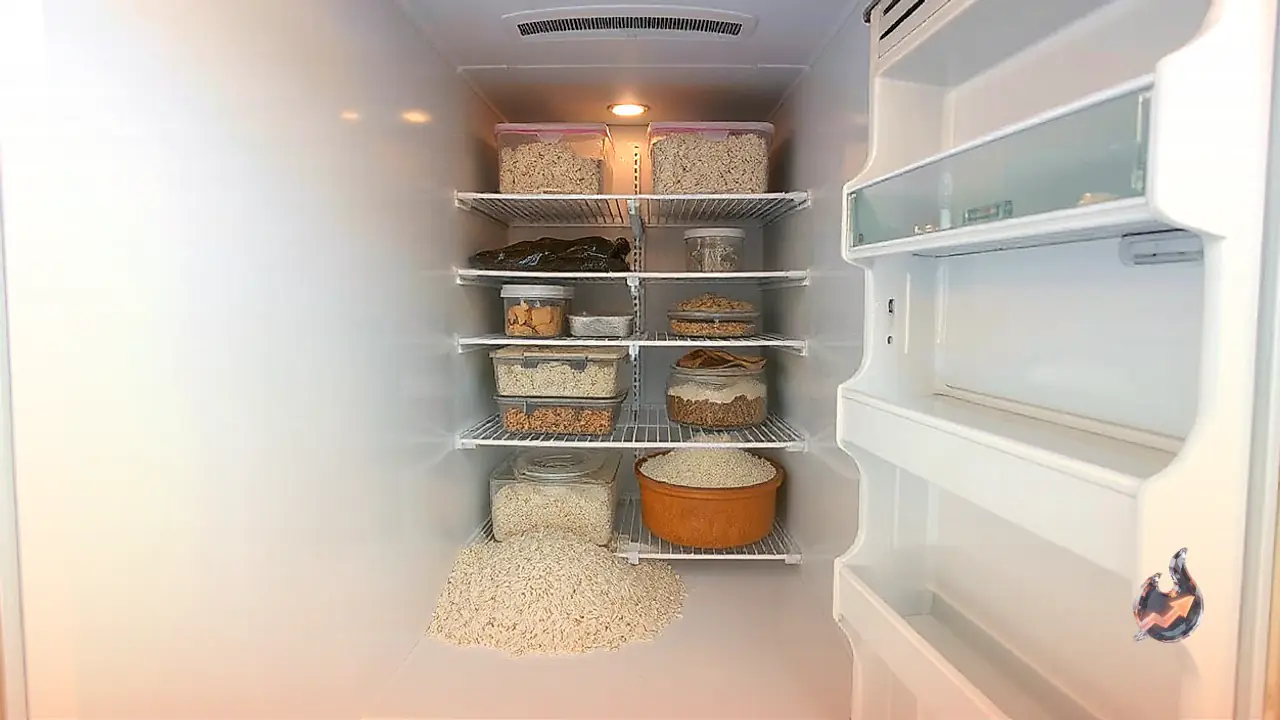

Rice remains a daily staple in households across India. Whether paired with lentils or red beans, most people enjoy having it on their plates regularly. However, individuals dealing with diabetes or blood sugar management issues are often advised to keep their rice consumption minimal. But did you know that letting cooked rice cool down in a refrigerator can alter how your body responds to it? Scientific research indicates that consuming chilled rice that has been reheated can sometimes result in a lower blood sugar spike compared to freshly cooked rice. This happens due to a chemical transformation that takes place within the starch content of the rice itself.
How Starch Structures Change During Cooling
Rice naturally contains a high proportion of carbohydrates. When the grains are cooked, heat and moisture soften the starches inside them significantly. This allows digestive enzymes in our system to easily break down the starch into glucose. The resulting glucose enters the bloodstream quickly, raising blood sugar levels. However, when cooked rice is allowed to cool, the starch molecules begin to rearrange their structure. This specific process is known as starch retrogradation. During this conversion phase, a portion of the regular starch transforms into resistant starch.
Understanding Resistant Starch and Digestion
Resistant starch is a unique type of starch that escapes complete digestion in the small intestine, unlike regular starch. It functions similarly to dietary fiber, allowing a portion of it to reach the large intestine intact. Bacteria residing there then ferment this portion. Consequently, this mechanism affects both the total quantity of glucose released from the rice and the speed at which it enters the bloodstream, resulting in a altered metabolic response.
Insights From Clinical Research
A small study published in the year 2015 within the Asia Pacific Journal of Clinical Nutrition examined 15 healthy adults. The findings revealed that rice stored in a refrigerator at 4 degrees Celsius for 24 hours and then reheated produced a lower glycemic response compared to freshly cooked rice. Furthermore, another study conducted in 2022 involving 32 individuals with type-1 diabetes observed a similarly lower rise in blood sugar levels after they consumed cooled and reheated rice. Nevertheless, these outcomes do not imply a universal effect for everyone. Factors such as the specific variety of rice, cooking methods, portion sizes, and medications also influence blood sugar levels significantly.
Proper Guidelines for Storing Rice in the Fridge
Cooked rice should never be left sitting at room temperature for extended periods. To cool it down rapidly, transfer the food into small, shallow containers and place them inside the refrigerator without delay. It is best to consume leftover rice within a 24-hour window and ensure it is heated thoroughly before eating.
Preventing Bacterial Contamination
The primary reason for these strict storage precautions is a bacterium named Bacillus cereus, whose spores can survive the initial cooking process. Leaving cooked rice out at room temperature allows these bacteria to multiply rapidly and produce toxins that cannot always be destroyed simply by reheating the food. Proper chilling prevents this risk entirely.