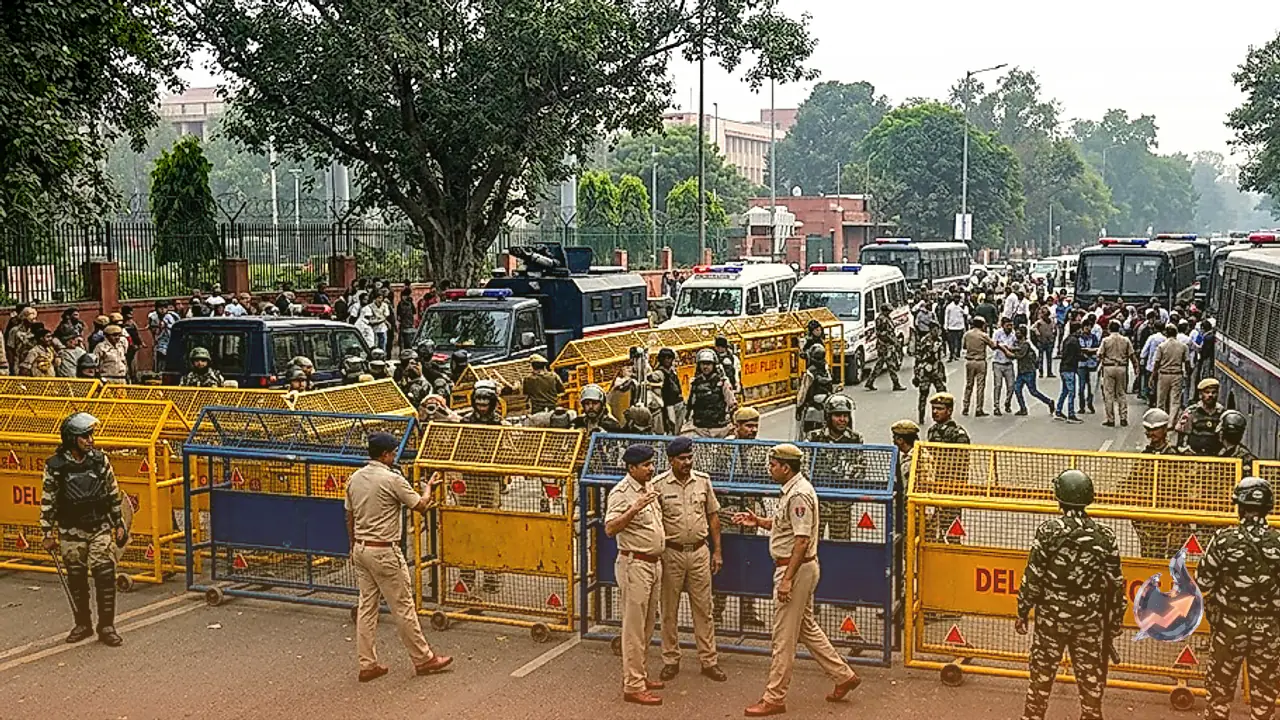



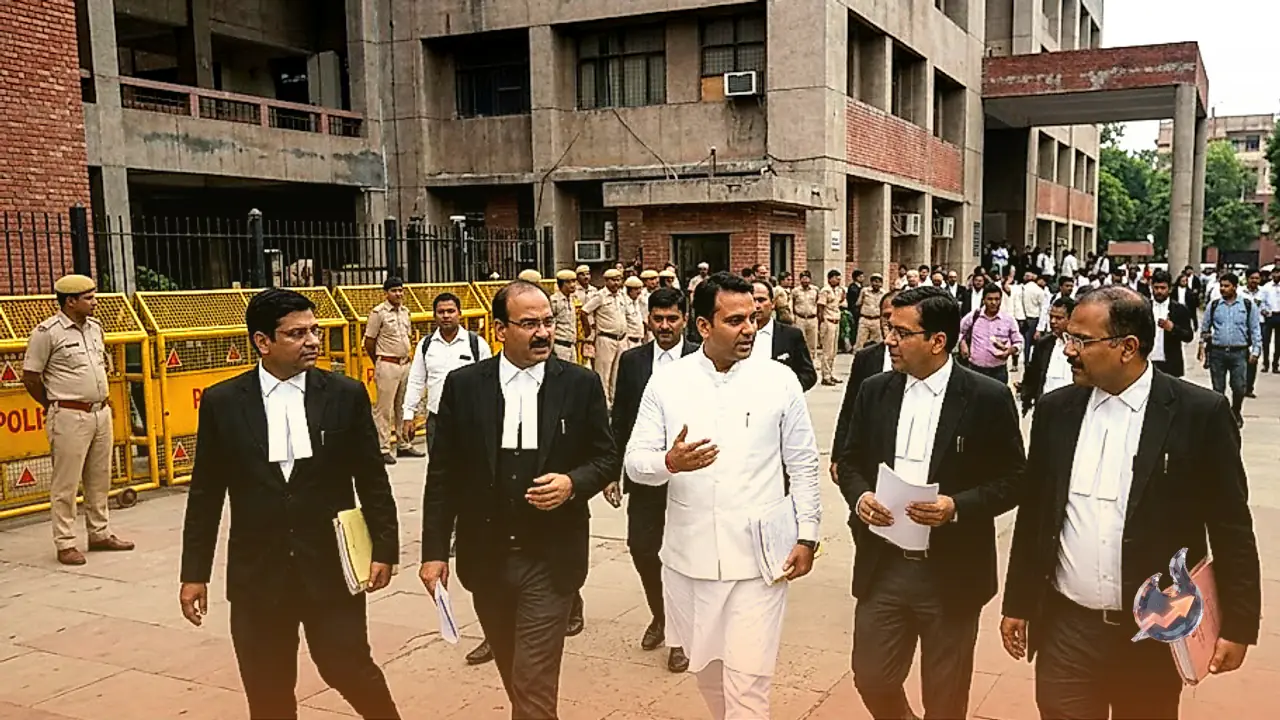














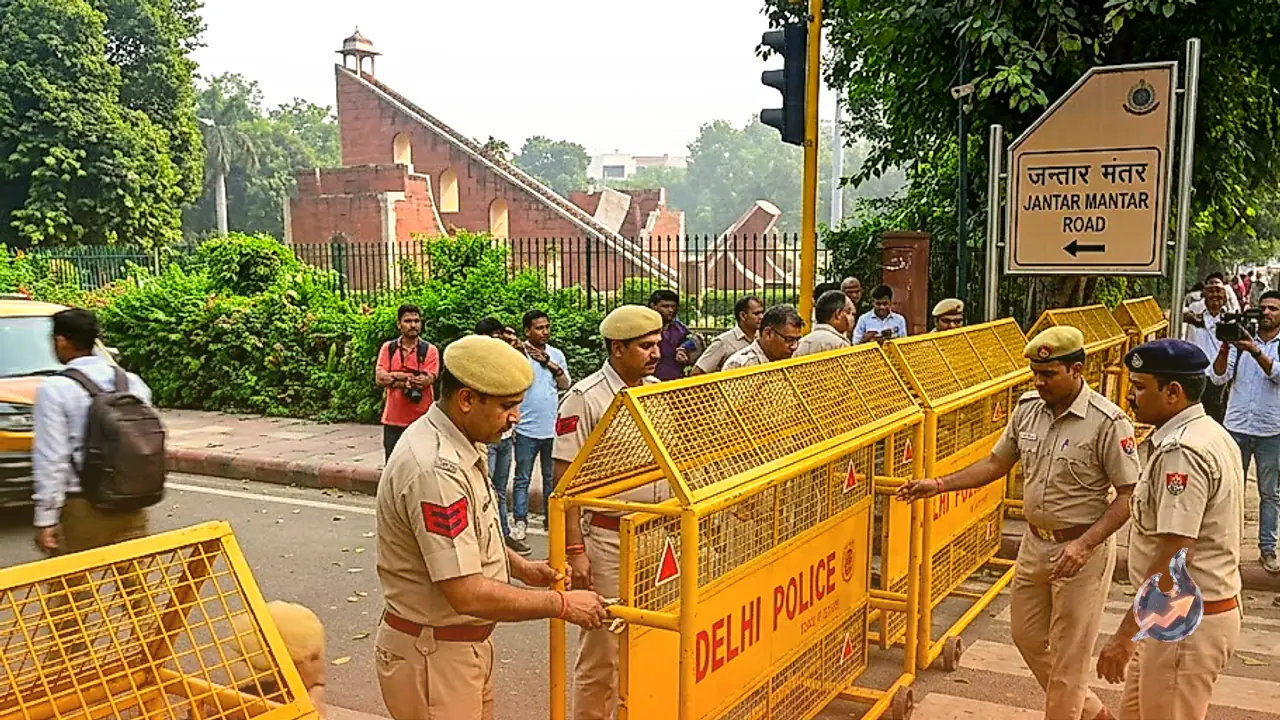

Delhi's prominent protest hub, Jantar Mantar, will no longer host public agitations and demonstrations under standard administrative protocols. In an official order issued on 11 October 2026, Delhi Police removed the historic central Delhi location from the list of approved protest grounds, naming three alternative locations instead: Ramlila Maidan, Burari Ground, and CBD Ground. The policy shift has triggered a debate over civil liberties and civic access, questioning whether moving public demonstrations far from the capital's power corridors will dilute public participation and media scrutiny that previously defined movements at Jantar Mantar.
Distance From Power Corridors and Impact on Public Attendance
Jantar Mantar sits roughly 1.5 km from the Parliament, a geographic reality that historically allowed protesters to voice demands directly within earshot of lawmakers and top policymakers. Shifting designated demonstration zones away from the city centre presents practical hurdles for ordinary citizens seeking to exercise their right to assemble. Office workers, university students, and daily wage earners frequently joined rallies at Jantar Mantar on short notice during breaks or after working hours. Relocating protests to outer zones necessitates longer commutes and extensive logistical planning, which can discourage spontaneous and short-notice turnout.
Resource disparities between political outfits and grass-roots assemblies will also widen under this arrangement. Established political bodies and well-funded organisations possess dedicated volunteer networks and transport infrastructure capable of moving crowds to distant suburban grounds. Conversely, independent student groups, trade unions, and neighbourhood associations operating on shoestring budgets will face severe operational difficulties. Legal boundaries circumscribe how far state agencies can go in restricting demonstrations. In 2018, the Supreme Court ruled that the constitutional right to peaceful assembly must be balanced against the comfort and movement of local residents, explicitly cautioning that regulatory authority should never morph into an outright ban on peaceful protest.
Visibility Challenges and Media Scrutiny at New Sites
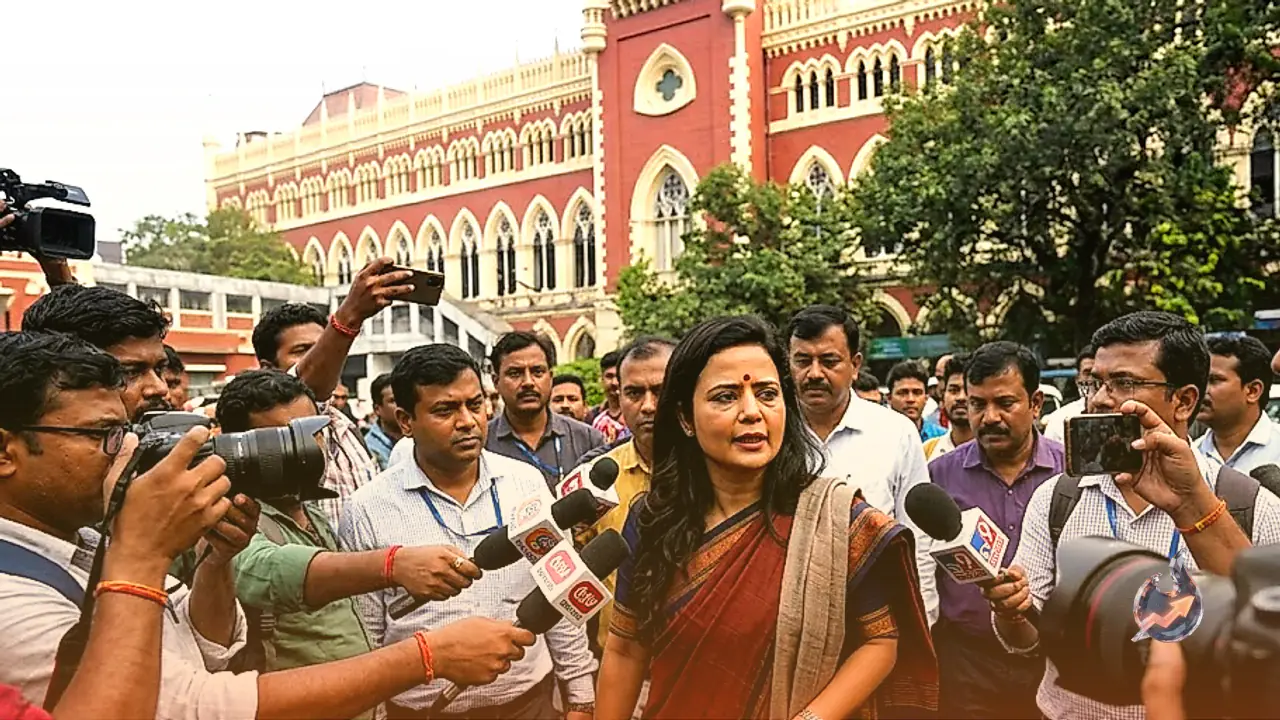
Gathering numbers is merely one component of public agitation; ensuring that grievances reach elected representatives and the public at large is equally critical. Demonstrations organised at peripheral sites risk losing immediate media traction and visual immediacy. A rally can assemble thousands of citizens, yet fail to generate institutional momentum if television crews, independent reporters, and commuters remain absent from the venue.
Author and historian Sohail Hashmi points out that designated demonstration grounds ought to provide citizens with proximity to the figures they seek to hold accountable. Historical precedents underscore why distant venues face resistance from protest organizers. During the 2024-25 farmers' agitations, farmers' unions flatly declined government proposals to assemble at Burari Ground. Farm leaders characterized Burari Ground as an open jail, arguing that its perimeter fencing and physical isolation would trap their movement and conceal it from public view. While internet tools, direct live streams, and digital publishing allow groups to broadcast demands independently of conventional news cameras, digital dissemination rarely offsets the physical impact of a demonstration held in the centre of the capital.
Multi-Agency Permissions and Venue Booking Costs
The status of a location as a designated protest venue does not confer an unconditional right to hold demonstrations whenever organisers choose. Assemblies remain governed by a strict administrative clearance regime. In its 11 October 2026 directive, Delhi Police officially identified the three venues while stating that an updated, comprehensive standard operating procedure (SOP) governing clearances would be released separately.
Securing permissions will require navigating multiple municipal and law enforcement departments. For instance, bookings for Ramlila Maidan fall under the jurisdiction of the Municipal Corporation of Delhi, yet applicants must first secure a formal no-objection certificate (NOC) from Delhi Police. Police authorities evaluate several factors before granting permission, including overall public safety, traffic management, and the possibility of public clashes, and they can stipulate binding operational conditions on the rally. High booking fees at formal municipal venues like Ramlila Maidan create an additional economic barrier for smaller civic bodies, labour committees, and youth collectives. Police clearance rules cannot legally be converted into an arbitrary veto against all public dissent.
Complete Restrictions at Jantar Mantar and Pending Court Review
Under current administrative norms, demonstrators cannot access Jantar Mantar even by seeking special permissions, as the latest directive contains no discretionary exceptions for the venue. Jantar Mantar has been entirely stripped of its designated status. The administrative move remains contested in court, with the Delhi High Court currently hearing challenges against the restrictions; the court has listed the matter for its next hearing on 17 November 2026.
Organisers utilizing the alternative grounds may also encounter administrative caps on assembly size. Law enforcement agencies maintain the legal power to impose reasonable restrictions on gathering sizes to maintain public safety and preserve civic order. In setting capacity limits, authorities typically assess ground dimensions, crowd safety infrastructure, emergency ingress corridors, and confrontation risks. The police order of 11 October 2026 stopped short of setting numerical headcounts for Ramlila Maidan, Burari Ground, or CBD Ground. The right to register peaceful dissent remains an essential pillar of constitutional democracy, but the removal of Jantar Mantar highlights the growing gap between holding a fundamental right on paper and exercising it in public space.