














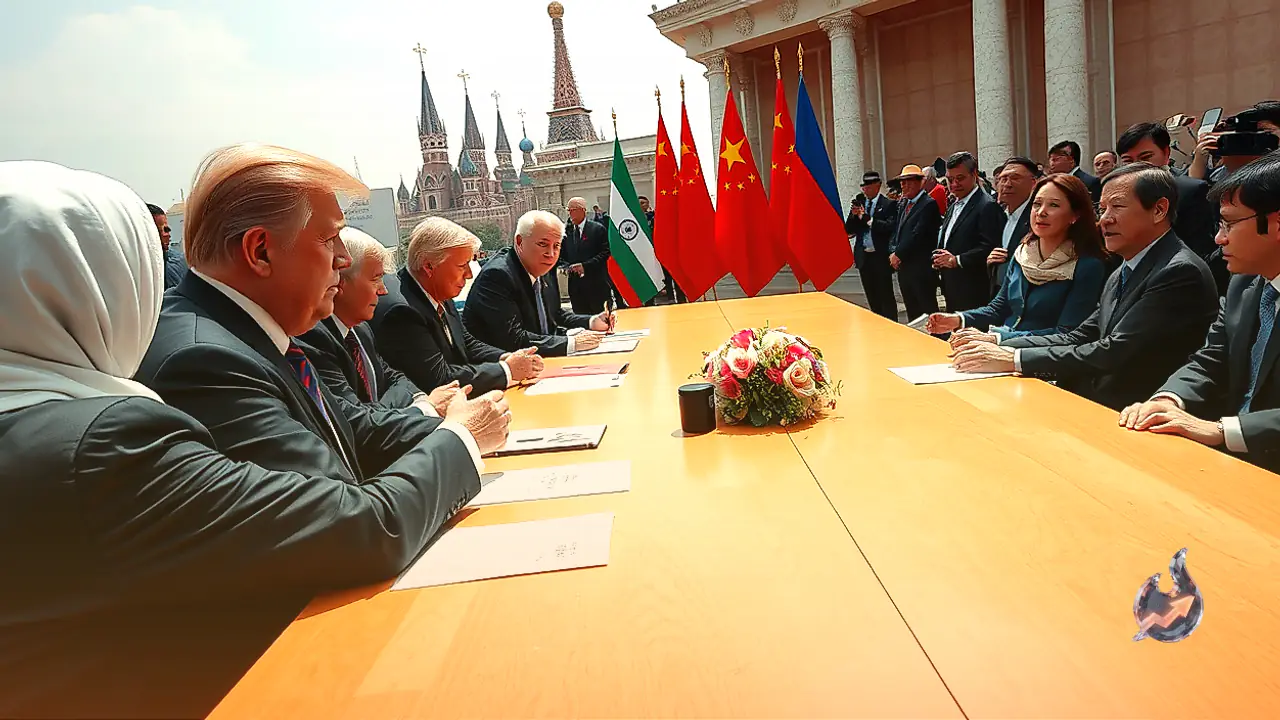

Global geopolitical balances face fresh scrutiny amid escalating friction across Western Asia. US President Donald Trump has stated that Russia and China are not assisting Iran during its confrontation with the US. While neither Beijing nor Moscow desires an outright military collision with Washington, both capitals maintain clear strategic motives to resist American hegemony. Any underlying collaboration between these powers would not merely steer the trajectory of the ongoing fighting, but could also inject profound complications into India's strategic ties with Washington, Moscow, and Tehran.
Why Moscow and Beijing Prefer to Avoid Acknowledging Any Support
Offering strategic backing to an international partner remains fundamentally different from publicly declaring wartime involvement. Should Russian or Chinese authorities provide logistical or technical assistance to Iran, acknowledging such measures openly would introduce severe complications. A public admission could provoke an immediate escalation from Washington, prompting severe diplomatic retaliation or intensified economic countermeasures, particularly if that assistance facilitates strikes against American military personnel.
Furthermore, discretion shields vital technology, intelligence methods, and covert procurement routes from scrutiny. If specific equipment or surveillance data became a matter of open record, American forces could swiftly map out Iran's supply lines and sever them. Beijing must also navigate sensitive commercial and energy partnerships with diverse states across the Persian Gulf, ties that could rapidly deteriorate if China assumed a vocal military stance alongside Tehran. Similarly, Moscow must evaluate whether assisting Tehran justifies the steep downside of worsening its standing with Washington. Keeping a public distance preserves diplomatic flexibility, allowing both capitals to arbitrate, support ceasefires, or shift approaches as circumstances evolve.
Methods of Strategic Assistance Beyond Direct Battlefield Deployment
Modern military support encompasses far more than dispatching ground troops to frontline trenches. A primary pillar involves the transfer of actionable intelligence regarding troop dispositions and operational installations. Satellite imagery provides critical visibility over naval vessels, aircraft maneuvers, and terrestrial logistical nodes, directly enhancing target identification.
Beyond intelligence sharing, delivering advanced components, electronics, and technical guidance substantially upgrades air defense and strike capabilities. Economically, sustaining petroleum purchases offers Tehran a crucial financial lifeline, ensuring domestic revenue continues to flow despite sweeping Western financial curbs. In the diplomatic sphere, exercising voting leverage and countering American resolutions within multilateral forums grants vital political shielding on the world stage.
Divergent Calculations Driving Strategic Ties with Tehran
While Russia and China both seek to constrain American geopolitical supremacy, their motivations for partnering with Tehran follow separate paths. Moscow gains a strategic advantage whenever Washington's attention and military assets are diverted toward the Middle East, reducing pressure in Europe and other adjacent theaters. Conversely, Beijing prioritizes securing uninterrupted energy shipments and expanding long-term trade frameworks across the Middle East. Expert in international affairs Mohsin Raza Khan observes that Russia and China view Iran as an ally and have no desire to see it fall. He emphasizes that increased American entanglements in Iran leave Washington with diminished capacity to commit energy toward East Asia or Europe.
Potential American Retaliation and Sanctions Mechanisms
Should conclusive evidence emerge confirming coordinated external backing for Iran, Washington retains a well-tested array of economic and diplomatic levers. In June 2026, the US Treasury Department imposed sanctions on nine individuals and entities accused of facilitating Iranian weapons procurement, including targets in China and Hong Kong. Expanded enforcement could rapidly cut off access to American financial rails, freeze foreign assets, and penalize international banking institutions executing prohibited transactions. Washington would also likely leverage intensive diplomatic negotiations to halt illicit supplies, tailoring punitive steps toward offending corporate entities rather than declaring blanket actions against sovereign states.
Diplomatic Tightrope and Energy Security Challenges for New Delhi
Any confrontation pulling major powers into open contention places New Delhi in an intricate geopolitical posture. India maintains vital partnerships with Washington, Moscow, and Tehran, making neutral positioning increasingly difficult to sustain. Stronger links between Russia, China, and Iran could prompt Washington to demand firmer stances from its strategic partners, including India, particularly if hostile operations impact American forces.
India remains heavily dependent on Russian military hardware and continues to import significant quantities of discounted crude oil from Moscow, relationships it cannot afford to see dismantled. Simultaneously, New Delhi maintains substantial investments in Iran's Chabahar port to secure commercial connectivity into Afghanistan and Central Asia. Mohsin Raza Khan notes that India seeks affordable Iranian crude, but the ongoing US blockade severely constrains these options. He warns that attempts to source Iranian oil could trigger American penalties or tariffs, noting that similar uncertainties cloud the continuity of discounted Russian petroleum flows. Navigating these conflicting crosswinds without getting drawn into great-power rivalry remains India's primary diplomatic test.