





















Nepal is still absorbing the shock of the flash flood that tore through Rasuwa on 26 August, even as a separate and far quieter story about Mount Everest draws scientific attention: the sheer volume of human waste piling up at Base Camp every climbing season.
A disaster with no link to climbers
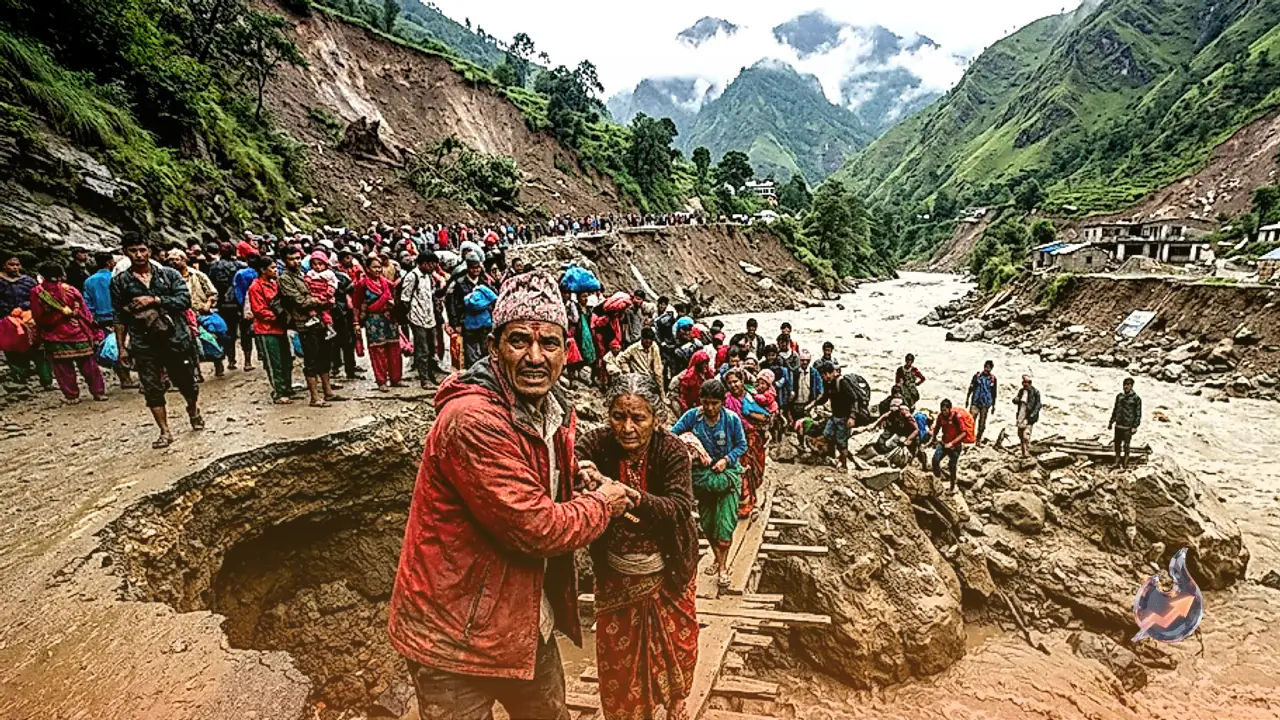
The 26 August event in Rasuwa began with a massive rock-and-ice collapse that sent a wall of water and debris crashing downhill. Roads disappeared, bridges were swept away and hydropower sites were wrecked in the process. Hundreds of people died and thousands remain unaccounted for, with search teams still combing the affected area. A US Geological Survey report on the collapse is expected to detail how the rock-and-ice mass gave way, but nothing about the disaster is connected to climbers, tourism or Base Camp waste; it is an entirely separate event unfolding at the same time in the same mountain range.
6,000 litres of urine a day
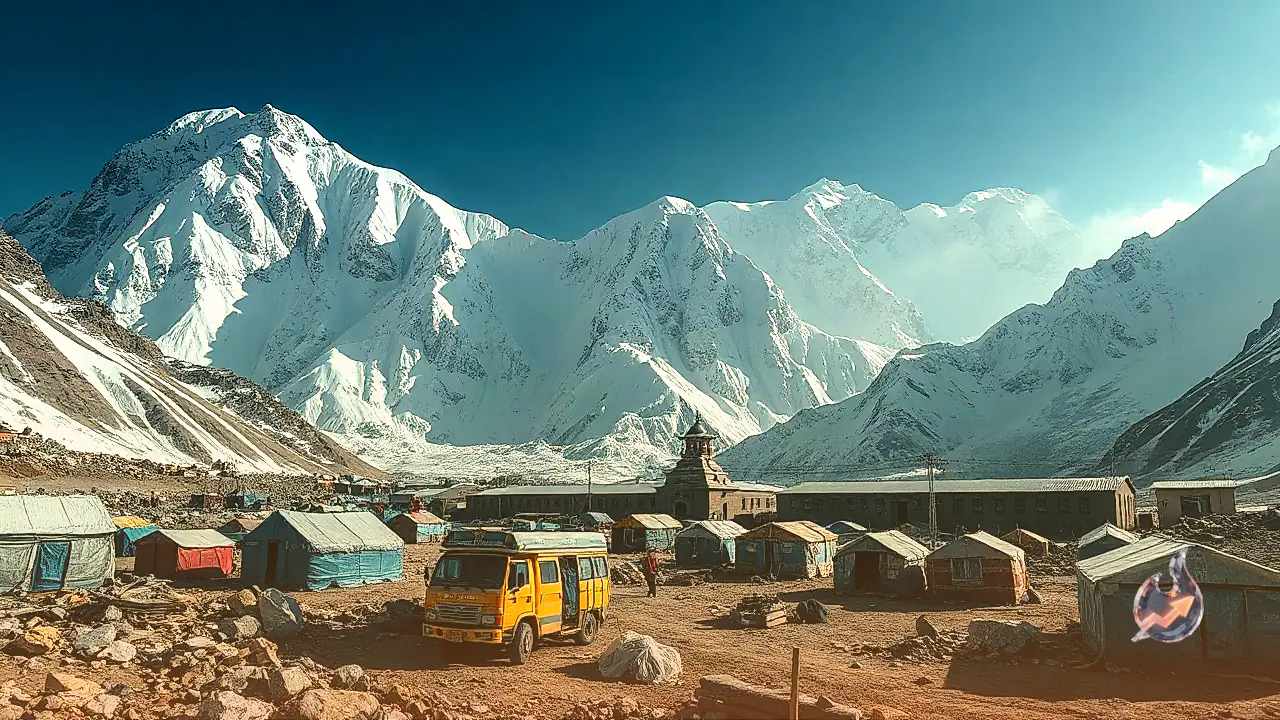
At Everest Base Camp, meanwhile, researchers have been quantifying a different kind of pressure on the mountain. Khim Lal Gautam, Virginia Burkett, George Xian, Mahesh Thapa, Anish Dahal and Sudeep Thakuri, writing in Regional Environmental Change on 27 July 2026, examined the effects of human activity on the Khumbu Glacier and concluded that Base Camp can generate more than 6,000 litres of urine a day during the peak climbing season. Their paper frames this as one part of a wider push toward a more sustainable Base Camp, since the site sits directly on the glacier's ice. Everest Base Camp is melting, and human urine is one contributor to that process, as concentrated waste sites can locally speed up the thawing of the ice beneath them.
Decades of shrinking ice
The Khumbu findings sit inside a much longer record of change. Owen King, Ann Rowan, Miriam Jackson and colleagues, in One Earth on 20 November 2020, used historical and contemporary images to reconstruct six decades of glacier mass changes around Everest, documenting a long-run pattern of loss well before the current wave of climbing traffic. Mariusz Potocki and colleagues, writing in npj Climate and Atmospheric Science on 3 February 2022, went further up the mountain and found that Everest's highest glacier is acting as a sentinel for accelerating ice loss, meaning change at extreme altitude is now outpacing what earlier records showed.
Water, chemicals and life at extreme altitude
The consequences reach beyond the mountain itself. Joseph M. Shea and colleagues, in Frontiers in Earth Science on 29 April 2020, warned that melting Himalayan glaciers threaten domestic water resources across the Everest region of Nepal, the supply that downstream communities depend on. Imogen Napper and colleagues, in Science of the Total Environment on 10 March 2021, found deposits of PFAS, so-called forever chemicals, on Everest itself, showing that pollution from far below is reaching the highest points on Earth. Even the mountain's frozen microbiome is under study: Dale T. Andersen and colleagues, in Arctic, Antarctic, and Alpine Research on 16 February 2023, carried out a genetic analysis of the frozen microbiome at 7,900 metres on the South Col of Sagarmatha, Everest's Nepali name.
Rules are catching up
Local authorities have already begun responding to the waste problem. The Khumbu Pasang Lhamu Rural Municipality introduced Everest waste-management regulations in 2024, aimed at controlling what climbers leave behind at Base Camp and higher camps. The Rasuwa flood and the Base Camp waste findings are unrelated events, but together they point to the same underlying question: how much pressure can the world's highest mountains absorb, from shrinking glaciers and unpredictable weather to the sheer number of people now climbing, travelling and building in terrain that was once far more remote, before the damage becomes impossible to ignore.