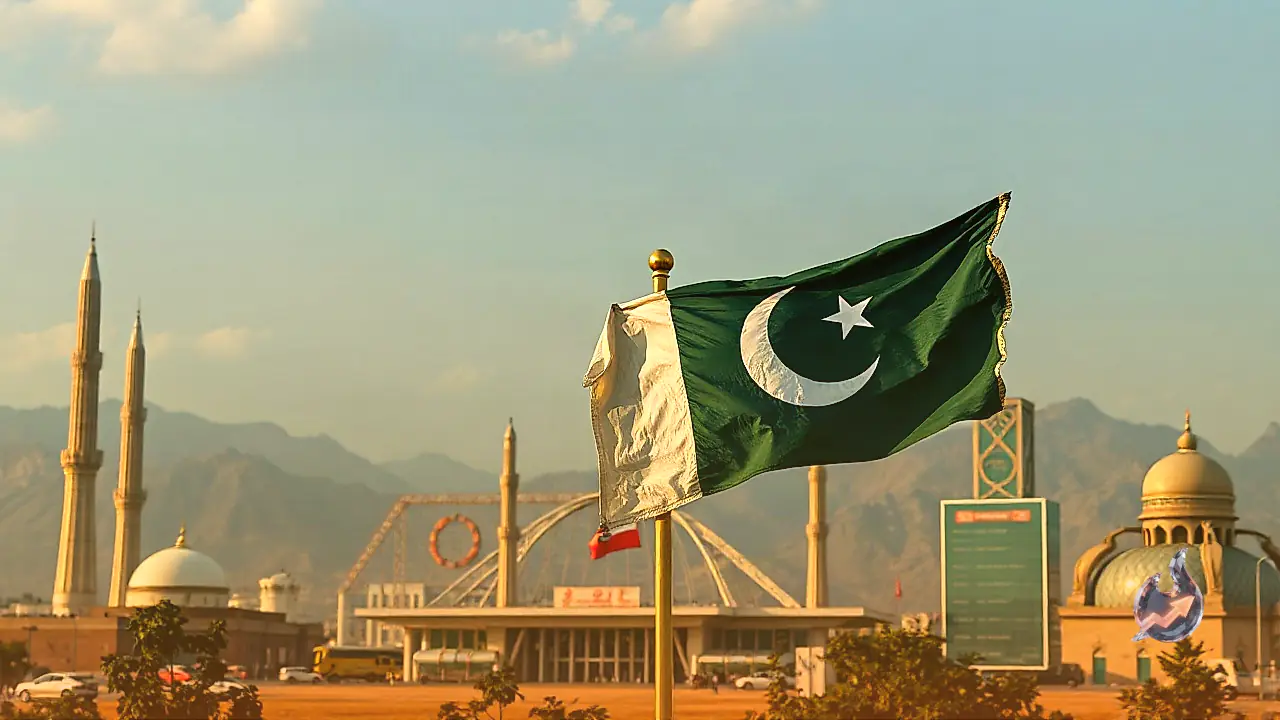


















Islamabad's long-running diplomatic bid to step into the premier club of emerging economies remains stalled outside the front door, exposing the harsh limits of financial diplomacy. Nearly three years after formally seeking admission into BRICS, Pakistani policymakers find themselves navigating a complex multilateral maze. While Moscow has publicly championed the bid and Beijing remains Islamabad's most steadfast strategic partner, neither patron has managed to deliver full membership. In an effort to demonstrate economic alignment, Pakistan even committed significant capital to the group's flagship multilateral lender. Yet, holding an equity slip in the bloc's development bank has proven to be entirely different from securing an actual chair at the geopolitical high table where strategic decisions are crafted by consensus.
Holding Equity in the Bank vs Securing a Diplomatic Seat
A critical distinction that often gets blurred in public commentary is the fundamental difference between BRICS as a political and economic bloc and the New Development Bank as a standalone lending institution. Set up by the original founding members comprising Brazil, Russia, India, China, and South Africa, the multilateral lender was designed specifically to channel funding into infrastructure projects and sustainable development initiatives across emerging territories. Importantly, its governance charter permits sovereign nations to acquire equity and secure borrowing access without ever being admitted into the core diplomatic group. Bangladesh provides a concrete precedent for this model, maintaining an active shareholding in the financial institution while remaining entirely outside the political summit room.
Pakistan pursued this track deliberately to diversify its funding avenues and shield its precarious finances from recurring Western scrutiny and the stringent conditions imposed by traditional lenders like the International Monetary Fund and the World Bank. The nation initially pledged 116 million dollars in paid-in capital to acquire a 1.09 percent interest in the financial entity. Building on that groundwork, authorities in Islamabad sanctioned the acquisition of 5,882 shares valued at roughly 582 million dollars in February 2025, firmly cementing its 1.09 percent holding. That transaction successfully established an operational umbilical cord with a major South-South financial mechanism. Nevertheless, financial participation in development banking does not translate into voting rights, policy alignment, or a diplomatic presence inside the political alliance itself.
Economic Fragility and the Search for Global South Clout
Islamabad's persistence in chasing full membership stems directly from the rapid transformation and expanding footprint of the bloc. Originally a tight five-nation pact, the group underwent a dramatic enlargement in 2024 with the induction of Egypt, Ethiopia, Iran, and the United Arab Emirates, followed by Indonesia gaining full entry in 2025. For developing nations, this expansion turned the alliance into an indispensable geopolitical stage. When the Pakistani Foreign Office submitted its formal paperwork in November 2023, officials pitched the country as a committed champion of inclusive multilateralism capable of reinforcing global cooperation across developing states.
Independent strategic assessments highlight that Pakistan's campaign is fueled by intertwined diplomatic and fiscal anxieties. With its economy buffeted by chronic shortages of foreign reserves, heavy external debt burdens, and frequent reliance on IMF rescue packages, gaining closer institutional proximity to wealthy emerging economies carries undeniable appeal. Established BRICS members such as China and the United Arab Emirates have repeatedly stepped in with vital financial lifelines in recent years. While political membership cannot magically resolve Islamabad's structural economic crises, it could open institutional channels to deeper capital pools, diplomatic solidarity, and expanded development financing across developing nations.
Security Friction and the Reality of Consensus Governance
Pakistan's primary hurdle lies in the foundational operating principles of the alliance. Membership applications are not submitted to Beijing or Moscow individually; they are addressed to the entire coalition, where India sits as an influential founding architect. Unresolved bilateral fractures surrounding cross-border terrorism, border disputes, and the status of Jammu and Kashmir continue to dominate regional dynamics. New Delhi has maintained an unyielding diplomatic position regarding terror infrastructure operating across the border.
These security frictions boiled over following the April 2025 terror strike in Pahalgam. Pointing directly to cross-border networks operating from Pakistani soil, Indian armed forces initiated Operation Sindoor to dismantle militant installations within Pakistan and Pakistan-occupied Kashmir. The diplomatic fallout from that confrontation was prominently mirrored during the 2026 BRICS summit in New Delhi. The resulting joint leaders' declaration explicitly denounced the 22 April 2025 Pahalgam assault and issued an unambiguous call for absolute zero tolerance against terrorism, demanding an end to terror financing, cross-border infiltration, and the provision of safe havens.
While Indian leadership has refrained from announcing an explicit formal veto against Pakistan, strategic analysts note that the requirement for unanimous consensus creates an effective barrier. Even as Russian voices like analyst Andrey Kortunov publicly argued in 2024 that Pakistani participation would enrich South-South trade and regional connectivity, Moscow's endorsements cannot bypass New Delhi's stance. Foreign policy specialist Muhammad Faisal pointed out that Pakistan faces an uphill battle, emphasizing that its trajectory remains heavily constrained by Indian resistance and the shifting climate of India-China ties.
Rival Visions: Counterweight Alliance or Development Platform
Underneath the bilateral tension sits a much deeper philosophical divide regarding the very purpose of the expanding bloc. Russia and China envision a broader, accelerated membership wave designed to create a heavyweight counterweight to Western-dominated geopolitical and financial architecture. For both powers, a broader roster enhances collective bargaining power against Western sanctions regimes and strengthens alternatives to traditional global governance frameworks.
India approaches the organization through a fundamentally different prism. Rather than transforming the group into a polarized, anti-Western coalition, New Delhi envisions it as a bridge for reforming global governance, boosting South-South collaboration, and ensuring that emerging economies receive equitable representation in international decision-making. Given India's extensive and strategic partnerships with European capitals and Washington, it resists moves that would turn the bloc into a partisan geopolitical weapon. Without collective agreement on long-term institutional goals, rapid expansion runs the risk of diluting the group's coherence, a concern that becomes especially acute given Islamabad's deep alignment with Beijing's geopolitical agenda.
The Partner Status Window and the Shifting Sino-Indian Dynamic
During the 2024 summit in Kazan, the group introduced an intermediate partner-country classification designed to allow candidate nations to cooperate on specific initiatives without attaining full member status. Islamabad was conspicuously missing from the approved partner roster finalized during those deliberations. However, diplomatic observers caution against viewing that omission as an outright, irreversible disqualification of its broader membership hopes.
Attention has consequently shifted toward the delicate balance between Beijing and New Delhi. Risk analyst Huma Yusuf observed that a prospective diplomatic thaw between India and China could recalibrate the strategic conversation surrounding Pakistan's prospects. This dynamic took center stage around the 2026 New Delhi summit, with Beijing slated to assume the revolving BRICS chair in the following cycle. As Indian Prime Minister Narendra Modi and Chinese President Xi Jinping explore diplomatic efforts to steady their own bilateral ties, Islamabad is watching intently to see whether improved regional dialogue might generate political space for its ambitions. Ultimately, Pakistan's entry is not simply a matter of Russian or Chinese patronage, but a fundamental test of how the bloc balances consensus, security principles, and differing visions for its future.