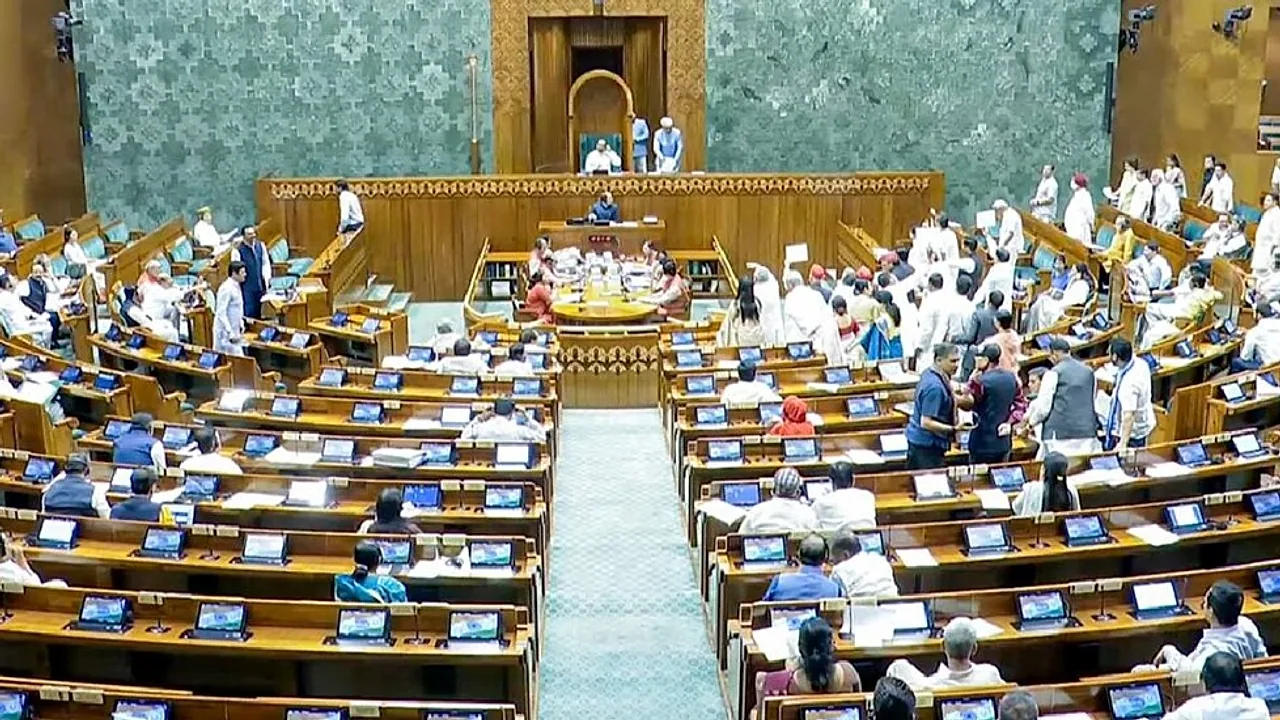

Parliamentary Affairs Minister Kiren Rijiju announced the government's plan to reconvene Parliament on 26 November. The Lok Sabha is scheduled to meet on 30 November, while the Rajya Sabha will convene on 2 December to process essential government business. Seven months prior, the administration fell short of securing the required majority for a constitutional amendment designed to raise the Lok Sabha ceiling to 850 members. In the interim, parliamentary arithmetic has shifted, and select opposition parties have signaled conditional backing for delimitation.
Why the government requires a special parliamentary sitting
The Lok Sabha sessions are slated for 30 November and 1 December, whereas the upper house will sit on 2 and 3 December. These proceedings represent a continuation of the Monsoon Session, which adjourned on 13 August without a formal conclusion, omitting Question Hour, Zero Hour, and private members' business. On 27 November, the Union Cabinet cleared two revised measures, namely the Constitution (132nd Amendment) Bill, 2026, and the Delimitation (Second) Bill, 2026.
According to reports, the administration aims for a uniform 50% expansion in parliamentary and assembly seats, with the updated framework frozen until 2051. It also intends to operationalize 33% reservation for women prior to the 2029 general election. Nonetheless, cracks have appeared within opposition ranks regarding these proposals.
Shifting stances among opposition parties
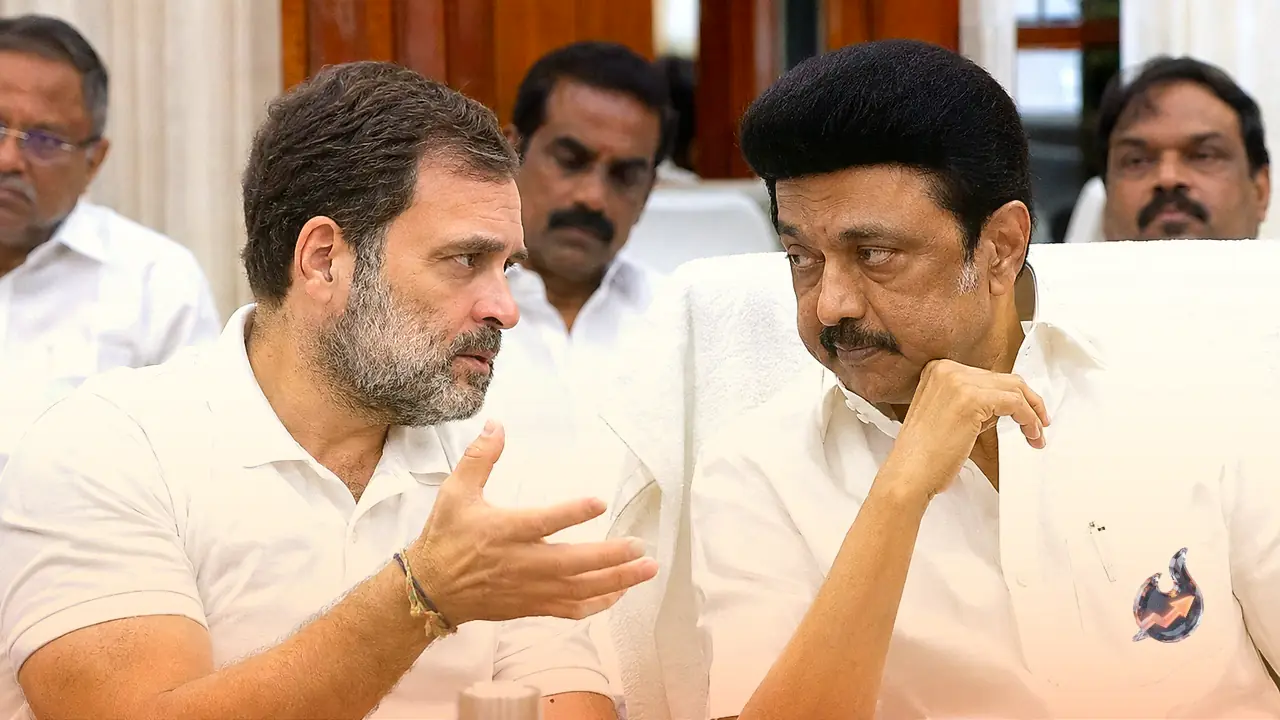
Following a meeting steered by MK Stalin on 28 November, the DMK resolved to back both bills, demanding protection for Tamil Nadu's existing 7.18% share of Lok Sabha seats. The NCP (SP) has also hinted at potential support, though working president Supriya Sule noted the faction would review the draft before a final stance is adopted. Meanwhile, Congress chief Mallikarjun Kharge convened a gathering of opposition leaders on 28 November to map out a unified strategy.
While Congress remains steadfast in its opposition to the proposed legislation, the positions taken by the DMK and the NCP (SP) have cast doubt on opposition solidarity. The debate ultimately hinges on the historical allocation of seats and the formula used for redistribution.
The history of delimitation and the 50-year seat freeze
Consider two constituencies where one houses 15 lakh residents and another accommodates 30 lakh, yet both elect a single Member of Parliament despite the population disparity. Delimitation entails redressing such imbalances by redrawing constituency boundaries and reapportioning parliamentary seats among states based on population metrics. However, India confronted a major dilemma during the 1970s, as states that curbed population growth effectively faced a penalty in parliamentary representation.
To counter this, the 42nd Constitutional Amendment Act of 1976 froze state-wise seat allocations based on the 1971 Census. The 84th Constitutional Amendment of 2001 extended this freeze until the publication of census data following 2026. Although internal boundaries shifted using 2001 figures, interstate allocations remained static while regional population growth rates diverged significantly.
Concerns raised by southern states
Bihar accounts for 40 Lok Sabha MPs, whereas Tamil Nadu sends 39. Based on the 2011 Census, Bihar registered 10.41 crore residents, compared to 7.21 crore in Tamil Nadu, resulting in roughly one MP for every 26 lakh people in Bihar versus 18.5 lakh in Tamil Nadu. While Bihar questions whether its larger populace warrants expanded representation, southern states fear that successful family planning efforts will diminish their political leverage.
Data from PRS Legislative Research indicates that a redistribution tied to the 2011 Census, while keeping overall Lok Sabha strength steady, could grant Uttar Pradesh nine additional seats, Bihar six, and Rajasthan five, while costing Tamil Nadu seven seats and Kerala five. However, expanding the house entirely alters the mathematical projections.
The April legislative package proposed lifting the Lok Sabha cap from 550 to 850 members. Under a uniform 50% increase across states, Bihar would secure 60 seats and Tamil Nadu about 59, preserving relative representation. Conversely, a population-based redistribution within an expanded house could give Bihar 69 seats and Tamil Nadu 48, increasing the latter's raw MP count while eroding its overall parliamentary share. Union Home Minister Amit Shah assured parliamentarians in April of a proportional increase, though the opposition demanded written guarantees.
Furthermore, linking women's reservation to delimitation complicated the legislative path. Parliament enacted the 106th Constitutional Amendment in 2023 for 33% reservations, but tied its implementation to post-census delimitation figures. With census collection slated for a 2027 reference date, completing the exercise before 2029 proved unfeasible through traditional means, triggering the April legislative defeat.
Legal experts note that the success of the upcoming parliamentary push depends heavily on how seats are distributed and whether the government can muster the requisite constitutional majority that eluded it earlier in the year.