

















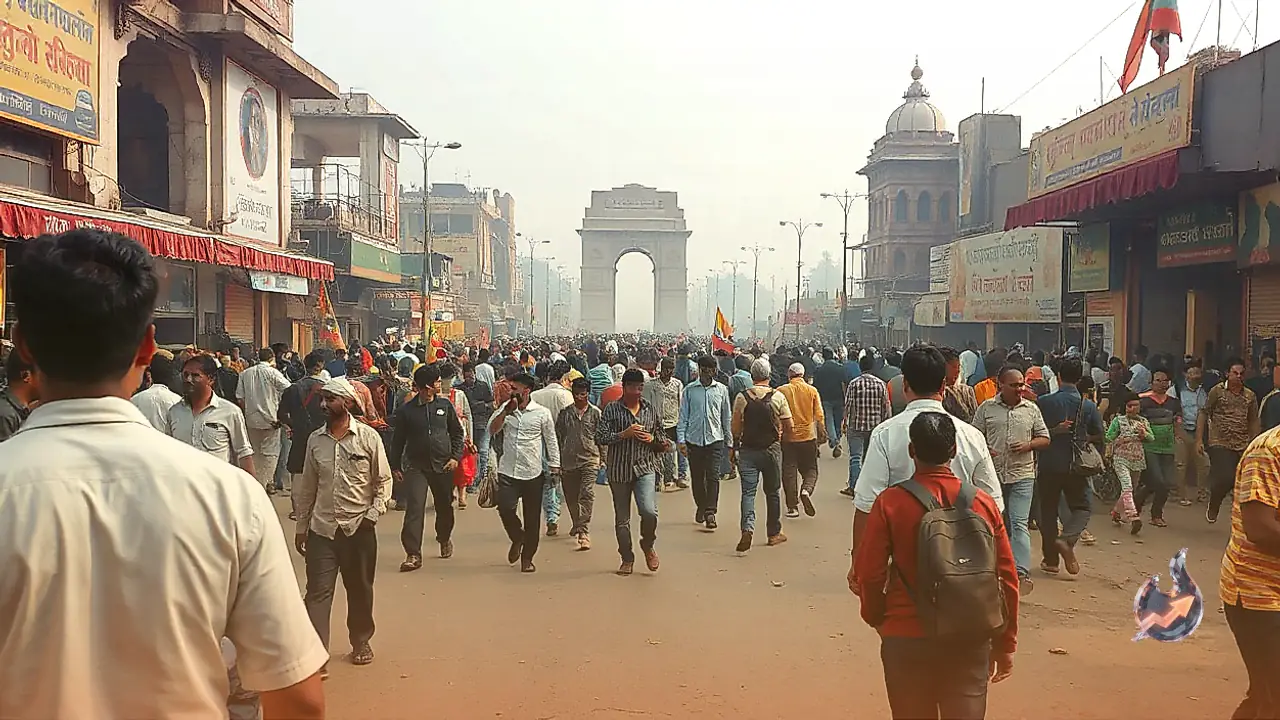

The festive calendar in India represents the single most vital commercial window for traditional retailers, wholesale distributors, and neighbourhood shopkeepers. Months of inventory planning, capital investment, and seasonal hiring all converge on the weeks leading up to Diwali. It was against this backdrop that the INDIA bloc held its large-scale political rally at Delhi's Ramlila Maidan on 1 November. In the run-up to the event, the Chamber of Trade and Industry (CTI) raised alarm bells, warning that commercial trade worth ₹10,000 to ₹12,000 crore stood at risk of disruption across the capital due to the rally and the resulting security restrictions. While this projection captured the scale of trade in jeopardy rather than verified monetary losses, the episode cast a bright spotlight on a recurring urban dilemma: how public demonstrations affect commerce and how their economic fallout can be measured.
The Balance Between Constitutional Assembly and Public Order
Under a democratic framework, public demonstrations serve as a legitimate tool to register dissent, push policy demands, or call attention to grievances. Citizens exercise this collective voice through various formats, ranging from marches and sit-ins to work stoppages and general bandhs. In India, these actions are firmly anchored in the Constitution. Article 19(1)(b) guarantees citizens the fundamental right to assemble peaceably and without arms, while Article 19(1)(a) secures freedom of speech and expression.
However, the exercise of these fundamental rights is not unqualified. Under Article 19(3), the state maintains the authority to impose reasonable restrictions on assemblies in the interests of public order, as well as the sovereignty and integrity of the nation. The Supreme Court has repeatedly observed that while the right to protest must be respected, it cannot entirely override the daily freedoms of residents, daily commuters, and businesses seeking unhindered mobility. On the administrative front, Section 163 of the Bharatiya Nagarik Suraksha Sanhita empowers local magistrates to issue preventive orders in urgent situations to avert danger, physical obstruction, or a breakdown of public tranquillity. Rather than acting as a blanket ban on demonstrations, this section provides a statutory mechanism for authorities to manage crowded urban environments.
How Traffic Restrictions and Diversions Strain Local Commerce
The severity of any urban protest depends on several operational variables, including its overall headcount, the geographic sensitivity of its location, and its duration. When thousands converge on a central transit junction, authorities are compelled to reroute traffic, set up barricades, and restrict vehicular movement. Commuters face extended transit times, public buses run off schedule, and access to key institutions such as hospitals, schools, and corporate parks becomes complicated. When transport arteries seize up, the ripple effects travel fast.
For retail and wholesale markets, physical barriers pose an immediate hurdle. Prospective shoppers frequently alter travel plans or cancel visits altogether rather than navigating congestion and checkpoints. The disruption extends behind the counter as well: delivery trucks carrying fresh stock face roadblocks, and retail staff struggle to report on time. In response, business owners may opt to shorten their working shifts or pull down shutters out of security caution. Even where establishments remain open, persistent uncertainty keeps consumer footfall depressed. Moreover, movement bottlenecks and occasional regional internet controls can slow down last-mile couriers and app-based food deliveries, curtailing alternative revenue streams.
Ground Realities Across Central Delhi's Small Businesses and Drivers
Observations from central Delhi during times of political assembly reveal that commercial disruption does not fall evenly across all sectors. Street vendors selling perishable goods often absorb immediate losses; for instance, a roadside sweets seller found himself holding inventory that would routinely clear out within hours on an ordinary business day. Similarly, specialty store owners experienced direct hits to their weekend revenue, with gift shop proprietor Gauravjeet Kochar noting that his store had to stay closed over the weekend.
The transport sector witnessed comparable friction. Commercial cab operator Sudheesh Kumar Yadav explained that barricaded streets and detours drastically increased passenger wait times, cutting down the total number of rides he could complete in a shift. Yet, the overall economic impact across the district remained mixed. While specific eateries, gift shops, and cab operators faced closures and sharply reduced receipts, other retail establishments reported negligible deviations from their regular daily turnover.
Quantifying Disruption: Trade at Risk Versus Actual Losses
A critical analytical distinction must be made between business exposed to risk and confirmed economic loss. When trade associations announce potential damages in the thousands of crores, those numbers typically represent the gross value of all commercial transactions usually recorded across entire market belts during that calendar window. Confirming an actual loss requires a more rigorous post-event audit of footfall levels, recorded sales invoices, inventory write-offs, and supply-chain delays.
During festivals like Durga Puja and Diwali, this dynamic is amplified because consumer spending is heavily compressed into a narrow timeframe. If buyers stay away during those specific days, the missed sales cannot always be recouped later. Seasonal goods like decorative lights, traditional apparel, and gift boxes face rapid post-festival depreciation. Historical records of past bandhs and mass protests show that while headline claims of financial losses run high, verified losses depend heavily on whether consumer purchases were permanently cancelled or merely postponed to subsequent days.
Appeals to Political Leaders and the Administrative Outcome
Prior to the Ramlila Maidan gathering, the CTI formally petitioned the leadership of the INDIA bloc to shield the festive market run. The trade body proposed two direct compromises: either postpone the demonstration until Diwali concluded or shift the gathering to the more spacious Burari Maidan on the city outskirts. CTI chairman Brijesh Goyal highlighted this cooperative stance, remarking, “We are not opposing the rally. We are folding our hands and requesting that our livelihoods be protected during the peak Diwali season.” The organisation also sought direct talks with Rahul Gandhi, maintaining that they sought constructive engagement rather than conflict, and offered to drop their objections if leaders could show how the event might benefit local shops.
The traders expanded their outreach by sending formal appeals to Sonia Gandhi alongside alliance figures Akhilesh Yadav, Mamata Banerjee, Tejashwi Yadav, and Uddhav Thackeray. Addressing the matter, Rahul Gandhi publicly encouraged attendees to visit local retail centres, stating, “I know that our rally will not hurt the traders,” and asking supporters to combine their political participation with seasonal shopping. Delhi Police ultimately permitted the gathering to proceed at Ramlila Maidan, enforcing clear logistical stipulations: event planners had to manage pedestrian movement, designate regulated parking zones, maintain CCTV coverage, and bring all proceedings to a close by 5 pm. Coupled with traffic police advisories detailing diversions, the event concluded without being postponed or relocated.