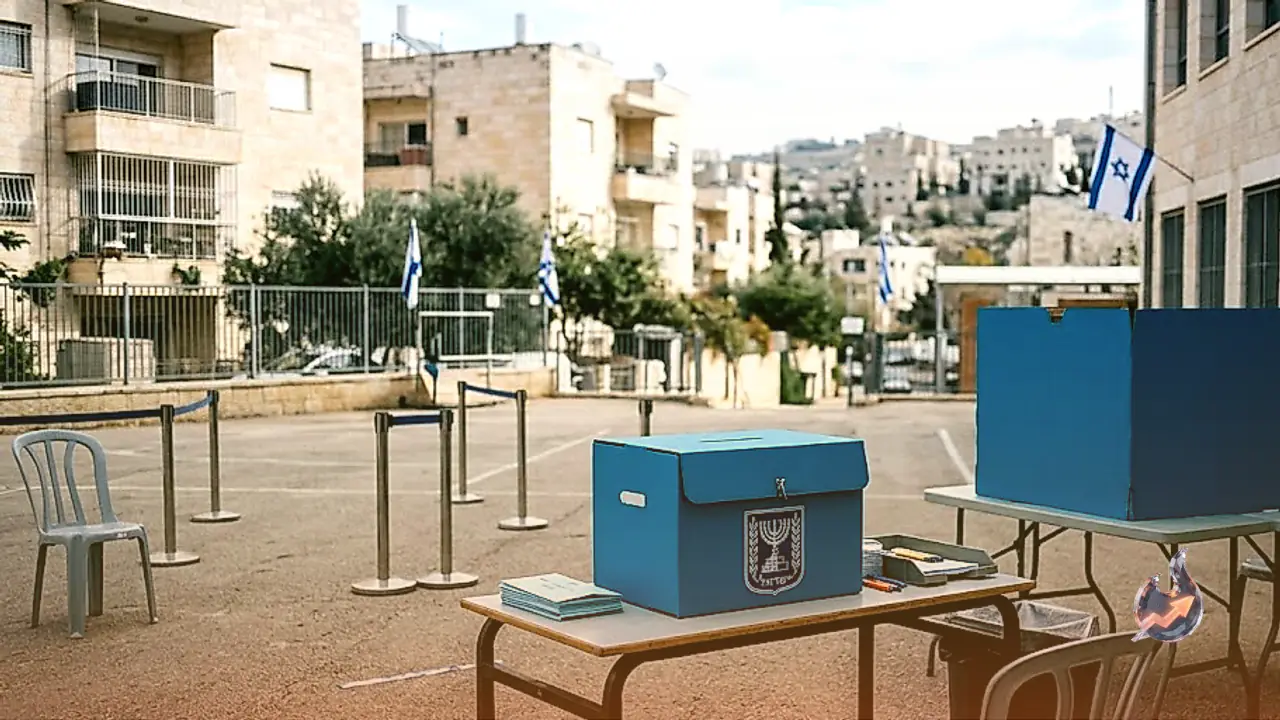




















Israel has been plunged into another phase of intense political bargaining after parliamentary election results left both primary political blocs short of an outright governing majority. Prime Minister Benjamin Netanyahu's ruling right-wing coalition has fallen seven seats short of the threshold needed to command parliament, while the opposition alliance led by Eisenkot sits 14 seats away from the magic number. With 19 seats in the 120-seat legislature, Israel's Arab factions have emerged in the pivotal role of kingmakers, capable of tipping the scales toward either side. While official election results are scheduled for formal announcement on 4 November, backchannel negotiations to establish a functioning administration have already begun in earnest.
Parliamentary Arithmetic and the Constitutional Path to Power
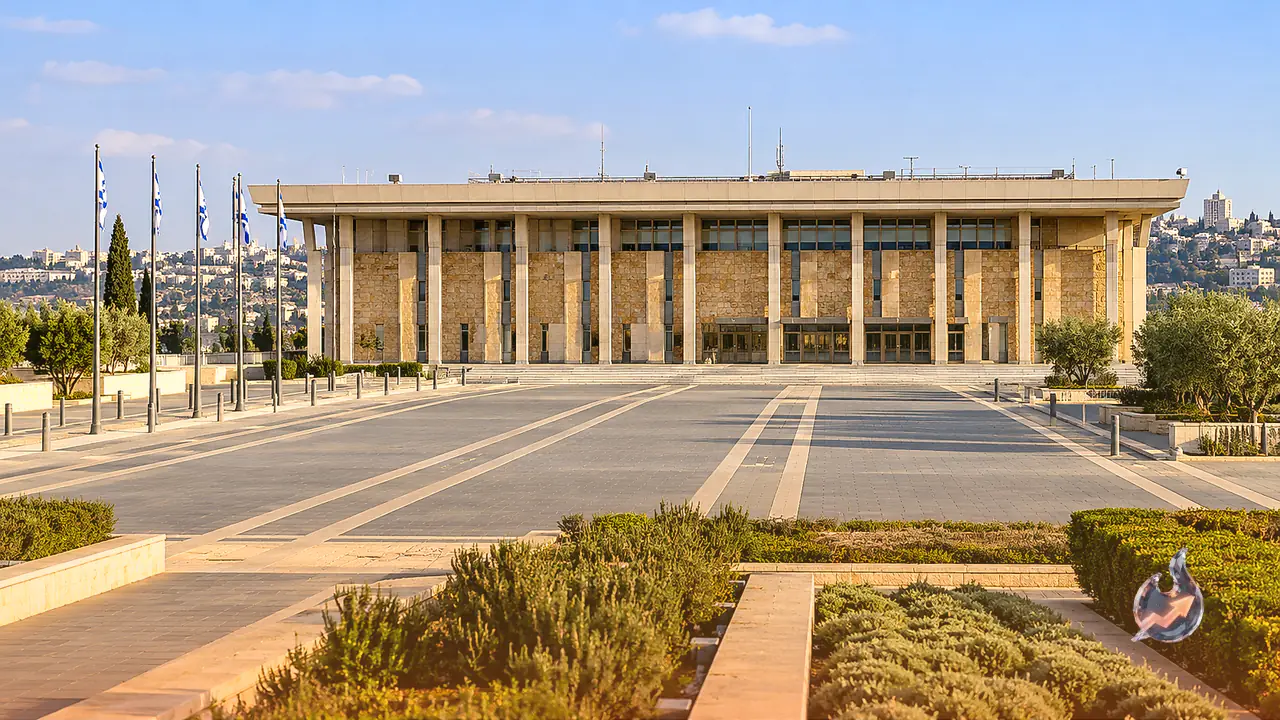
Israel's parliament, the Knesset, comprises 120 seats, meaning any aspiring prime minister must assemble a viable coalition of at least 61 lawmakers to form a government. Throughout Israel's 78-year history, no individual party has ever managed to secure a single-party majority on its own. Coalition governance is an institutional reality, and this latest ballot reaffirms that structural pattern. Under Israeli law, the process of navigating this fractured mandate involves four distinct procedural and constitutional milestones.
The initial responsibility rests with President Isaac Herzog. The president conducts formal consultations with the leaders and delegations of every political faction that cleared the electoral threshold. Following these discussions, President Herzog will entrust the mandate to the lawmaker deemed to possess the highest probability of cobbling together a 61-seat majority. Conventional precedent usually favors the head of the largest single party, but the president is not legally bound by that convention. A clear historical precedent occurred in 2009, when then-President Shimon Peres bypassed Kadima, which had won a plurality of votes, and tasked Benjamin Netanyahu of Likud with government formation because he enjoyed broader right-wing alignment.
Once a candidate is designated, the timeline for assembling a cabinet begins. The appointed leader is granted an initial window of 28 days to conclude coalition agreements. If formal negotiations require additional time, the president retains the discretion to grant a single extension of up to 14 days, providing a strict ceiling of 42 days in total. During this operational timeframe, the designated prime minister must present the proposed cabinet roster and foundational policy guidelines to the Knesset floor, where the coalition must successfully survive an investiture vote backed by at least 61 members.
Should the first designee fail to muster the necessary numbers within the allocated 42 days, the mandate reverts to the president, who will select an alternative leader to attempt the same task. If the secondary nominee also reaches an impasse, parliamentary mechanics still allow for the establishment of an unconventional minority arrangement. This dynamic played out in 2021, when Naftali Bennett, who led a party with merely seven lawmakers, managed to assume the premiership through an expansive multi-faction alliance supported by the broader opposition.
The fourth and ultimate recourse is the dissolution of the legislature and a return to the ballot box. Coalition bargaining routinely spans several weeks, but if all designated leaders exhaust their options without producing a viable governing majority, the Knesset is deemed dissolved by statute. Under such circumstances, fresh national elections must be organized within 90 days. This exact failure of coalition arithmetic forced the country through five grueling national elections between 2019 and 2022. Until a newly minted cabinet takes the oath of office, Benjamin Netanyahu will continue to serve as interim prime minister. However, this electoral cycle offers a distinct alternative, as the parliamentary math suggests a stable government could be assembled with the active backing of Arab factions.
The Four Arab Parties and Their Electoral Trajectory
Israel is home to approximately 2.1 million Arab citizens, whose domestic political representation is divided across four prominent entities: Hadash, Ta'al, Balad, and Ra'am. The historical trajectory of these parties in national ballots reveals evolving strategies of consolidation and fragmentation over the past decade.
A watershed moment arrived during the 2015 national elections, when all four Arab factions put aside internal differences to run under a unified alliance known as the Joint List. That joint ticket resonated strongly with Arab voters, capturing 4.46 lakh votes and securing 13 seats in the Knesset, which established the alliance as the third-largest parliamentary faction in the country.
Internal friction resurfaced ahead of the April 2019 elections, fracturing the joint slate into two competing tickets. Hadash and Ta'al joined hands to secure six seats, while Ra'am and Balad ran in tandem to win four seats. Recognizing that division suppressed their aggregate weight, the four organizations reassembled the Joint List for the September 2019 snap ballot, polling 5.81 lakh votes to regain 13 seats. Maintaining that momentum in the March 2020 election, the united Arab ticket achieved its strongest historical showing, securing 15 parliamentary seats.
The strategic consensus dissolved again in 2021. Hadash, Ta'al, and Balad contested jointly, taking six seats, while Ra'am, headed by Mansour Abbas, broke away to contest independently on a pragmatic domestic-policy platform and won four seats. In the subsequent 2022 elections, Hadash and Ta'al preserved an electoral partnership that yielded five seats, and Ra'am retained five seats on its own. In contrast, Balad ran without partners and failed to clear the statutory 3.25 percent electoral threshold needed to enter the Knesset. Now, with a combined tally of 19 seats across the Arab political spectrum, these lawmakers hold the numerical leverage required to determine the executive branch.
Three Plausible Pathways to Coalition Building
As the primary parties assess their options, three distinct coalition scenarios have emerged regarding how the Arab factions might deploy their 19-seat bloc. The primary scenario involves Mansour Abbas and Ra'am offering direct support to Eisenkot in exchange for binding policy commitments on longstanding Arab civic concerns. Abbas has stated his intention to cooperate with the anti-Netanyahu coalition to reach the decisive 61-seat mark. Furthermore, the Joint List positioned the removal of Netanyahu at the core of its campaign manifesto. Reinforcing this pathway, Yair Golan, leader of the Democratic Party allied with Eisenkot, has publicly urged the opposition leadership to formally partner with Arab lawmakers.
A second configuration envisions the Joint List providing crucial parliamentary confidence from the outside rather than entering a formal governing coalition. Yusuf Jabarin, who heads the Joint List, has confirmed that his bloc stands prepared to facilitate a change in national leadership, noting that any camp genuinely seeking to replace Netanyahu must engage in direct dialogue. Lawmaker Ahmad Tibi has similarly indicated a willingness to extend outside support to a prospective Eisenkot administration. Under such an arrangement, the Joint List would vote to confirm the government and defeat motions of no confidence without demanding ministerial portfolios.
Nonetheless, Tibi has stressed that outside support remains conditional on substantive policy concessions for Israeli Arab Muslims. Key among his demands is the immediate formation of an independent state commission of inquiry to examine both Hamas's attack on Israel on 7 October 2023 and the subsequent military campaign in Gaza. The collective agenda of the opposition parties already incorporates a pledge to institute such an investigative body, and Tibi has coupled this international-facing demand with concrete requirements addressing domestic infrastructure and public safety in Arab towns.
A third potential scenario, though complex, involves Netanyahu engineering an alliance with factions such as Ra'am. If Eisenkot encounters friction within his broader camp and cannot cross the threshold even with partial Arab backing, Mansour Abbas's parliamentary faction could become the final decider. Should Abbas pivot toward Netanyahu's faction, the entire balance of power would shift immediately.
This pragmatic cross-ideological dynamic is not without historical foundation. The 2021 government formation illustrated that seemingly incompatible political actors could converge to resolve an impasse. Naftali Bennett's Yamina held merely seven Knesset seats following the fourth inconclusive election in two years, yet Bennett secured the prime ministership when Yair Lapid's Yesh Atid and several divergent opposition parties agreed to back him. Ra'am subsequently joined that governing coalition, providing four indispensable votes that ended Netanyahu's uninterrupted run in office. Although Netanyahu maintained a firm public stance against negotiating with Arab parties throughout the recent campaign, Ra'am has consistently maintained a more conciliatory tone toward Likud than its peers in the Joint List. Netanyahu held informal talks with Mansour Abbas in 2021 when attempting to assemble his own majority, leaving open the outside possibility of transactional cooperation between them.
Much will depend on the procedural sequence initiated by President Isaac Herzog. Under his constitutional remit, the president can award the first mandate to an alliance that did not achieve the single largest popular vote tally, provided it demonstrates a credible pathway to 61 votes. In their formal audience with the president, Arab representatives possess the authority to recommend a preferred candidate for prime minister even if they subsequently choose not to enter the cabinet.
The Socio-Political Realities of Arab Citizens in Israel
Arab citizens constitute approximately 21 percent of Israel's overall population of around one crore, numbering roughly 21 lakh people. Within this demographic, approximately 18.5 lakh identify as Arab Muslims, while nearly 2.5 lakh comprise Christians, Shiites, and the Druze community. The roots of this population trace back to the establishment of the state in 1948, an event during which an estimated 7 lakh Palestinians were displaced, while around 1.5 lakh Arabs remained within the newly drawn borders. The descendants of those who remained form today's community of Arab citizens of Israel.
Spatially, the majority of Israeli Arabs reside in three designated geographic pockets: the Galilee region across the north, the Triangle corridor in central Israel, and the southern Negev desert. Other Arab populations inhabit mixed urban municipalities including Haifa, Lod, Acre, and Ramle. In East Jerusalem, Palestinian residents generally do not hold Israeli citizenship. In the West Bank, Jewish settlers exercise full national voting rights, whereas local Palestinian Arabs are excluded from Israeli elections. While Arab citizens within Israel hold legal voting rights and formal statutory equality with Jewish citizens, their day-to-day conditions reflect systemic neglect.
Policy evaluations by the Israel Democracy Institute indicate that municipal budget allocations, housing availability, educational resources, and physical infrastructure across Arab-majority towns remain severely substandard. Findings compiled by ACRI, Israel's foremost civil rights organization, emphasize that government funding allocated under comprehensive five-year development initiatives for Arab municipalities has faced recurring fiscal cuts. Obtaining formal residential construction permits in Arab localities remains exceedingly difficult, frequently stalled by mandatory police review procedures. Consequently, violent crime and gang activity have surged far beyond the levels documented in Jewish towns, with Bedouin Muslim communities in the unrecognized villages of the Negev experiencing the most acute deprivations.
Mohammad Darawshe, who serves as the Strategic Director of the Center for Shared Society at Givat Haviva, a non-profit dedicated to Arab-Jewish dialogue, highlighted the stark domestic safety disparity: "More than 80% of the victims in the murders that have taken place in Israel in recent years are Arab Muslims. The risk of an Arab being killed is eight times higher than the risk of a Jewish person being killed." Furthermore, Arab citizens are exempt from mandatory conscription, which keeps their participation in the Israel Defence Forces at a minimal level. In contrast, young Jewish citizens face mandatory national service, which unlocks substantial long-term financial, housing, and educational benefits upon discharge. The limited number of Arab soldiers serving in specialized military formations, such as Gadsar Nahal and the All-Arab Unit, are predominantly deployed across the West Bank and in Negev desert outposts.
Historic Voter Turnout and Future Political Clout
Electoral participation among Arab citizens has historically lagged behind that of Jewish voters. In the 2022 national election, nationwide turnout stood at 70 percent, whereas participation across Arab localities slumped to approximately 53 percent. In this latest cycle, however, political mobilization pushed turnout in Arab districts upward to as high as 80 percent, representing an unprecedented surge of civic engagement.
Addressing this transformation, Mansour Abbas framed the elevated turnout as a deliberate shift among Arab citizens to convert accumulated despair into tangible civic leverage. Mohammad Darawshe pointed out that the overarching objective of Arab voters is to translate their demographic weight into genuine political enfranchisement and state responsiveness, underscoring that Arab citizens view themselves not as temporary guests in Israel, but as rooted residents demanding full democratic equality. Darawshe cautioned that while an Eisenkot-led administration reliant on Arab parties would not resolve deep structural inequities overnight, it would mark an essential turning point for civil liberties, community safety, and parliamentary representation.