





















More than 18,000 Agniveers from the initial intake are scheduled to conclude their military service by December 31, with discharge procedures anticipated to commence in mid-November. As these trained individuals complete their four-year engagement and return to civilian society, the operational mechanics and long-term consequences of the Agnipath framework have once again become the subject of extensive analysis. The transition highlights crucial questions regarding post-service career pathways, social safety nets, and the broader institutional adjustments required for short-service personnel.
The Structure of Agnipath and Post-Service Provisions
The Agnipath initiative was officially rolled out in 2022 to govern recruitment across the Army, Navy, and Air Force, replacing conventional long-term enlistment models with a four-year service contract. Prior to its formal launch, the military establishment had evaluated an alternative concept known as the "Tour of Duty." Under the Agnipath framework, recruits undergo specialised training and operational deployments over a four-year timeline, carrying the official designation of Agniveers.
Upon the completion of the four-year tenure, up to 25 percent of each graduating cohort may be absorbed into the regular ranks of the armed forces, contingent on rigorous merit evaluations, individual performance records, and force requirements. The remaining personnel are transitioned back into civilian life. To aid their financial adjustment, departing personnel receive a lump-sum Seva Nidhi disbursement created through mutual contributions during their service period.
To support civilian re-employment, the Ministry of Home Affairs announced a 50 percent quota for former Agniveers across specified Constable (General Duty) vacancies in the Central Armed Police Forces, alongside Rifleman positions in the Assam Rifles. These employment measures feature age concessions and exemptions from designated recruitment evaluations. However, these institutional provisions serve primarily to establish eligibility and application opportunities rather than extending an unconditional employment guarantee.
Operational Readiness and Multi-Terrain Experience
The compressed duration of the enlistment cycle has prompted varied assessments from defence professionals concerning military readiness. Indian Army veteran Lt. Col. JS Sodhi (Retd) contended that a four-year service window may prove insufficient for soldiers to accumulate thorough field experience across distinct environmental theatres. He noted that developing full competence in operating sophisticated machinery and adapting seamlessly to conditions in high-altitude mountain sectors, arid desert frontiers, and expansive plains typically demands eight to ten years of active duty.
Taking into account the strategic demands of a potential two-front conflict involving China and Pakistan, Lt. Col. JS Sodhi advocated for retaining at least 75 percent of Agniveers within the regular force structure to preserve operational stability, institutional memory, and battlefield stamina.
Civilian Integration and Identified Security Concerns
The return of thousands of disciplined, weapons-trained personnel to civilian life without guaranteed permanent posts led security observers to outline precautionary assessments beginning in 2022. These observations represented prospective threat analyses rather than documentations of unlawful actions by discharged personnel. Retired Brigadier Rahul Bhonsle cautioned that hostile entities could attempt to target and leverage trained individuals who find themselves without adequate direction or employment.
Colonel Jassi Sodhi similarly underscored the socioeconomic vulnerabilities tied to post-discharge adjustment. He pointed out that a one-off Seva Nidhi payment cannot replicate the enduring financial security provided by a traditional lifelong pension, arguing that ex-Agniveers facing employment instability could experience severe personal distress. Hostile organisations, he suggested, might attempt to exploit those economic pressures. This appraisal serves as a conceptual risk assessment rather than evidence of former service members being co-opted by adversaries.
Furthermore, in September 2026, remarks from an unnamed retired officer referenced the theoretical risk of former personnel gravitating toward organised crime. That commentary functioned as a structural warning regarding potential systemic pitfalls, not as an assertion that former Agniveers had entered criminal syndicates.
Insights from International Veteran Research
Sociological and criminological investigations conducted across different international jurisdictions reveal varied post-discharge trajectories, demonstrating that post-service outcomes depend heavily on domestic support structures and personal history. A study conducted in the United Kingdom revealed an increase in offending rates among the observed cohort of former military personnel following their release from duty. That research noted that mental health complications and substance abuse were correlated with elevated risks, whereas stable residential situations and cohesive family or community networks mitigated them.
In the United States, research into veteran demographics observed that deployment into active combat environments was linked to higher incidences of criminal behaviour, including ties to illicit groups. That project specifically evaluated the psychological aftermath of direct combat exposure rather than the singular impact of civilian unemployment. Conversely, a comprehensive Swedish study examining veterans deployed to Afghanistan found no increased rate of violent crime convictions compared to matched non-deployed military personnel with no prior criminal records.
Rehabilitation Architecture and Accountability Metrics
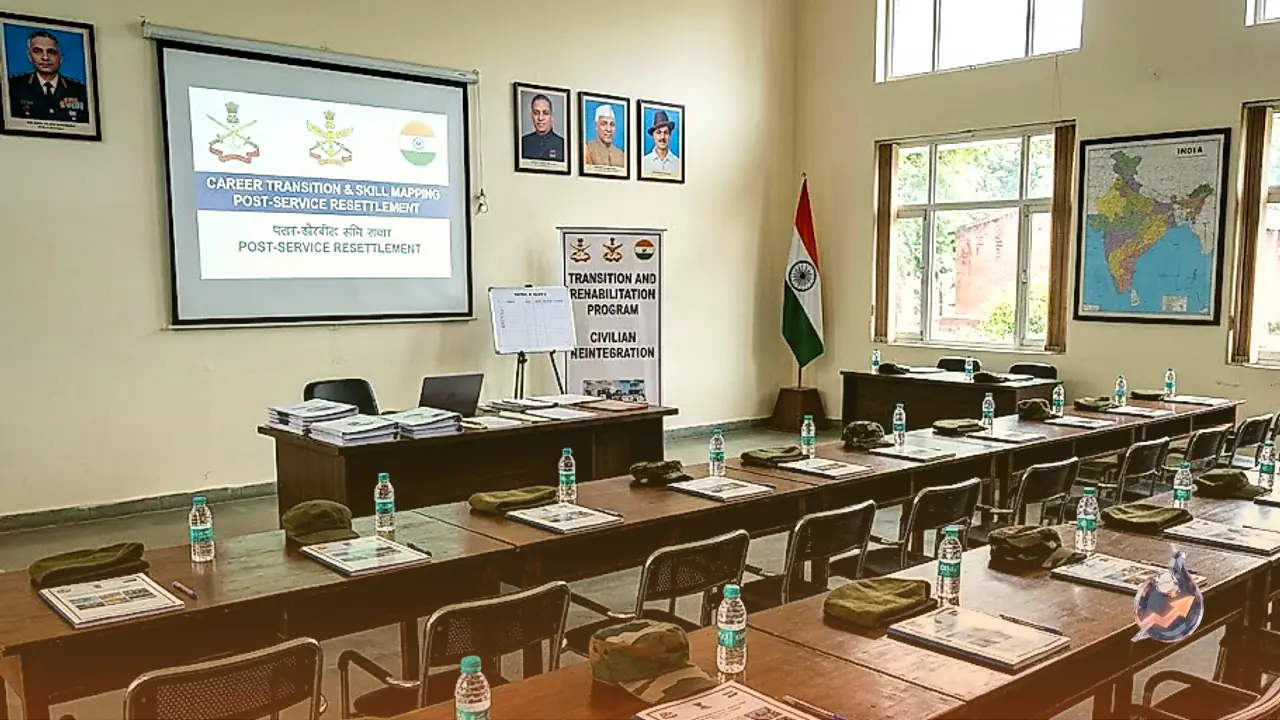
In response to the practical demands of civilian reintegration, the Ministry of Home Affairs established a specialised ex-Agniveer wing and coordinating cell tasked with overseeing assistance mechanisms, tracking post-release progress, and drafting comprehensive rehabilitation strategies. These administrative structures are complemented by trade skill certifications and targeted reservations across designated services.
Official metrics detailing post-service employment results for the first cohort remain unpublished. Comprehensive evaluation of the programme will depend on releasing granular data tracking the number of ex-Agniveers actively seeking jobs, verified placement figures, the average timeframe required to secure steady employment, and long-term job retention rates.
Previous studies exploring the broader Indian ex-servicemen community highlight systemic hurdles such as occupational skill mismatches, limited professional mentorship, persistent financial worries, and difficulties adapting to non-military workplace cultures. A 2025 examination of Indian veterans pointed to these precise factors as persistent barriers to second careers. Additionally, past analyses demonstrated that reserved vacancy quotas frequently suffered from incomplete implementation, compounded by private employers failing to appreciate military qualifications.
Efforts to bridge these gaps are developing regionally, such as a proposed Agniveer Cell in Uttarakhand focused on cataloguing qualifications, facilitating supplemental training modules, and linking discharged individuals directly to prospective employers. Independent research across veteran demographics confirms that social identity, institutional backing, and workplace acclimatisation represent decisive factors in post-service stability. Transparent data on career retention will remain essential to verifying whether existing assistance frameworks effectively meet the needs of departing personnel.