






















A small cohort of exceptionally wealthy Silicon Valley figures is pursuing an extreme vision of the future that seeks to sever human beings from the natural world and democratic society. These corporate leaders are investing heavily in schemes to cryonically preserve their brains upon death and eventually upload human consciousness into computational networks. Rather than emerging from rigorous philosophical enquiry or humanitarian goals, these ambitions directly mirror concepts popularized nearly a century ago in pulp science fiction stories written for boys. Central to this worldview is the dream of extraterrestrial migration, digital immortality, and the construction of private planetary colonies.
The Systematic Dismantling of Democratic Oversight
The ideological justification behind this corporate expansion relies on weakening democratic nation-states and public institutions. Proponents argue that legal and regulatory restraints on corporations must be eliminated so that planetary resources can be concentrated on accelerating the development of advanced artificial intelligence. The stated rationale claims that hyper-advanced computing is necessary to escape what they describe as the physical limitations of Earth, while simultaneously creating environmental and technological conditions that make such an escape urgent.
Although technology executives previously made public commitments regarding the need for public participation and democratic guardrails in steering transformative technologies, no meaningful international governance structures or constitutional frameworks were ever established. Instead, industry leaders utilized science fiction narratives about existential threats from machine intelligence to argue that the only safe response is accelerating their own corporate development pipelines, regardless of the environmental damage inflicted on the biosphere. In 2025, OpenAI executive Sam Altman publicly speculated that data centers would soon cover vast expanses of the planet, casually proposing that they might eventually be placed into orbit.
Interpreting Cautionary Tales as Operational Manuals
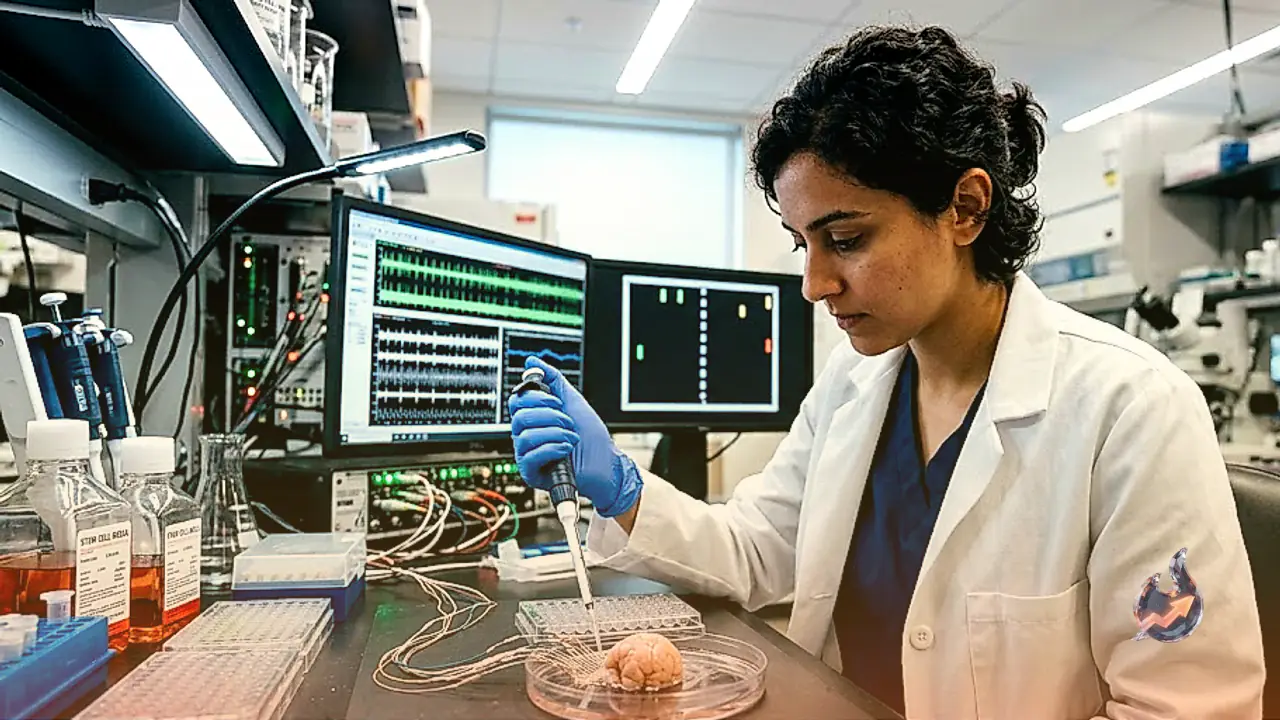
Sam Altman has frequently expressed admiration for speculative literature, specifically referencing Dennis E. Taylor's novel 'We Are Legion (We Are Bob)'. In that story, global conflict eradicates humanity, and the digital consciousness of a deceased person is uploaded to an autonomous probe tasked with serving a governing regime. Rather than viewing this premise as a dystopian portrait of human obsolescence, technology figures have treated it as an attractive technical blueprint. Altman, along with investors such as Peter Thiel and computer scientist Marvin Minsky, arranged for post-mortem cryopreservation in hopes of future technological revival.
This pattern reveals a profound misinterpretation of cautionary literature. When computer scientist Stuart Russell compared the alignment problem of artificial intelligence to the ancient legend of King Midas, he focused strictly on the difficulty of precise command execution. Author Ted Chiang noted that this interpretation missed the fundamental moral of the Midas myth, which warns that unchecked greed and the obsessive pursuit of wealth inevitably destroy everything of genuine human value.
Satire Lost on the Architects of Industry
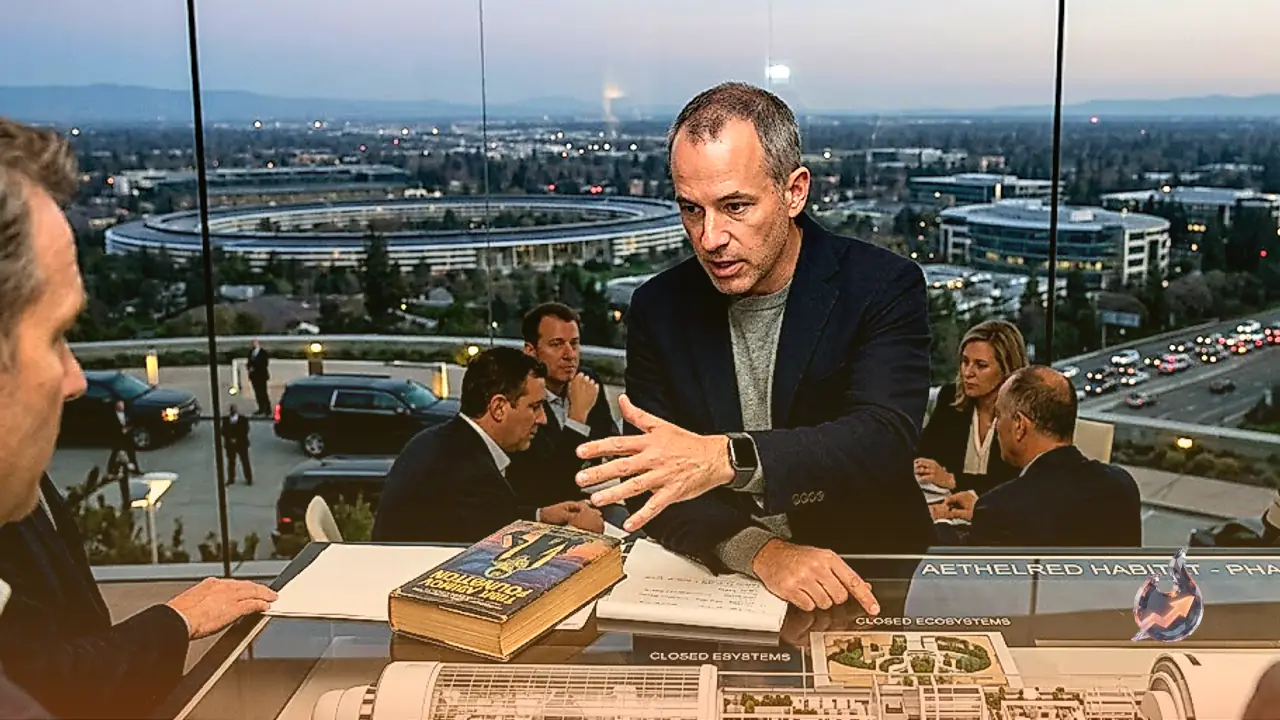
Elon Musk has often cited Isaac Asimov's 'Foundation' novels, which he read at age ten, as the inspiration for his belief that decisive individual action is necessary to minimize the duration of future civilizational dark ages. However, Asimov's narrative fundamentally demonstrates that historical trajectories are shaped by broad socio-economic forces rather than visionary individuals, while warning that predictive behavioral algorithms can easily evolve into tools of oppressive control. A similar misreading occurred with Douglas Adams' seminal 1970s work, 'The Hitchhiker's Guide to the Galaxy'.
Originally produced for BBC Radio 4 before becoming an international publishing sensation, Adams' work was a direct satirical parody of classic space operas and imperialist ambitions. Musk recalled encountering the book during an adolescent existential crisis following his readings of Schopenhauer and Nietzsche. He focused on a specific narrative thread where an advanced supercomputer calculates the answer to existence as forty-two, prompting the creation of an even larger machine to determine the original question. Musk concluded from this passage that framing the correct question is the primary challenge in problem-solving.
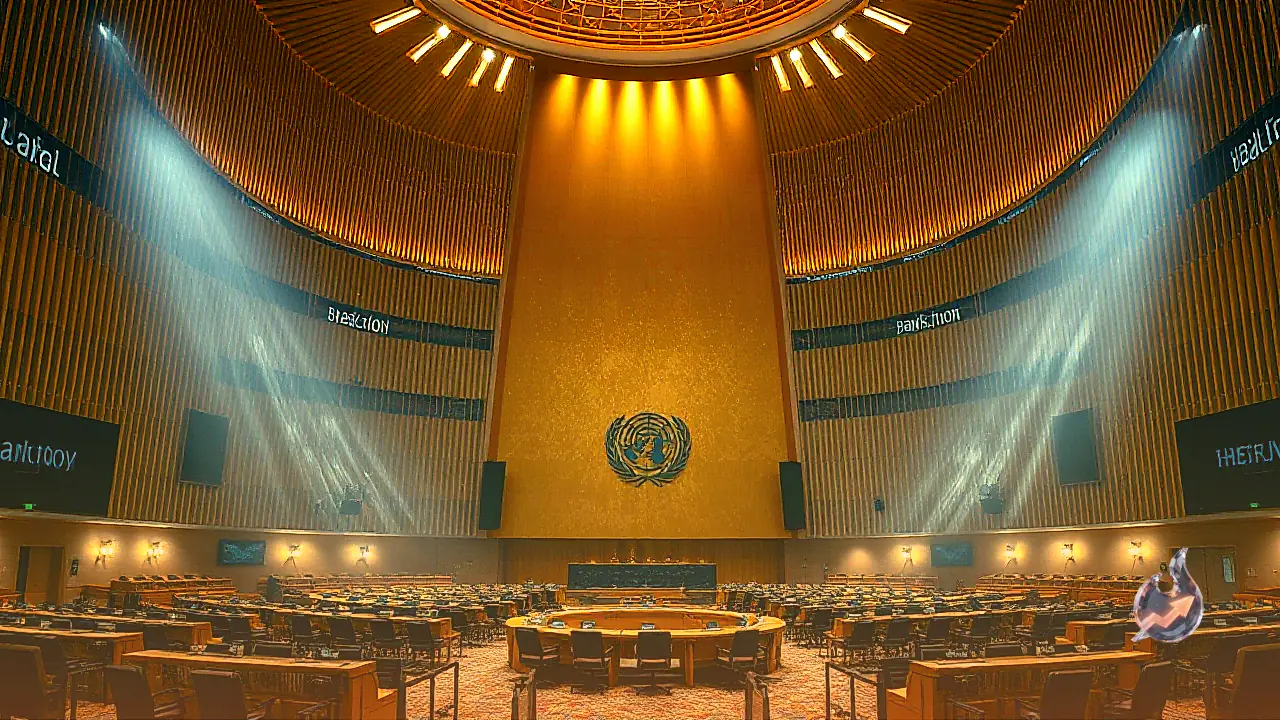
This narrow reading overlooked the biting critique of global inequality, unchecked capitalism, and imperial conquest embedded in Adams' writing. When the BBC broadcast the radio serial to international audiences, including listeners in Pretoria, South Africa, in 1978, international opposition to the South African apartheid regime was mounting. The United Nations General Assembly had formally condemned apartheid in 1973, and state police had killed protesting schoolchildren in Soweto in 1976. Adams composed his manuscript on a manual typewriter bearing a prominent anti-apartheid decal, continuing a long literary tradition of using interplanetary conquest as an allegory to critique colonial exploitation on Earth.
The Parody of Galactic Megalomania
The central antihero of 'The Hitchhiker's Guide to the Galaxy', Zaphod Beeblebrox, is depicted as a self-absorbed figurehead serving as Galactic President solely to distract the public from the illicit operations of dominant corporate conglomerates like the Sirius Cybernetics Corporation. When subjected to the Total Perspective Vortex, a device designed to shatter an individual's sanity by demonstrating their absolute insignificance in the cosmos, Beeblebrox's monumental narcissism leads him to conclude that he is the most vital entity in existence. Decades later, Musk launched a Tesla Roadster into orbit aboard a SpaceX rocket containing Asimov's texts, a dashboard displaying the phrase 'DON'T PANIC', and proposed naming future Mars transport vessels 'Heart of Gold' after Beeblebrox's stolen craft, entirely without apparent irony.
Billionaire Space Ventures and Ecological Grief
Jeff Bezos, born in New Mexico in 1964 as NASA launched the Mariner 4 Mars mission, similarly linked his commercial space ambitions to childhood fantasies. During the 1990s, as extreme wealth accumulated across the technology sector, speculative literature such as Kim Stanley Robinson's 'Mars trilogy' and Robert Zubrin's 1996 volume 'The Case for Mars' popularized the notion that humans could rapidly colonize the red planet. Bezos established Blue Origin in 2000, followed by Musk founding SpaceX in 2002.
In 2021, actor William Shatner, renowned for portraying Captain Kirk in television science fiction, participated in a suborbital flight aboard a Blue Origin vehicle. Upon returning to Earth, Shatner experienced profound sorrow rather than triumph, later describing how viewing the fragile terrestrial atmosphere against the void emphasized the catastrophic loss of global biodiversity driven by human industry. While Shatner described the perspective as an encounter with mortality and ecological grief, corporate aerospace initiatives continued to frame space travel as an evacuation plan for Earth's elite.
Physical Confinement and Industrial Realities
The physical consequences of technological acceleration were foretold in early twentieth-century literature, including E. M. Forster's 1909 story 'The Machine Stops', which depicted isolated human populations living entirely indoors while dependent on mechanical life-support systems. Modern urban populations across industrialized nations currently spend up to ninety percent of their lives indoors. Severe atmospheric pollution prompted mandatory stay-indoors orders across 79 Chinese cities in 2018 alone, while outdoor exposure across Europe and North America has dropped to historic lows.
Despite enormous capital investment in commercial artificial intelligence, broad economic benefits remain unproven. A 2026 comprehensive empirical survey encompassing nearly 6,000 enterprises across the United States, the United Kingdom, Germany, and Australia revealed that 80 percent of surveyed firms realized no measurable gains from adopting AI tools. Simultaneously, the ecological baseline of the planet has deteriorated dramatically, with total wild mammal biomass declining by an estimated 80 percent over the past 10,000 years and dropping by 70 percent since the 1850s.
Automated Labor and the Mechanics of Abandonment
Industrial machinery continues to replace biological life at a rapid pace. By 2016, estimates indicated an average density of one robot for every 250 human inhabitants globally. Annual manufacturing of industrial robotics in the United States quadrupled between 2010 and 2023, expanding from 100,000 to 400,000 units, while the worldwide operational total reached approximately 5 million units. Tesla maintains projections to produce one million humanoid Optimus units annually, and financial analysts at Morgan Stanley estimate the global population of humanoid robots will hit 1 billion by the year 2050. When asked about the ongoing necessity of human workers, Microsoft co-founder Bill Gates remarked that people would no longer be needed for most tasks.
The physical infrastructure supporting this automated economy demands tremendous electrical power and land, accelerating planetary degradation. For the executives orchestrating these systems, personal contingency plans insulate them from the fallout: Elon Musk focuses on Martian colonization, Mark Zuckerberg constructs virtual realms, Peter Thiel secures expansive land holdings in New Zealand, Jeff Bezos develops orbital infrastructure, and Sam Altman prepares for brain preservation. The trajectory represents an orchestrated withdrawal from shared civic life rather than an investment in human preservation.