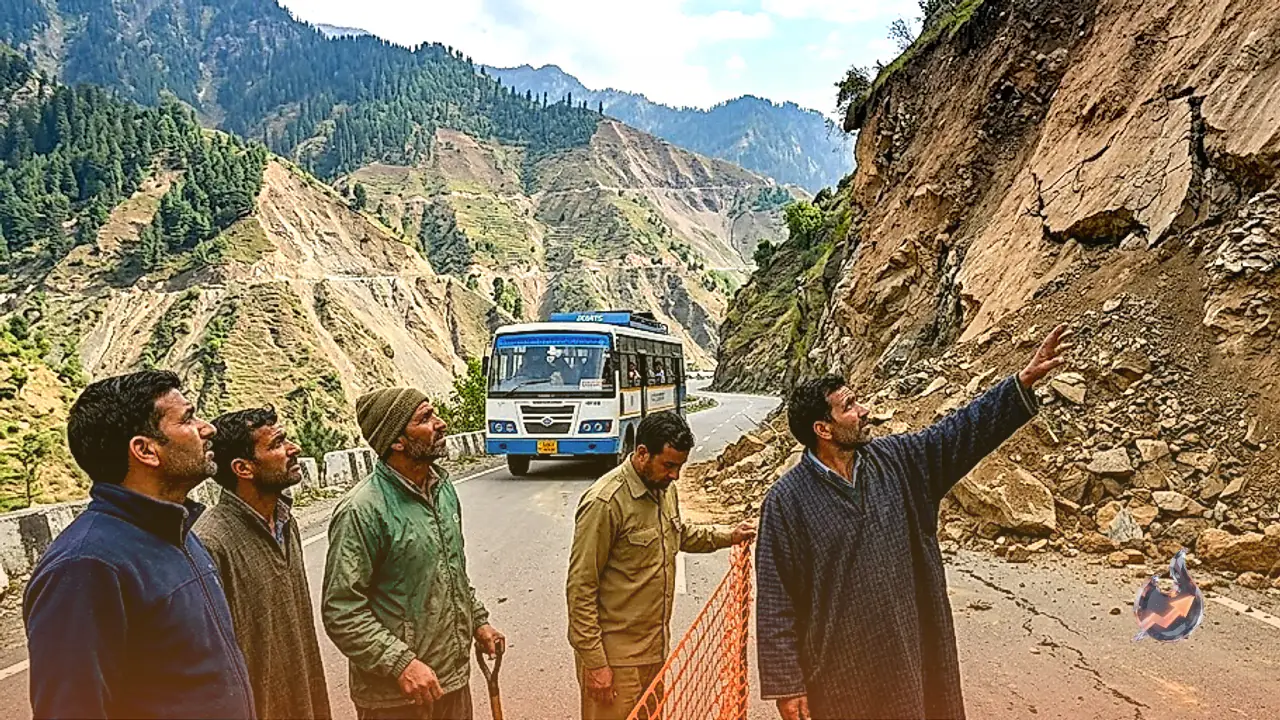
























The earth shook across a wide expanse stretching from India to Afghanistan on Tuesday as multiple tremors rattled the region. Afghanistan experienced a series of seismic events rather than just a single jolt, prompting panicked residents to wake up in the dead of night. While these tremors varied significantly in magnitude and depth, the preliminary assessments brought comforting news as no casualties or major property damage had been reported from any of the affected locations, though the sudden shaking left many deeply shaken.
Series of Tremors Strike Afghanistan
According to the National Center for Seismology, the seismic activity in Afghanistan began shortly after midnight. The first earthquake hit on September 1, 2026, at approximately 1:06 AM, registering a magnitude of 4.4 on the Richter scale with its hypocenter located 132 kilometers deep inside the earth. The tremors continued at regular intervals, with a second quake striking at 3:14 AM at a magnitude of 3.7 and a depth of 127 kilometers, centered 99 kilometers southeast of Faizabad. Just minutes later, a third tremor was recorded at 3:31 AM with a magnitude of 4.2, originating 105 kilometers east of Kabul.
Meanwhile, within India, tremors were felt in different geographical pockets during the middle of the night. In Jammu and Kashmir, the Kishtwar region experienced ground movement at 1:54 AM, where the intensity was measured at a mild 2.4 on the Richter scale with no adverse incidents reported. Concurrently, the northeastern state of Sikkim also recorded a nocturnal tremor. Mangan district in Sikkim felt the ground shake at 1:48 AM, registering a magnitude of 3.9 on the Richter scale.
Midnight Panic and Aftermath
The sequence of tremors striking from midnight through the early morning hours created widespread anxiety among residents. Deep sleeps were abruptly broken as the sudden movement caused widespread panic across the affected valleys and towns. Despite the unsettling nature of the middle-of-the-night events, the silver lining remained the complete absence of any destructive outcomes or loss of life, while local authorities continued to monitor the situation for any further updates.
Broader Regional Context of Natural Disasters
These tremors, spanning from Kashmir down to Mangan in Sikkim, arrived during a particularly fragile period for South Asia, as neighboring Nepal continued to struggle with devastating flash floods. The water calamity triggered urgent flood alerts across Nepal on August 29 amidst worsening conditions. The death toll from the Nepal floods has already surpassed 900 people, with Nuwakot and Rasuwa districts bearing the brunt of the catastrophic destruction.