






















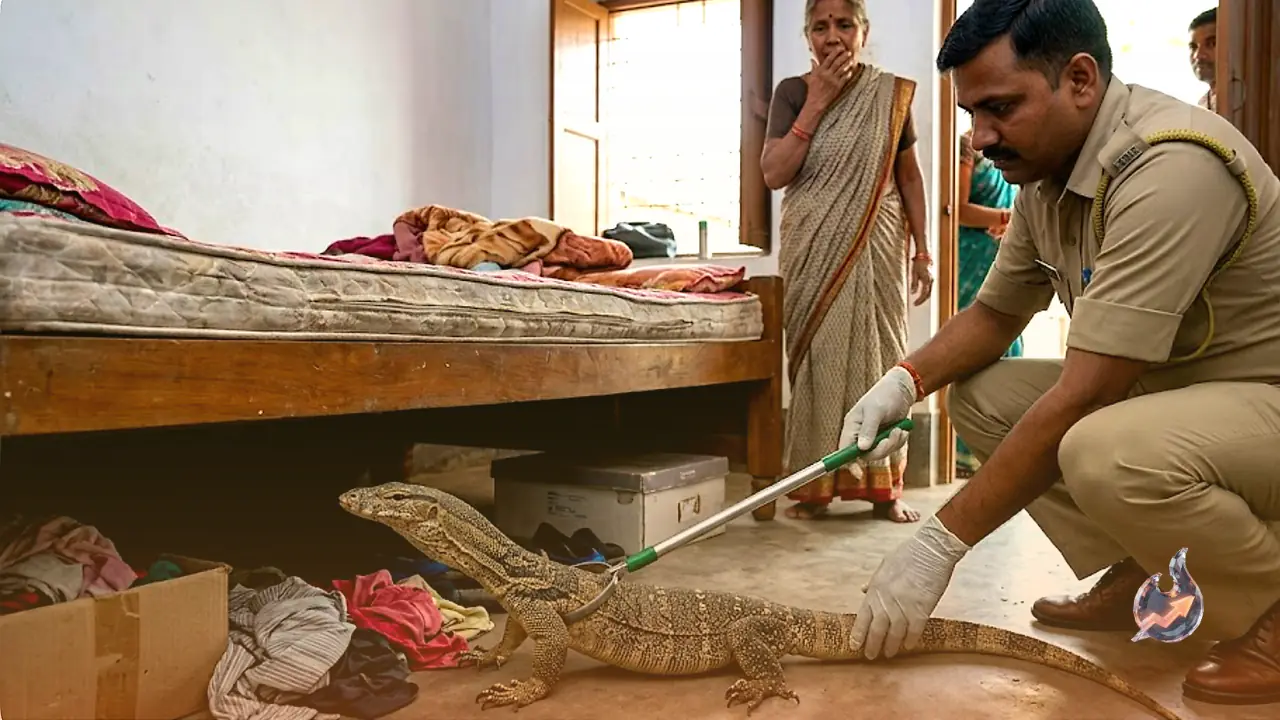

A late morning scare turned into a wildlife rescue story in Chirachas village of Chas block in Jharkhand's Bokaro district, after a family heard something moving under a bed and feared a baby crocodile had entered their home. The forest department team that arrived at the spot found instead a nearly 2 foot long monitor lizard, locally known as goh, and carried out a careful rescue.
A son's scare, a father's phone call
According to Chirachas resident Sunil Mahto, his son Shivam walked into the room at around 10 am when he noticed something moving under the bed. Startled, he switched on his mobile phone's flashlight and looked underneath, only to spot a large, unfamiliar creature. Shaken by what he saw, he immediately called his father and described what he had found. The family's first instinct was that a baby crocodile had somehow entered the house, but it soon became clear that the creature was in fact a monitor lizard. Without wasting time, the family alerted the forest department.
Forest department carries out a safe rescue
Forester Shashikant Mahto reached the house with his team soon after receiving the alert about a strange animal inside a home. A search of the room revealed the monitor lizard hiding under the bed. The team worked carefully to pull it out without harming it, and according to the forester, the animal will now be released back into a safe forest area where it belongs.
Why the monitor lizard matters for farms and the environment
Shashikant explained that the goh, or monitor lizard, is a large lizard commonly found across India's forests, farmlands and bushy areas. It feeds on rats, small snakes, insects, birds and their eggs, which makes it a natural check on pests in farmland and helps keep the local ecosystem in balance. Because of this role, the monitor lizard is a protected species under Schedule 1 of the Wildlife Protection Act, 1972, meaning it is illegal to harm or kill one.
Common misconceptions about the goh
Shashikant also pointed out that people often carry wrong ideas about the monitor lizard. Many believe it is poisonous, when in reality it is not venomous at all. He appealed to people not to harm a monitor lizard if they spot one, and instead inform the forest department right away. He further advised keeping homes and their surroundings clean during the monsoon season, since these creatures sometimes wander into houses in search of rats to eat.