






















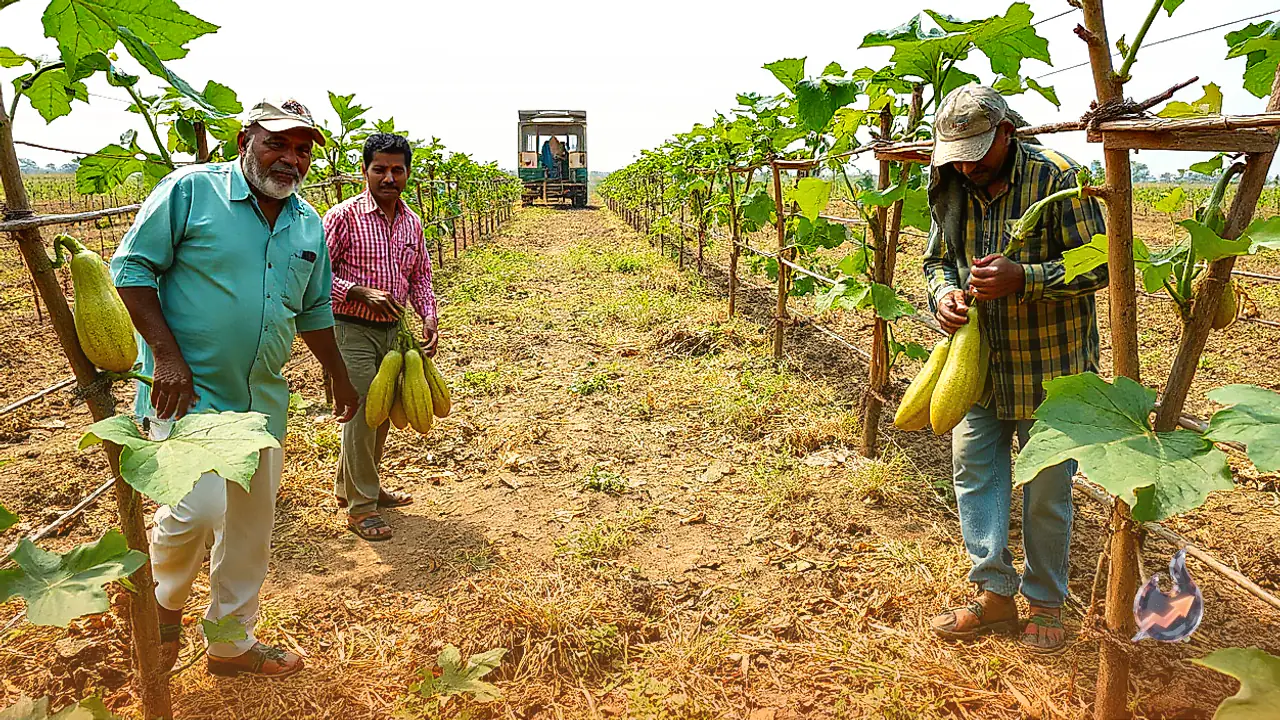

Shifting from conventional farming methods toward scientific and modern cultivation techniques is significantly enhancing farm incomes. Shivnath, an enterprising farmer based in Bokaro, has turned vegetable cultivation into a profitable enterprise by modernizing his farm practices. Inspired by observing peer cultivators implement advanced practices and by watching agricultural training videos on his mobile phone, he transitioned into vegetable farming. Today, he is utilizing trellis structures and plastic mulching sheets to produce high-yielding bitter gourd crops.
Sowing in August and Harvesting Within 70 Days
Shivnath planted his bitter gourd crop during the month of August. Depending on the specific crop variety chosen, the fruits typically mature and become ready for the initial harvest within 60 to 70 days. Following the first plucking, farmers can pick mature bitter gourds at regular intervals to maintain a continuous supply for local wholesale markets, ensuring consistent weekly earnings throughout the season.
Breakdown of Production Costs, Yield and Net Profit
According to Shivnath, cultivating bitter gourd across a 70-decimal plot required an upfront investment of approximately Rs 30,000. That acreage can yield between 90 and 100 quintals of harvest. In the wholesale produce market, bitter gourd fetches an average rate ranging from Rs 20 to Rs 25 per kilogram.
Even when calculating returns conservatively at 90 quintals of produce sold at an average wholesale price of Rs 20 per kilogram, the total gross revenue reaches around Rs 1,80,000. After deducting the cultivation expense of Rs 30,000 along with transportation charges, a net profit of roughly Rs 1,40,000 is comfortably realized from the single harvest cycle.
Managing Plant Nutrition and Guarding Against Pests
Detailing the agronomic vigilance required for the crop, Shivnath cautioned that nutrient deficiencies and pest attacks frequently cause the yellowing of leaves. Such discoloration severely retards plant growth and depresses fruit yield. To prevent this setback, cultivators must apply fertilizers judiciously, tailored to specific soil conditions and the nutritional demands of the crop.
He emphasized the importance of regular field inspections to spot insect infestations early. Consulting agricultural specialists immediately upon identifying symptoms enables timely, targeted pest management. Adopting structured plant protection measures safeguards the crop, sustains high output quality, and maximizes financial returns.