




















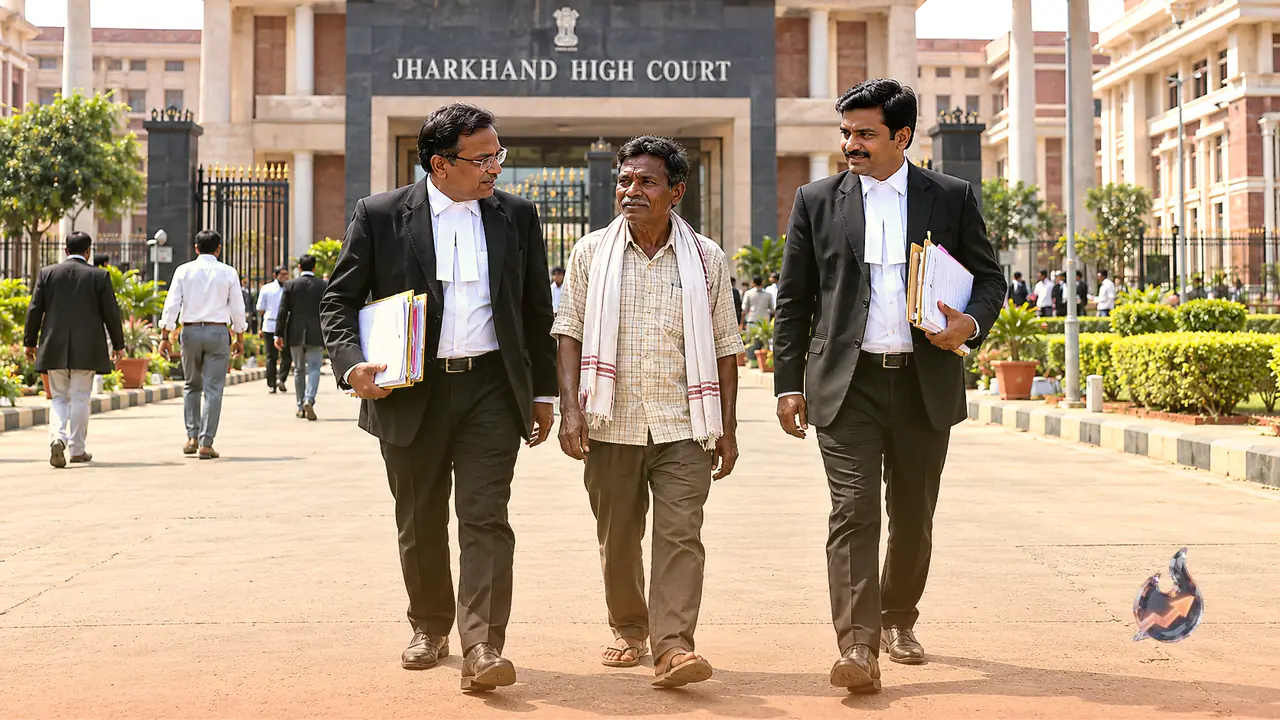

In a significant judicial ruling, the Jharkhand High Court has set aside the life imprisonment sentence of C. Oraon in a murder case, granting him a complete acquittal. The high court observed that recording an accused person's statement in English, when he does not understand the language at all, violates the fundamental right to a fair trial and severely prejudices his defense.
Violation of Fair Trial Principles
A division bench comprising Justice Anand Sen and Justice Pradeep Kumar Srivastava delivered the judgment while hearing a criminal appeal filed on behalf of C. Oraon. The bench noted that questioning a suspect in a language foreign to him reduces the statement recording procedure to a mere formality. Under the Constitution of India, every citizen is entitled to a fair trial. When an accused cannot comprehend the questions being posed, any recorded answers cannot be relied upon, as they undermine the individual's constitutional right to defend himself effectively.
Background of the 2009 Drowning Case
The case dates back to 26 February 2009, when C. Oraon was accused of murdering Parameshwari Devi over a land dispute. According to the prosecution, a conflict regarding land possession escalated, leading Oraon to allegedly drown Parameshwari Devi in a well. Following a trial, a lower court in Ranchi convicted Oraon on 25 April 2018, sentencing him to life imprisonment along with a fine of Rs 20,000. Seeking relief against the conviction, Oraon subsequently appealed the decision before the high court.
Flaws in the Evidentiary Process
During the appellate proceedings, the high court scrutinized the trial records and discovered that the prosecution had posed questions to Oraon in English. Furthermore, the lower court had formally recorded his statements in English before obtaining his thumb impression on the documents. Rebuking the lower court's approach, the bench highlighted that such procedural lapses deny the accused an authentic opportunity to present his version of events. Concluding that the conviction was unsustainable due to these procedural deficiencies, the Jharkhand High Court quashed the lower court's sentence and ordered Oraon's acquittal.