





















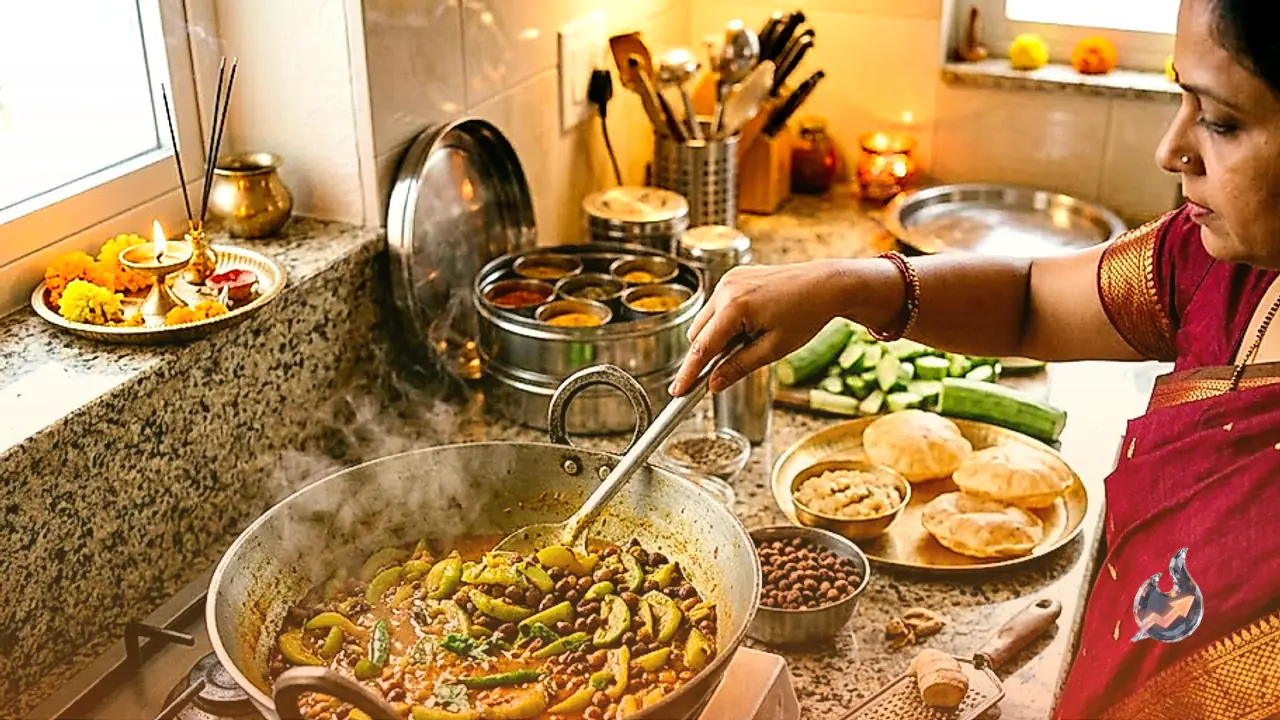

During festive occasions, many households look for flavorful meal options that do not require onion or garlic. Ridge gourd, locally known as jhinga, is often overlooked by younger family members, but combining it with nutrient-dense black chickpeas turns it into an appealing and savory preparation. Usha, a homemaker residing in Ranchi, outlined a straightforward two-step cooking technique that yields a rich and satisfying dish suitable for Navratri or everyday family dining alongside flatbreads and puris.
Initial Prep for Vegetables and Chickpeas
The cooking process begins with fresh jhinga. The vegetable must be thoroughly peeled to remove the tough outer skin, washed clean in water, and then chopped into very small pieces. Alongside the vegetable prep, small black chickpeas need advance soaking. Allowing the chickpeas to soak overnight in water for approximately 8 hours ensures they swell properly and soften enough for fast cooking.
Tempering and Initial Sauté
To begin cooking, heat 3 tablespoons of mustard oil in a heavy-bottomed pan or kadhai. Once the mustard oil becomes appropriately hot, add cumin seeds, bay leaves, and dried whole red chilies to create the aromatic base. Allow the spices to crackle in the hot oil. Next, add the soaked black chickpeas directly into the pan and stir continuously for just one minute to coat them in the tempered oil.
Seasoning and Vegetable Incorporation
After the one-minute sauté, tip the finely chopped jhinga into the pan. Add the ground spices next, which include turmeric powder, coriander powder, mixed masala blend, and salt adjusted to taste. For festive observance such as Navratri, rock salt can be substituted in place of regular salt. Garlic and onion remain completely optional in this preparation, making it practical to skip them entirely without compromising the depth of flavor.
Simmering and Serving Instructions
Once all ingredients are well combined, leave the pan to simmer on moderate heat for about 25 minutes. During this period, the moisture naturally released by the jhinga provides sufficient liquid to cook both the vegetable and the chickpeas thoroughly. If excess liquid lingers at the end of the cooking duration, increase the flame and stir steadily until the gravy thickens to your preferred consistency. Once reduced, the savory sabzi is ready to serve hot with freshly made rotis or crisp puris.