






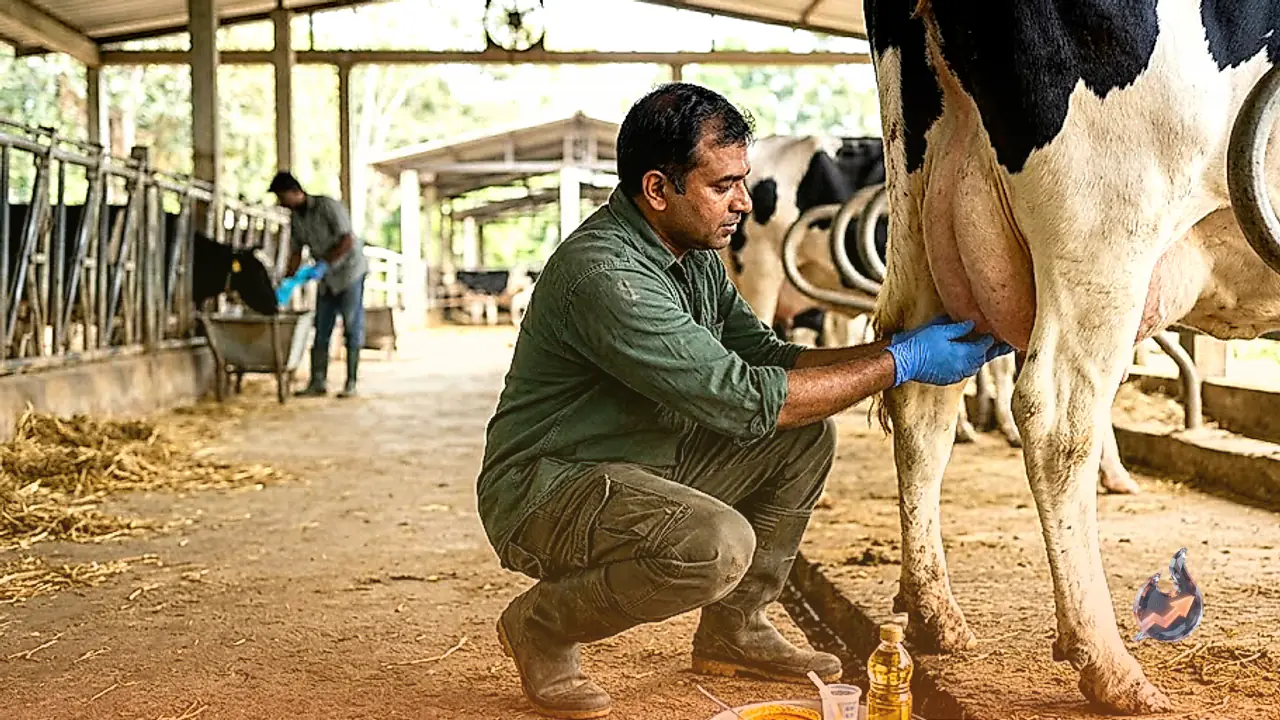
















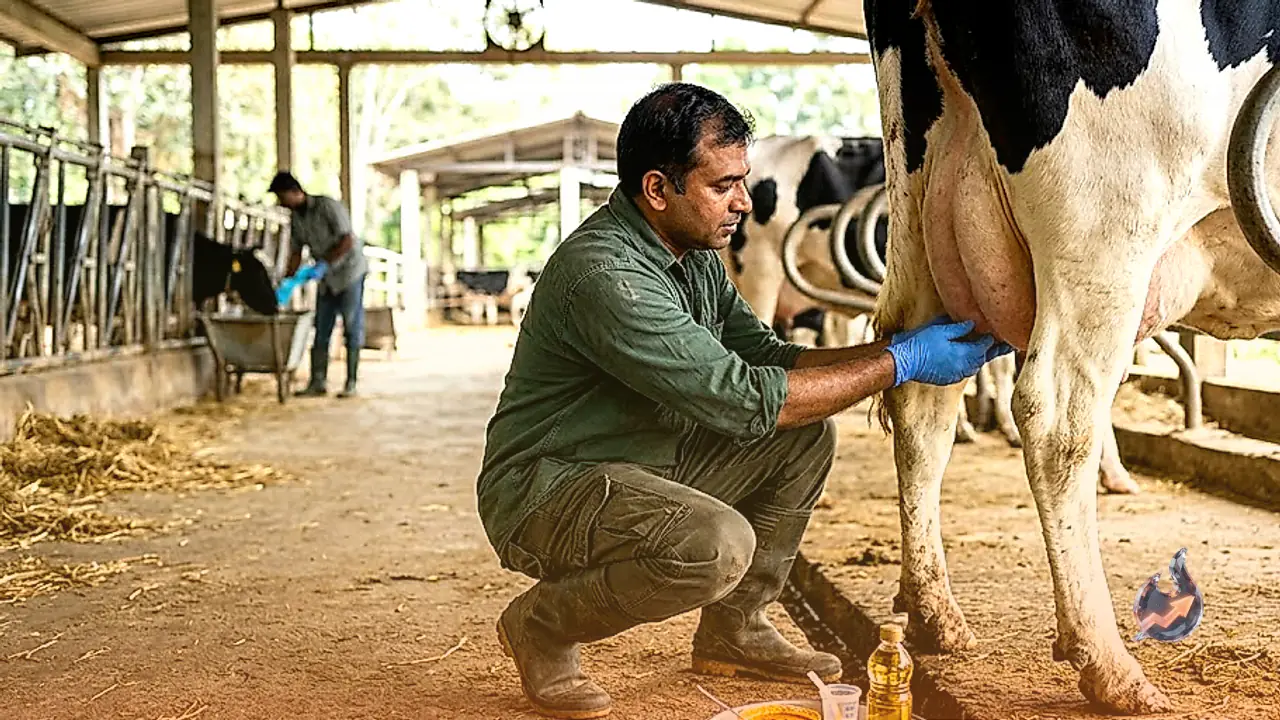

For farmers and dairy keepers, a milch cow or buffalo serves as a vital pillar of household livelihood and daily income. Livestock keepers invest long hours every day caring for their animals to ensure healthy milk production that sustains their families. However, when a lactating animal falls prey to an infection, it immediately triggers serious financial distress. Mastitis is one of the most painful and troublesome conditions affecting dairy cattle, directly degrading both the yield and quality of milk.
Understanding Mastitis and the Risk of Permanent Damage
If mastitis is not identified and treated in its early stages, the animal's physical condition can deteriorate rapidly. In advanced cases, the internal tissues of the udder may suffer irreversible damage, permanently destroying milk secretion capacity. To prevent such permanent impairment, dairy farmers must stay vigilant regarding early warning signs and seek timely intervention rather than ignoring initial symptoms.
Key Symptoms and Early Identification
Pashu Mitra Jaikant Roy from Deoghar explains that mastitis is a severe condition among milch cattle, primarily characterized by inflammation and infection within the udder and teats of cows and buffaloes. As the infection progresses, the animal's milk-producing capacity is drastically impaired. The steep drop in milk output leads to immediate financial losses for livestock owners.
Dairy keepers must closely inspect their cattle during milking. If the udder appears noticeably swollen, feels unusually hot to the touch, or if the milk contains blood, unusual clots, or altered consistency, these signs should never be dismissed as minor issues. Furthermore, if the animal develops a fever, loses its appetite, or shows extreme lethargy, these symptoms strongly indicate an advanced underlying infection.
Hygiene Protocols and Preventative Measures
Maintaining clean sheds and adopting proper milking techniques play a vital role in preventing mastitis outbreaks. Handlers should thoroughly wash and sanitize their hands as well as the animal's teats both before and after milking. The resting area for cattle must remain clean and completely dry to minimize exposure to filth and bacterial pathogens. If any unusual abnormality is detected in the milk, it should never be consumed or sold without proper testing.
Effective Traditional Home Remedies
Jaikant Roy points out that several traditional home remedies offer notable relief in rural areas. Fomenting the inflamed udder with warm water mixed with alum is widely practiced. Following this fomentation, applying a paste made from fresh aloe vera and turmeric helps soothe the affected area. Additionally, feeding the cow or buffalo a mixture of lemon juice, black pepper powder, and clarified butter every two hours provides strong internal support. Administering this remedy consistently for a week significantly improves recovery prospects.