
















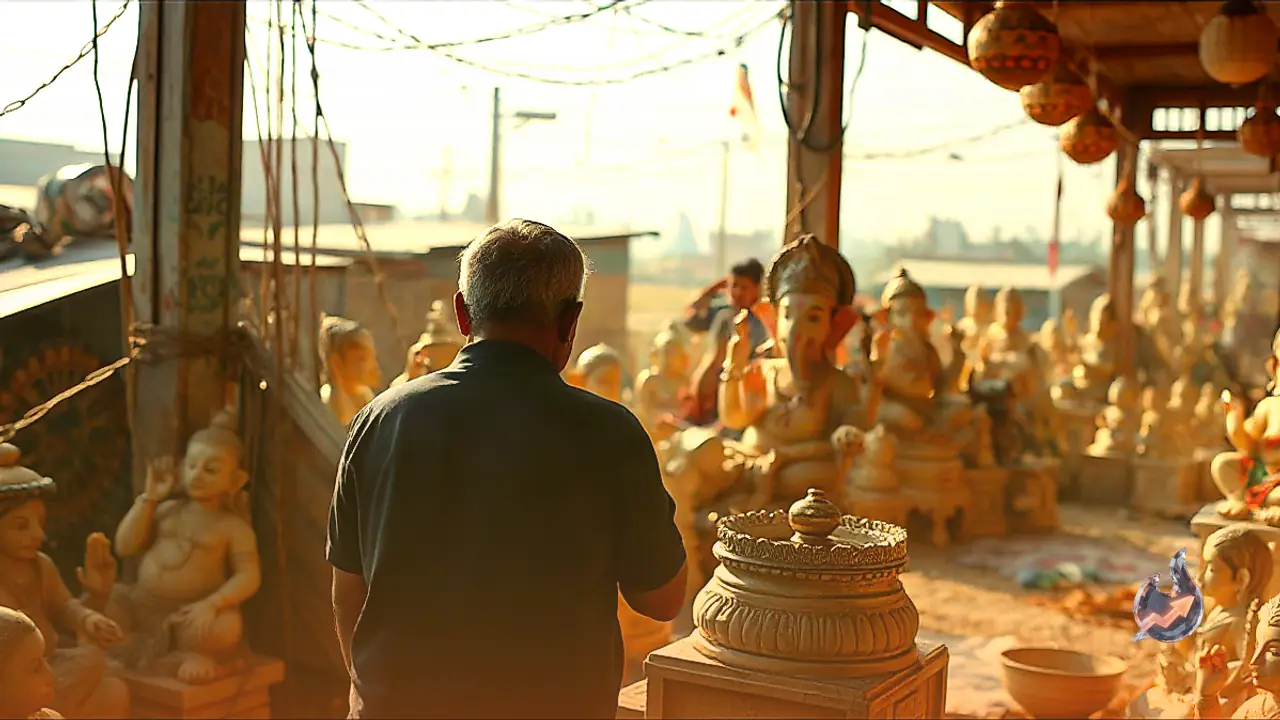

Ganesh Chaturthi preparations are in full swing in Jamshedpur, with sculptors across the city working round the clock to give final touches to idols of Lord Ganesha. Craftsmen in different parts of the city are putting in long hours so that every idol is ready in time for the festival. The standout trend this year is a notable rise in demand for smaller idols alongside the traditional bigger ones, especially among families who hold the puja at home.
Why buyers are switching to smaller idols
Sculptor Arjun says there has been a clear shift in what people want. Bigger idols used to be the preferred choice earlier, but families who perform puja at home are now leaning towards compact, attractive idols instead. The reason is straightforward: smaller idols fit easily into a home's limited puja space, and immersing them afterwards is far less of a hassle. That is why sculptors working across different parts of the city are seeing a steady, uninterrupted stream of orders for smaller idols this season, with demand showing no signs of slowing.
How the price is decided
According to Arjun, prices for Ganesh idols start at around ₹3,000. From that base, the cost climbs depending on the idol's size, the intricacy of its design and the quality of its finishing. In other words, a bigger idol with finer detailing and decoration will cost noticeably more. Buyers are negotiating with sculptors based on their budget and how much space they have at their puja spot.
The Ganga clay idols drawing special attention
This year, sculptors are paying particular attention to idols made from Ganga clay, soil specially brought in from the banks of the Ganga river in Bengal. Sculptors say working with this clay carries its own distinct tradition and quality that sets it apart from idols made with other clay. The process begins with preparing the clay, after which the idol is shaped. It is then dried gradually over multiple stages before the finishing work is carried out. Finally comes the painting and decoration, which gives the finished idols their attractive look.
Fine detailing gets harder on smaller idols
Making an idol out of Ganga clay is no easy task, it takes considerable effort and time. Arjun explains that the clay's quality, the idol's sturdiness and its finishing all need close attention at every step. That fine detailing becomes even more challenging on smaller idols, since features like Lord Ganesha's eyes, crown, jewellery and other parts all have to be carved beautifully within a much smaller frame. Even so, given the rising demand for smaller idols, sculptors in Jamshedpur are working with full dedication to get every order ready in time for Ganesh Chaturthi.