


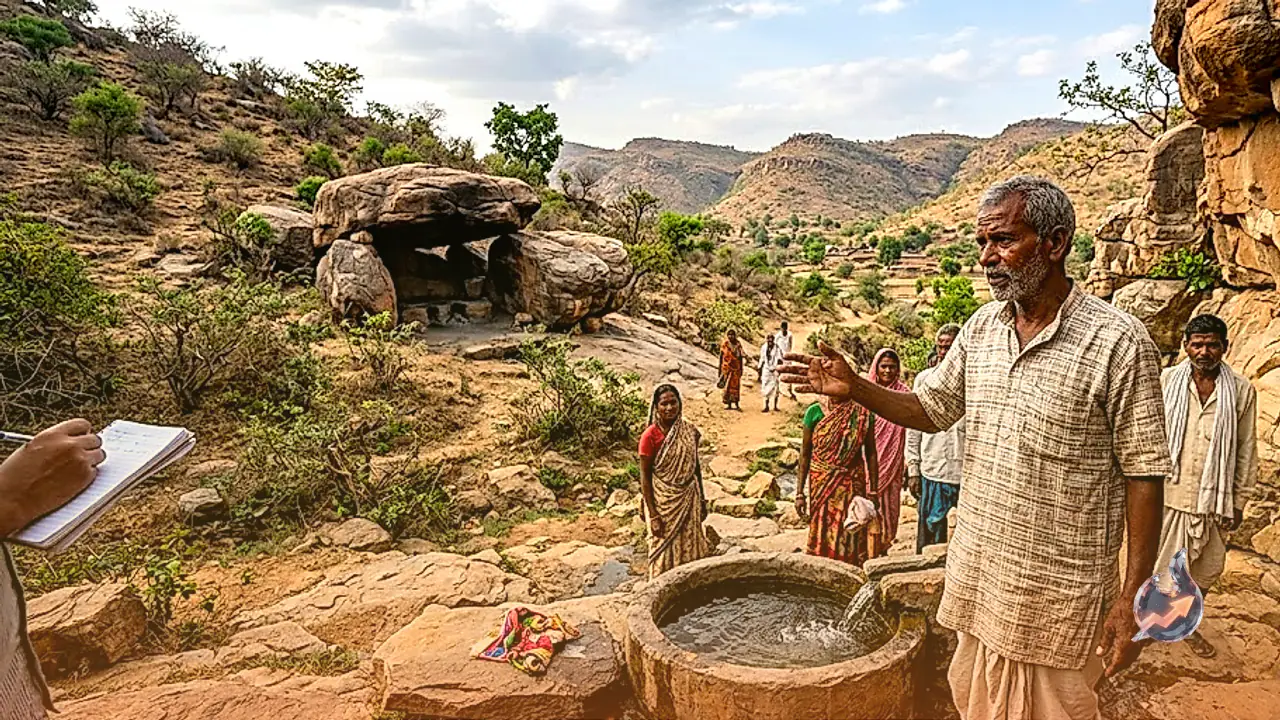



















Tucked among the hills and forests of Haidarnagar block in Jharkhand's Palamu district lies a natural spring that villagers have treated as sacred for generations. The district itself is known for its hills, dense forests and natural water sources, and this particular spot has become a deep centre of local faith. Known locally as Sita Chua, the spot carries a folk story that traces back to the era of the Ramayana and has been passed down by word of mouth ever since.
A name rooted in an exile-era legend
In the local dialect, the word "chua" refers to a natural water source, water that seeps out of the ground or rocks on its own, without a well or hand pump. According to the belief held by people in the surrounding villages, Ram, Sita and Lakshman are believed to have passed through this region during their exile, and Sita is said to have used the water from the spring here. That is why the site came to be known as Sita Chua. There is no independent historical record backing the legend, yet it has not dimmed the faith of local residents, and elders continue to pass the story down to younger generations.
Water that never fully dries up, even in peak summer
The defining feature of Sita Chua is that its water emerges naturally from between the hillside rocks. Villagers say that while many nearby ponds, wells and smaller water sources run dry in the harsh summer heat, this spring never completely empties out. That is part of why people regard the water as special and sacred. A small temple has also been built at the site, where visitors who travel from nearby areas come to pray and offer worship. The calm, green surroundings, framed by hills and forest, add to the pull of the place.
Bhim Chulha, a rock formation tied to the Mahabharata, sits close by
A short distance from Sita Chua stands another well known spot called Bhim Chulha. Local folklore links this formation to Bhima from the Mahabharata. The massive rock structure here is striking in its own right, and villagers narrate several different stories about how it came to look the way it does. What makes the area unusual is that folklore tied to both the Ramayana and the Mahabharata exists side by side in a single stretch of land, a combination that sets the site apart from other religious and mythological spots.
A case for preservation and tourism
Palamu's Sita Chua can be seen as a rare meeting point of natural beauty, local faith and centuries-old mythological belief. Set amid dense forest and high hills, the site still retains a distinct identity of its own, but local residents believe such places deserve better protection and deserve to be developed with tourism in mind. Local residents believe that if the area is brought onto the tourism map in an organised way, this distinctive piece of Palamu's heritage can be preserved for generations to come. Sita Chua is not just a water source, it stands as a living example of Palamu's folk culture and of the faith that generations have carried forward, one where memories of both the Ramayana and the Mahabharata continue to live on together.