























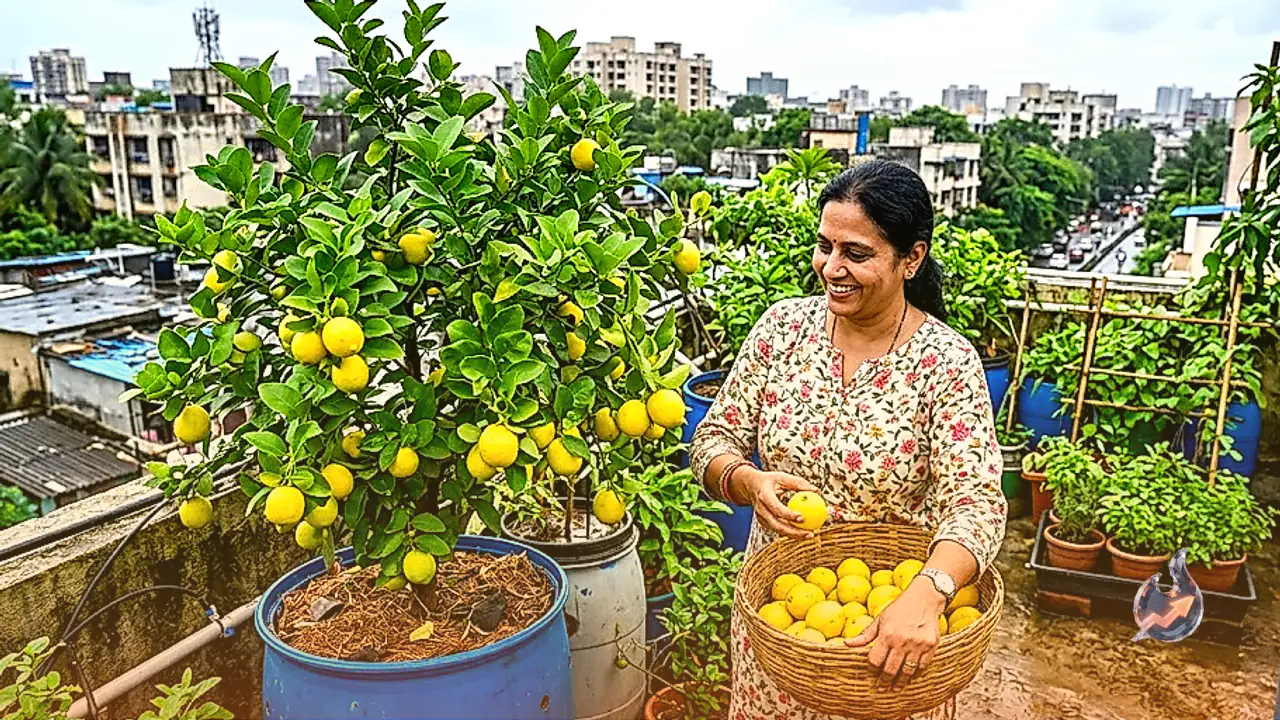

A patch of unused space on a rooftop is all it takes to grow a healthy lemon plant at home, with no digging into open ground required. A large pot or even a plastic drum works just as well as a garden bed, and the monsoon season turns out to be an especially good time to start, since the extra moisture in the air and soil gives the plant a natural push. With the right care, a rooftop lemon plant can go on producing fruit for years.
Picking the Right Plant and Pot
The first step is choosing a healthy sapling, ideally from a trustworthy nursery, with green leaves and a sturdy stem, since a weak start almost always leads to bigger problems later. The pot needs to be large enough to give the roots room to spread; too small a container and the plant simply stays stunted. Drainage holes at the base of the pot are non-negotiable, as they are the easiest way to prevent waterlogging. When preparing the soil, mixing ordinary garden soil with well-rotted cow dung manure or compost gives the plant the nutrients it needs right from the start.
Getting Watering Right During the Monsoon
Monsoon rains do make upkeep somewhat easier, but that is no reason to keep watering the plant every day. Excess water pooling in the pot can rot the roots, which is why good drainage matters so much. On days when the soil is already soaked from rainfall, there is no need for any extra watering at all. If the rain turns heavy and continuous, it is better to move the pot somewhere it still gets enough light while water does not sit around the roots for long stretches.
Sunlight and Pruning Matter Just as Much
A lemon plant needs plenty of direct sunlight to grow well, so the spot chosen on the rooftop should get several hours of it every day. Alongside this, dry, weak or diseased twigs should be trimmed off from time to time, redirecting the plant's energy toward fresh branches and leaves. Any weeds sprouting around the pot should also be cleared out promptly, since they compete for the soil's nutrients. These small, consistent habits are what gradually make the plant thicker and stronger.
Feeding the Plant for a Good Fruit Yield
Getting a healthy number of flowers and fruit depends heavily on maintaining soil quality. Well-decomposed organic manure or compost can be added to the pot at regular intervals. After adding manure, the topsoil should be mixed in gently by hand, taking care not to disturb or damage the roots. If the leaves start turning yellow or growth stalls, it is worth checking water, sunlight and soil conditions right away, since these three factors are usually behind most problems. Any chemical fertiliser or pesticide should only be used once its correct dosage and necessity are properly understood, since guesswork can end up harming the plant rather than helping it.
A Practical Option Even Without a Big Garden
For anyone without space for a full garden, growing a lemon plant on the rooftop is a simple and workable alternative. A good pot, fertile soil, adequate sunlight, proper drainage and periodic feeding are really all it takes to keep the plant healthy. That said, getting fruit all year round depends on the plant's variety, its age, the season and the care it receives, so it is best not to expect a large harvest right away. With patience and consistent care, a lemon plant grown on a home rooftop can become a reliable source of fresh fruit for the family.