






















With the arrival of early winter, the market appetite for fresh seasonal vegetables witnesses a sharp rise. Cauliflower remains one of the primary commercial crops in heavy demand across vegetable mandis and household kitchens alike. For growers and backyard gardening enthusiasts intending to cultivate cauliflower, October and November present an ideal climatic window. However, achieving a profitable harvest involves far more than simply transplanting seedlings. High productivity demands the selection of climate-resilient varieties, structured land preparation, accurate spacing between plants, and proactive disease monitoring throughout the crop cycle.
Selecting Season-Specific Varieties for Optimal Curd Formation
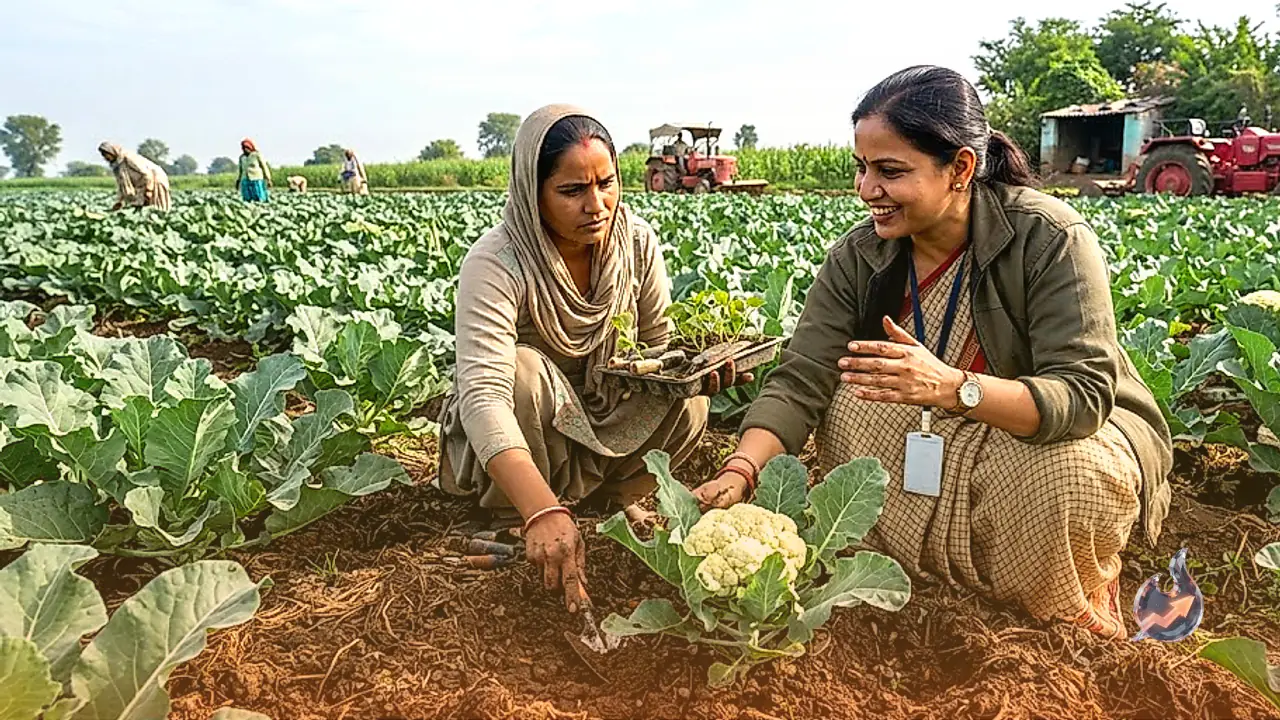
According to Deoghar-based agricultural expert Ambika Kushwaha, matching crop varieties with local temperature and sowing schedules is foundational to agricultural success. Cauliflower varieties respond differently depending on monthly shifts in temperature. For plantings carried out through October and November, growers are advised to consider varieties such as Ajit Megastar and VNR-3. These specific varieties are recognized for their ability to produce relatively large and compact curds. In commercial markets, white, attractive, and dense curds command premium prices. At the same time, the final harvest yield and physical quality of the curd remain deeply tied to soil fertility, moisture availability, climate variations, and routine crop management.
Soil Preparation and Drainage Protocols Before Sowing
Thorough field preparation serves as the foundation for root establishment and crop vigor. Before introducing seedlings to the field, growers should integrate well-decomposed cow dung manure across the entire planting area. Deep plowing must follow to incorporate the organic matter evenly into the soil matrix. This practice softens the earth, creating a friable texture that enables young roots to penetrate deeper and absorb critical soil nutrients effectively.
Establishing an efficient drainage mechanism across the field is equally critical. Standing water resulting from unexpected rainfall or excessive irrigation can suffocate and rot the sensitive root systems of brassica crops. Home gardeners preparing backyard beds or containers should follow a similar routine by thoroughly blending organic compost with light soil to ensure adequate aeration and moisture retention without waterlogging.
Maintaining Proper Distance Between Seedlings
Plant density directly affects curd size, particularly in robust varieties such as Ajit Megastar and VNR-3. Ambika Kushwaha explains that planting seedlings too close together forces crops to compete for sunlight, soil nutrients, and space, inevitably leading to stunted plant growth and undersized curds. To avoid this, a spacing of approximately one hand length between individual seedlings is recommended during transplantation. While the exact spatial configuration can be adjusted according to specific cultivars and field layouts, adequate spacing ensures healthy foliage development and substantially simplifies subsequent weed removal, earthing up, and localized spray treatments.
Inspecting Nursery Seedlings to Prevent Crop Damage
The health of the initial planting material determines the ultimate trajectory of the harvest. Growers must exercise caution when procuring seedlings from nurseries, as introducing infected plantlets can compromise the entire acreage. Before setting them into the main field, each seedling should undergo a detailed physical check covering both leaf condition and root integrity. Plants showing signs of fungal infestation, leaf spotting, or discolored roots must be culled immediately rather than planted. If required, preventive root or foliar treatments should be administered on the advice of an agricultural specialist. Following transplantation, periodic field scouting remains essential to spot pest pressures or pathogens at the earliest developmental stage, ensuring a productive and commercially viable crop.