




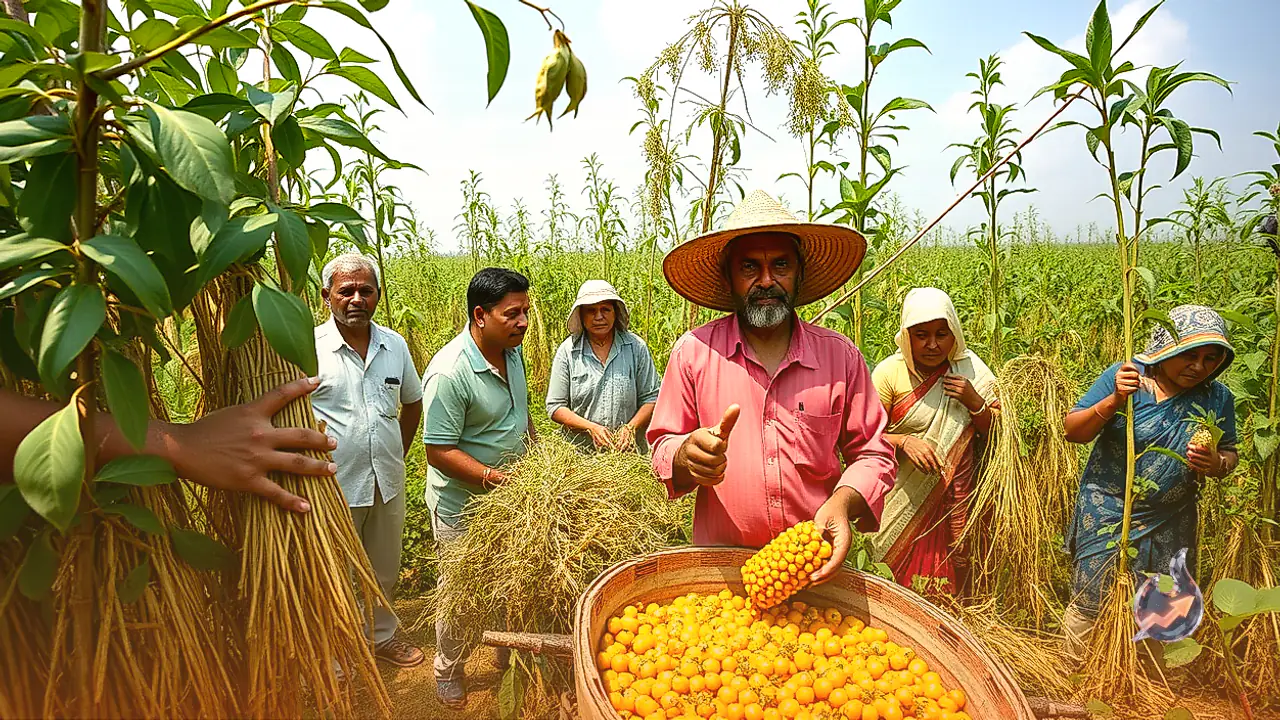
















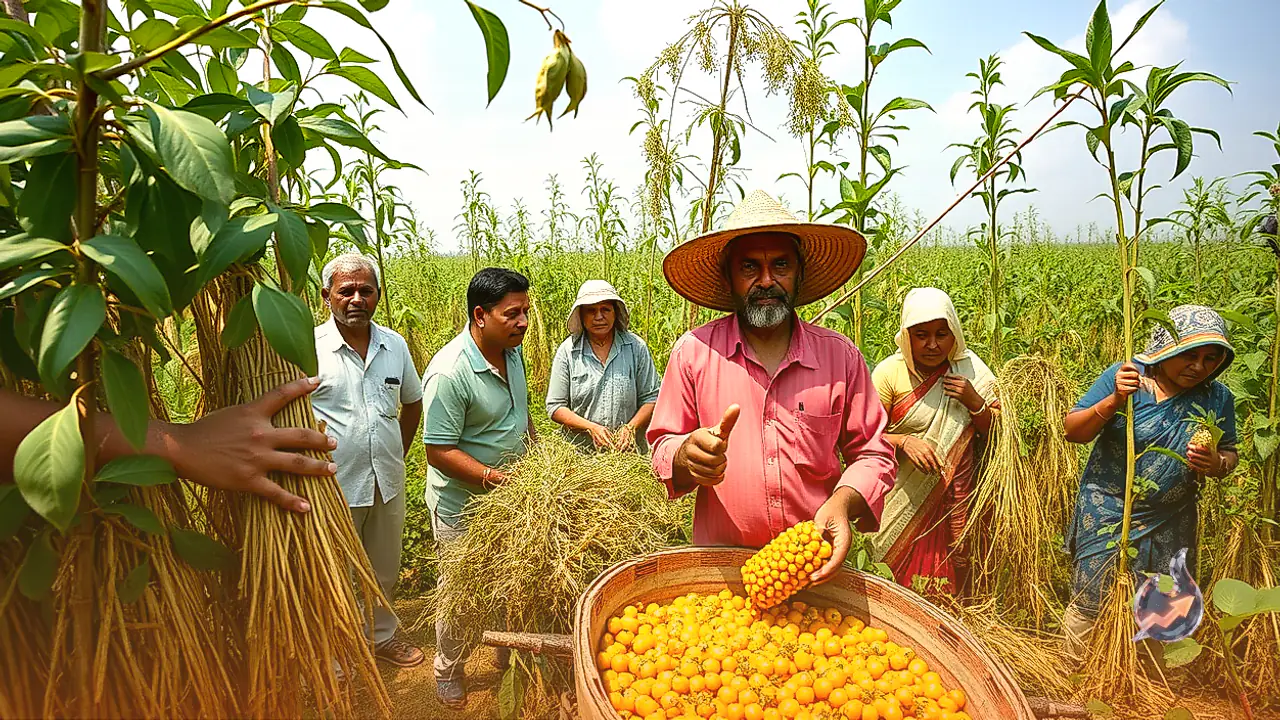

Agricultural practices are witnessing continuous evolution across the country, with farmers increasingly exploring auxiliary ventures alongside traditional crop cultivation to boost their earnings. In this context, Palamu district in Jharkhand has emerged as a prominent hub for an innovative agricultural experiment. Rural communities here are actively adopting beekeeping as a lucrative alternative, bypassing the conventional requirements of extensive field tillage or artificial irrigation systems. Nature is autonomously laying out profitable pathways for the local agrarian ecosystem.
Wild basil blossoms naturally across Palamu post-monsoon
The geographical topography and climatic conditions of Palamu district prove exceptionally conducive to this unique enterprise. Once the monsoon season concludes, wild basil plants spontaneously sprout across open fields and forested peripheries throughout the district. With the onset of winter, these plants burst into vibrant bloom, carpeting the landscape. Honeybees flock to these wild basil blossoms in vast numbers to harvest nectar and pollen, culminating in the creation of a distinct variety of honey. This wild basil honey is widely celebrated for its unique flavor profile and potential medicinal attributes. Consequently, as soon as the flowering season commences, professional beekeepers from neighboring states migrate toward Palamu.
Muzaffarpur beekeeper scales operations with Italian bees
Among the key figures driving this initiative is Sumant Prasad, a dedicated beekeeper hailing from Muzaffarpur in Bihar, who has spent the last five years perfecting honey production techniques. Operating in Palamu, he utilizes specialized Italian bee species known for their high productivity and efficiency in honey collection. To finance and expand his entrepreneurial venture, he leveraged the PMEGP scheme, securing a loan amounting to approximately 15 lakh rupees. He initially launched his enterprise with 200 wooden boxes and has steadily expanded his inventory to roughly 250 boxes. He continues to scale up operations incrementally to maximize output and financial returns.
Climatic dependencies and seasonal yield calculations
The entire enterprise of wild basil honey harvesting is fundamentally tethered to environmental conditions and weather fluctuations. According to Sumant Prasad, the active blooming season for wild basil lasts for roughly one month, with the initial or optimal 15-day window proving most critical for high production volumes. When weather conditions remain favorable, a single box can yield between 2 and 2.5 kilograms of honey over the course of a single season. However, unseasonal rainfall, temperature shifts, and floral availability exert a direct influence on final output. While pleasant weather translates to robust profits for cultivators, adverse climatic disruptions inevitably reduce yields and dent overall earnings.
Ambitious production targets and financial projections
Beekeepers have set substantial production benchmarks for the current operational cycle. Sumant Prasad has established a target of harvesting approximately 1000 kilograms of wild basil honey during this season, expressing confidence that favorable weather will help achieve the milestone. The targeted market price for selling this honey ranges between 100 and 140 rupees per kilogram. Calculations indicate an expected net profit of around 2 to 2.5 lakh rupees within a single season, though final earnings naturally fluctuate based on actual production volume, market rates, and operational overheads. This innovative approach is empowering cultivators to elevate their incomes while harnessing Palamu's abundant natural flora.