















Residing in Aragaro village located within the Chandwara block of Koderma district, Kiran Devi has established a remarkable benchmark of success through sheer hard work. Her journey proves beyond doubt that if an individual possesses the genuine drive to toil and channels their efforts in the right direction, even the most modest beginnings can transform into an inspiring tale of achievement. Today, she stands among those rural women who have completely reshaped their financial standing through independent enterprise.
The journey began in the year 2012
The foundational stone of this entire venture was laid roughly fourteen years ago in 2012. During that period, an organization named Support was actively working to foster livelihood opportunities across rural pockets. As part of this initiative, Kiran Devi was handed four roosters and eight hens to help her establish a source of sustenance. At that juncture, she lacked extensive resources or capital to launch a commercial venture on a grand scale. Nevertheless, she resolved to make the absolute best use of the opportunity presented to her and poured her dedication into it.
Gradually expanding the flock over time
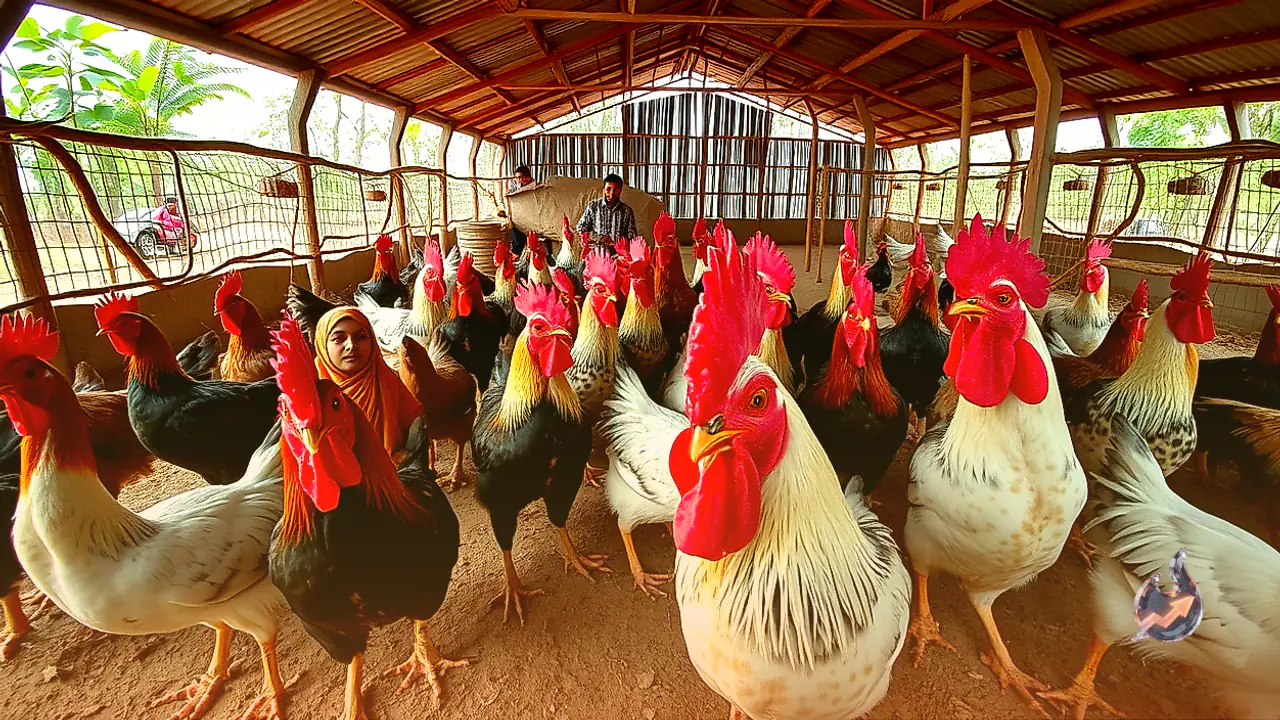
Starting out with a mere dozen birds, Kiran Devi ensured that their upkeep received meticulous attention. She looked after the fowls diligently and leveraged their natural breeding cycle to gradually scale up their numbers. Driven by proper management and persistent toil, her small-scale initiative steadily blossomed into a substantial enterprise. Over the course of these fourteen years, she has successfully sold several thousand birds. The current reality of her enterprise is that her poultry farm houses approximately one thousand birds at any given time.
Rearing indigenous and Sonali breeds
At present, Kiran Devi maintains two distinct categories of birds within her poultry establishment. These comprise indigenous chickens alongside the Sonali breed. The rationale behind rearing both varieties differs purposefully, thereby providing her with multiple streams of revenue. She explained that eggs from the indigenous chickens are utilized to hatch fresh chicks. Once these chicks grow in size, they are subsequently sold in the market. On the other hand, the Sonali breed is primarily kept for egg production. Additionally, the sale of roosters and mature birds brings in supplementary earnings.
Managing the farm alongside daily household chores
For women navigating life within a rural setting, balancing domestic responsibilities alongside commercial work is far from simple. Despite this reality, Kiran Devi oversees her poultry farm efficiently while simultaneously attending to her household and agricultural duties. She noted that she dedicates a few hours every morning and evening to feed the birds, supply fresh water, and monitor their overall well-being. Once these chores are wrapped up, she turns her attention to the remainder of her domestic tasks.
Essential practices for proper maintenance
Routine care and appropriate oversight constitute the most vital components of a poultry venture. Ensuring timely provision of feed and water, keeping a close eye on the physical condition of the birds, and addressing their specific needs form the bedrock of this daily routine. She shared that when chicks receive adequate and timely care, they typically grow to maturity within a span of roughly ninety days.
Generating a monthly income of fifteen thousand rupees
Kiran Devi shared that her poultry enterprise yields a steady monthly income of approximately fifteen thousand rupees. This financial return allows her to purchase essential household items with ease. Furthermore, these earnings assist her in funding the education of her children while extending financial support toward broader household expenditures. Despite kicking off her venture with minimal resources, she has successfully cultivated a reliable and sustainable source of livelihood for her household.