






















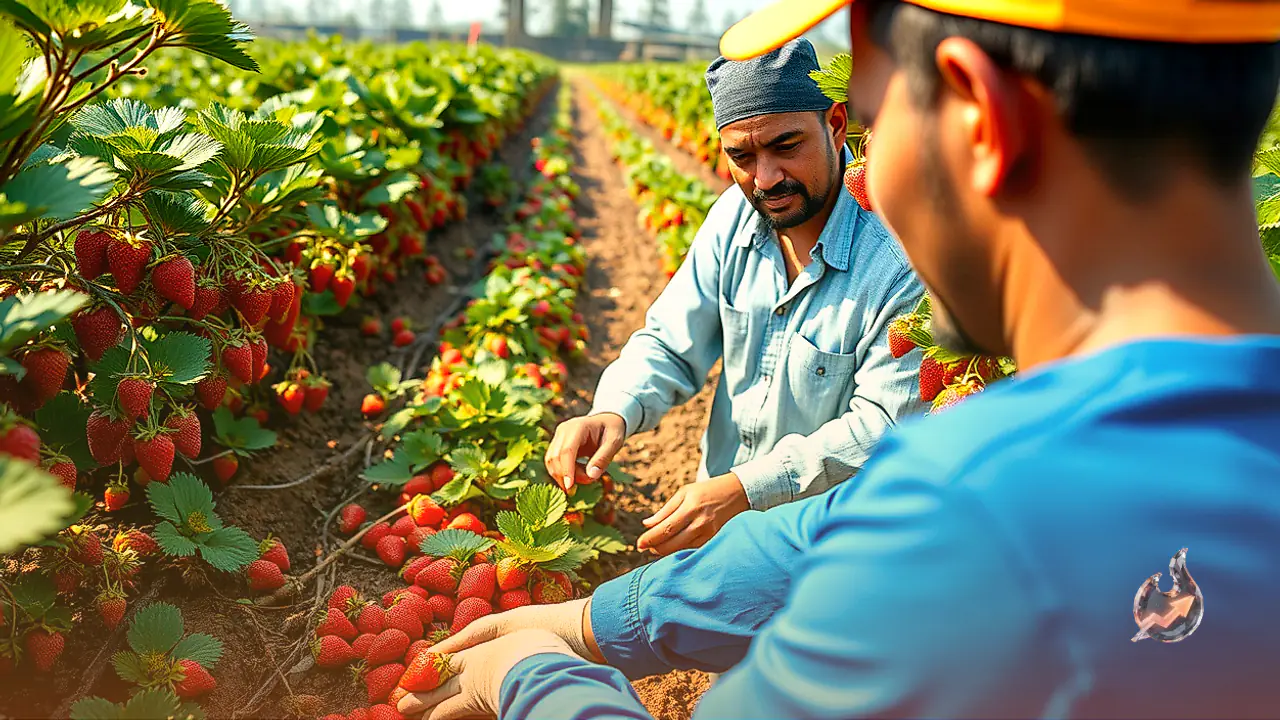

In the Palamu region of Jharkhand, strawberry cultivation is rapidly establishing itself as an attractive source of commercial income for local growers seeking higher returns than conventional farming. Nevertheless, harvesting a profitable and premium quality crop requires strict adherence to specialized agronomic interventions. Mulching has become an indispensable component of this approach, proving highly effective not only in boosting berry quality but also in curbing weed proliferation and conserving vital moisture within the topsoil. Interestingly, growers can choose between commercial plastic sheets and locally gathered organic materials to lower upfront capital expenditure while simultaneously enriching the fertility of their plots.
Raised Bed Preparation and the Organic Advantage
Palamu district agricultural scientist Dr Pramod Kumar pointed out that mulching plays a fundamental operational role in successful strawberry management. He recommended setting up raised planting beds and covering them thoroughly with appropriate mulching material before transplanting. Farmers can implement this strategy using either plastic film or natural organic matter. Organic mulch, however, delivers a dual benefit by keeping production overheads low. By utilizing readily available farm residue such as dry fallen leaves, straw, and other biodegradable farm waste, growers can completely eliminate the expense of procuring synthetic rolls from external commercial markets.
Moisture Retention and Progressive Soil Enrichment
Explaining the technical virtues of biodegradable covers, he stated that the primary benefit of organic mulching lies in its capacity to lock residual dampness in the root zone, significantly diminishing the requirement for repeated irrigation rounds. Furthermore, by blocking sunlight from directly striking the open soil surface, it arrests the germination and unchecked growth of competing weeds. Over the course of the cropping cycle, these organic layers naturally decompose and blend into the ground, raising the overall organic matter quotient. This process directly enhances soil texture, aeration, and inherent nutrient availability. However, to safeguard delicate strawberry fruits from fungal rot and moisture spoilage, growers must ensure that the laid mulch remains properly aerated, clean, and spread in an even, measured volume.
Selecting the Correct Micron Thickness for Plastic Covers
For growers who prefer deploying synthetic plastic film across their fields, paying close attention to gauge specifications is critical. Dr Kumar explained that a thickness of 25 microns is conventionally recommended for standard strawberry cultivation. In situations where farmers are managing shorter crop cycles lasting around three months, a lighter 20-micron film can serve the purpose adequately. Conversely, if the crop is intended to stay in the field for an extended duration, investing in heavier, more durable plastic sheeting is essential to prevent premature degradation.
Retail Pricing and Quality Verification
When purchasing plastic film from retail suppliers, farmers should carefully verify material grade and tensile strength, as inferior sheets tear easily during installation and weeding operations. In local supply markets, a roll measuring approximately 450 metres with a thickness between 25 and 30 microns typically retails for about 1500 rupees. While longer duration crops demand sheets with higher micron values to endure environmental exposure, shifting toward organic mulching remains an outstanding alternative for resource-conscious farmers aiming to slash operational expenses while securing strong harvest margins.