
















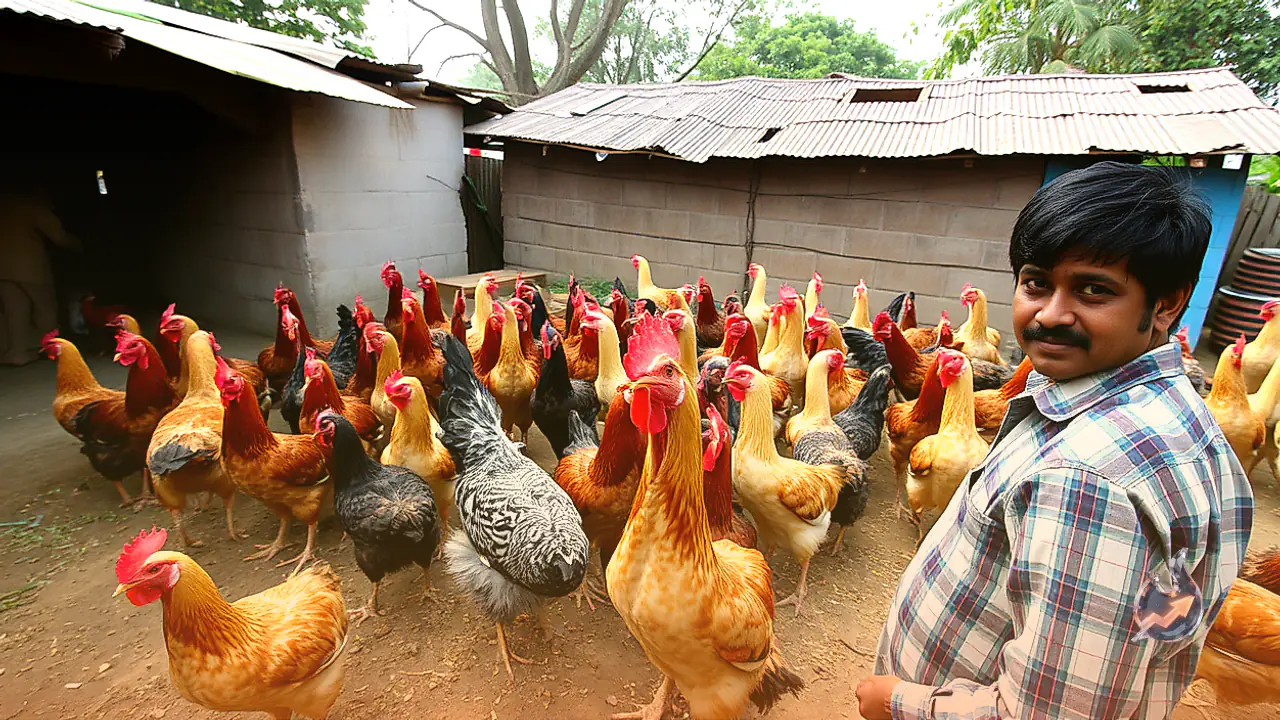

Backyard poultry farming has long served as a vital cornerstone of rural household economies across India. For generations, families in villages and small towns have kept small flocks around their homesteads to generate supplemental income and food. As modern livestock practices have evolved, the approach to small-scale bird rearing has also experienced a noticeable transformation. Rather than committing heavy capital toward commercial broiler sheds, many growers now seek improved indigenous-type varieties that require modest management while delivering dependable margins. This practical shift is clearly visible in Bihar's Jehanabad district, where smallholders are rethinking their approach to poultry.
Seven Years Of Hands-On Experience With Dual-Purpose Birds
Abhay Sharma, a resident of Modanganj block in Jehanabad, exemplifies this low-cost poultry model. He has been actively raising chickens for the past 7 years, deliberately steering clear of industrial broiler configurations. Instead, he chose birds that adapt effortlessly to backyard settings without demanding climate-controlled infrastructure or costly housing setups. Sharma maintains that native-type dual-purpose birds provide far greater resilience and financial safety for smallholders. Guided by this strategy, he brought Vanaraja and Gramapriya breeds into his rearing routine.
High Egg Output Reaching Up To 300 Per Year
Both Gramapriya and Vanaraja varieties stand out for their prolific laying performance under semi-intensive or open backyard conditions. According to Abhay Sharma, hens from these two varieties possess the capacity to produce between 280 and 300 eggs annually. In the retail market, each egg sells for 15 rupees, creating a reliable and recurring revenue stream throughout the year.
The feed expenditure for these birds remains remarkably low compared to intensive farming setups. Each hen requires approximately 180 grams of food on a daily basis. Farmers do not need to rely heavily on commercially packaged feeds, because these chickens naturally forage in the immediate surroundings. They actively scavenge for green vegetation, leftover grains, and insects, fulfilling a significant portion of their daily dietary requirements on their own.
Space Economy, Sturdy Immunity, And Monthly Financial Returns
Physical hardiness gives these breeds a substantial edge over commercial broilers. Vanaraja and Gramapriya birds display superior disease resistance and natural immunity, allowing them to withstand weather fluctuations with fewer medical interventions. Their housing needs are equally minimal, requiring only one square foot of floor space per individual bird.
Sharma points out that maintaining a modest flock of 50 hens from these breeds can yield between 12,000 and 15,000 rupees every month directly from home. The primary operational caution involves monitoring the flock's movements, as these active birds have a natural tendency to wander across open areas, requiring the caretaker to keep a vigilant eye on their whereabouts.