


















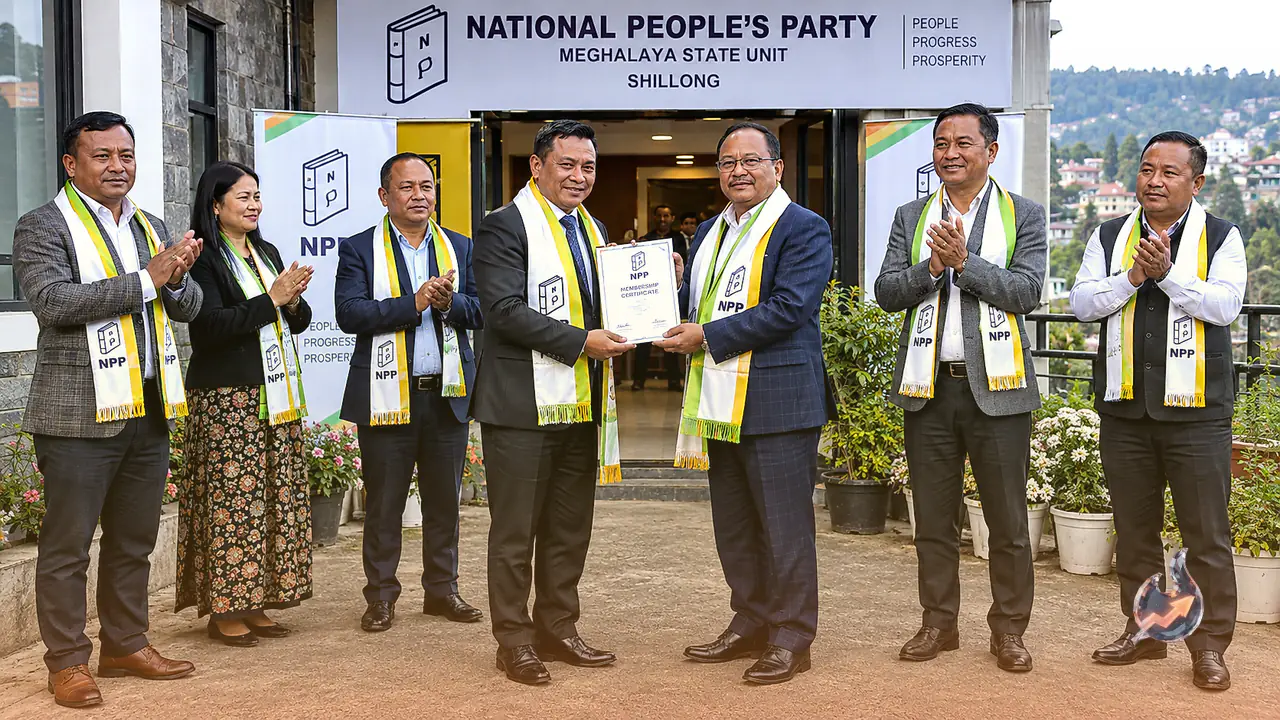

In a significant political development in Meghalaya, the ruling National People's Party (NPP) has expanded its legislative strength following the induction of former United Democratic Party (UDP) lawmakers Paul Lyngdoh and Renikton Lyngdoh. Meghalaya Chief Minister Conrad K Sangma formally welcomed the two leaders into the fold during an official ceremony hosted at the party's headquarters in Shillong, where Deputy Chief Minister Prestone Tynsong presented them with their membership certificates.
Absentee Lawmaker and Official Assembly Recognition
Although the merger effort involves three former UDP members, Mookaiaw legislator Nujorji Sungoh was unable to attend the ceremony due to health issues. Alongside Sungoh, 18-West Shillong MLA Paul Lyngdoh and 36-Mawkyrwat MLA Renikton Lyngdoh (also referred to as Renikton Tongkhar) had previously submitted a merger request to join the NPP. Assembly Speaker Thomas A Sangma reviewed and officially recognized the merger prior to the ceremonial induction.
Chief Minister's Public Statement
Expressing optimism over the expansion, Chief Minister Conrad K Sangma wrote on X to extend a warm welcome to Bah Paul Lyngdoh, Bah Renikton Tongkhar, and Bah Nujorki Sungoh alongside their supporters. Sangma noted that their arrival would strengthen the party's collective mission to advance progress, prosperity, and governance across Meghalaya.
Shift in Meghalaya's 60-Member Assembly Numbers
This political realignment follows a major shift just days earlier, when eight other UDP legislators resigned to join the Bharatiya Janata Party (BJP). Taken together, these consecutive crossovers have drastically reduced the UDP's presence in the 60-seat Meghalaya Legislative Assembly from 12 seats down to a single legislator.
The series of defecting members has simultaneously reshaped the numerical strength of the coalition partners. The BJP's representation in the House jumped from two to 10 seats, while the NPP boosted its controlling tally from 33 to 36 MLAs, consolidating the coalition's legislative majority in the state.