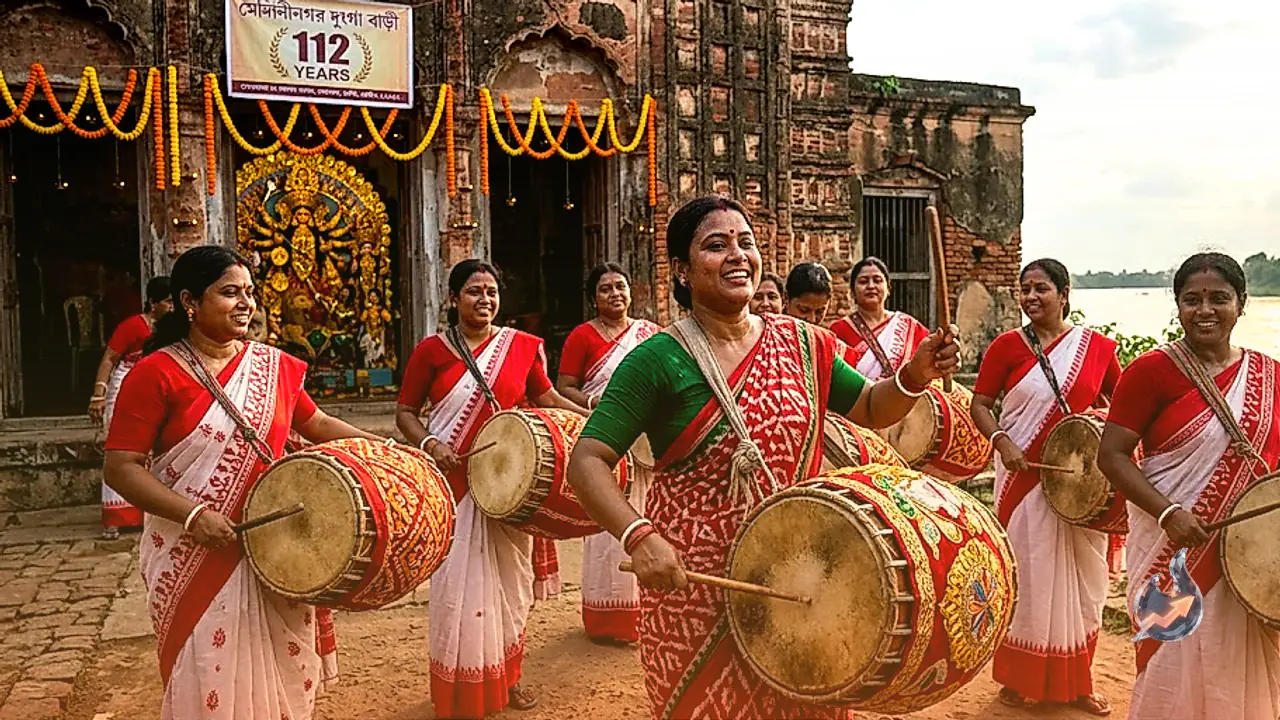




















Situated along the picturesque banks of the Koel River in Medininagar, the administrative center of Jharkhand's Palamu district, the revered Durga Bari continues to preserve a vibrant 112-year-old tradition of Bengali Durga Puja rituals. While celebrations occur nationwide, the authentic customs and scriptural ceremonies associated with Bengal draw immense devotion, and Durga Bari brings that distinct spiritual heritage alive in Jharkhand. The annual festivity, defined by age-old customs and intricate craftsmanship, remains a central spiritual landmark for devotees across the region.
From Ranka Bhawan to the Banks of the Koel River
Records preserved by the Durga Bari Puja Committee trace the origin of this celebration back to the year 1914, when it first commenced at Ranka Bhawan located in Chhemuhan. For the initial 13 years, through 1926, the annual prayers and rituals were faithfully organized inside that historic building. A transformative milestone occurred in 1927 when members of the local Bengali community secured land directly adjacent to the Koel River. The shrine was formally established as Durga Bari, and traditional Bengali ceremonies began on the riverbank. This unbroken devotional lineage has continued uninterrupted on the same premises to this day.
The Historic Ek Chaal Idol Reaches 12 Feet
A core element that distinguishes Durga Bari from surrounding venues is its adherence to the Ek Chaal structural tradition. Head priest Devi Prasad Banerjee explained that under this classical format, Goddess Durga is enshrined alongside Goddess Lakshmi, Goddess Saraswati, Lord Kartikeya, and Lord Ganesha within a single unified arch frame rather than on disconnected pedestals. For this year's festival, a towering 12-foot idol is being sculpted following these strict canons. The craftsmanship remains an inherited responsibility of the Pal family. When the festival originated more than a century ago, the committee's forebears invited and settled the artisan family locally, and their descendants have preserved this sacred sculpting heritage across generations.
Eco-Friendly Sculpting Using Pure Natural Materials
In harmony with environmental stewardship, the sculpting process this year strictly avoids synthetic compounds. The artisans rely solely on traditional alluvial smooth clay, bamboo structures, seasoned wood, and natural jute ropes to construct the entire 12-foot framework. Devi Prasad Banerjee noted that chemical pigments, toxic varnishes, and industrial additives have been entirely avoided. By utilizing natural and organic elements, the shrine preserves the ceremonial purity required by ancient texts while demonstrating a strong civic commitment to nature conservation.
All-Women Dhak Troupe Arrives from Bengal
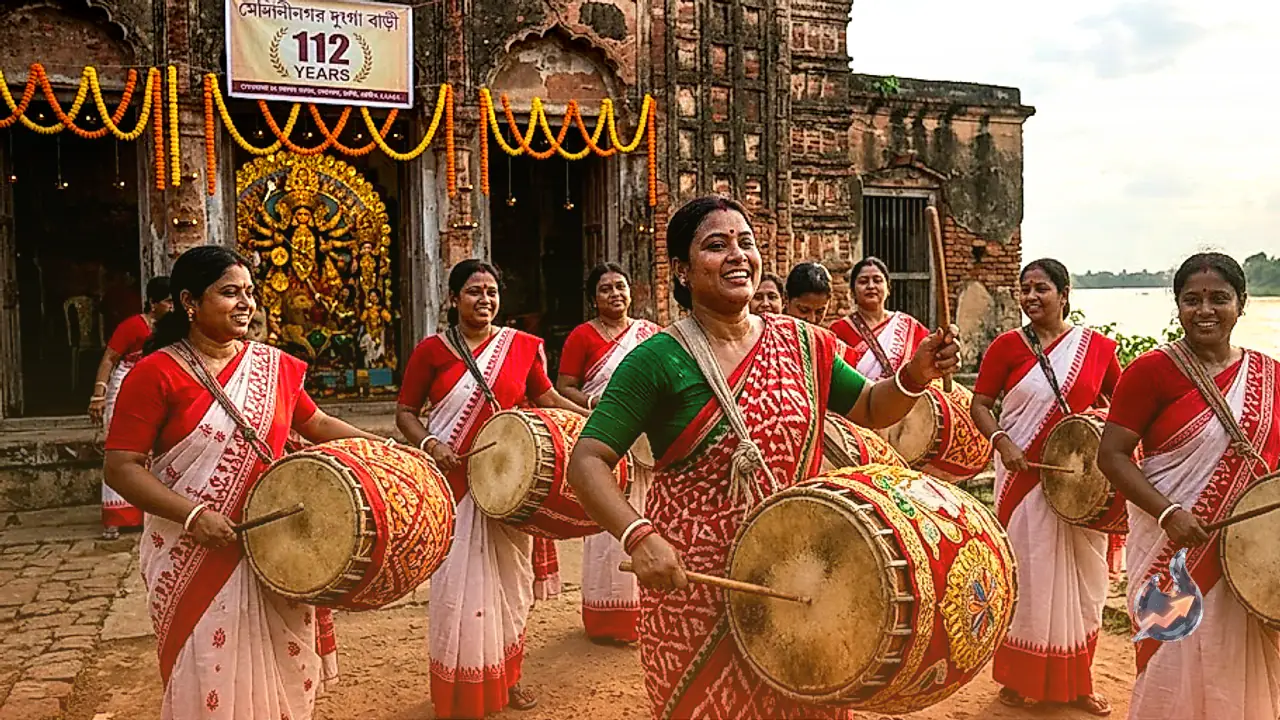
A quintessential fixture of Bengali devotional celebrations is the resonant rhythm of the Dhak drum, traditionally performed by master drummers brought directly from West Bengal. In an inspiring step toward women empowerment, the organizing committee has arranged an all-women Dhak performance troupe from Bengal for this edition. This marks the first occasion in Palamu's history where a female drumming ensemble will take charge of the devotional percussion during Durga Puja. Accompanied by these complex rhythmic beats, women and devotees perform the customary Dhunuchi devotional dance before the altar.
Ceremonial Calendar from Sasthi to Dashami
The liturgical ceremonies at Durga Bari commence formally on the Sasthi tithi. Each subsequent morning and evening features intricate scriptural worship accompanied by solemn evening Sandhya Aarti gatherings. The most critical spiritual juncture occurs during Sandhi Puja, observed precisely at the confluence of Ashtami and Navami tithis, drawing large congregations of worshippers. Throughout these solemn hours, devotees dance to resonant drum cadences, and an age-old ritual tradition of symbolic sacrificial offering continues to be observed with deep piety.
Evening Cultural Dramas and Mahaprasad Feast
In keeping with tradition, the religious observances are complemented by community cultural events in the temple courtyard. Beginning at approximately 7:00 PM on Saptami and Ashtami evenings, stage plays, classical dances, and devotional bhajan recitals will take place. These cultural showcases extend across Ashtami, Navami, and Vijayadashami, highlighting regional artistic talent. On the day of Navami, the committee arranges a massive community feast where traditional Khichdi Mahaprasad is distributed among thousands of gathered pilgrims.
The Abode of Goddess Kali Since 1996
The spiritual sanctity of Durga Bari extends throughout the year through an adjacent shrine dedicated to Goddess Kali. Established in 1996, the Kali temple has seen Devi Prasad Banerjee perform daily pujas and rituals as the resident priest since its consecration. On every Amavasya (new moon day), elaborate ceremonies and scriptural offerings are conducted in honor of Goddess Kali. During the festive days of Durga Puja, this consecrated precinct draws steady crowds of pilgrims, making the riverbank complex a profound emblem of enduring religious devotion and community harmony in Medininagar.