






















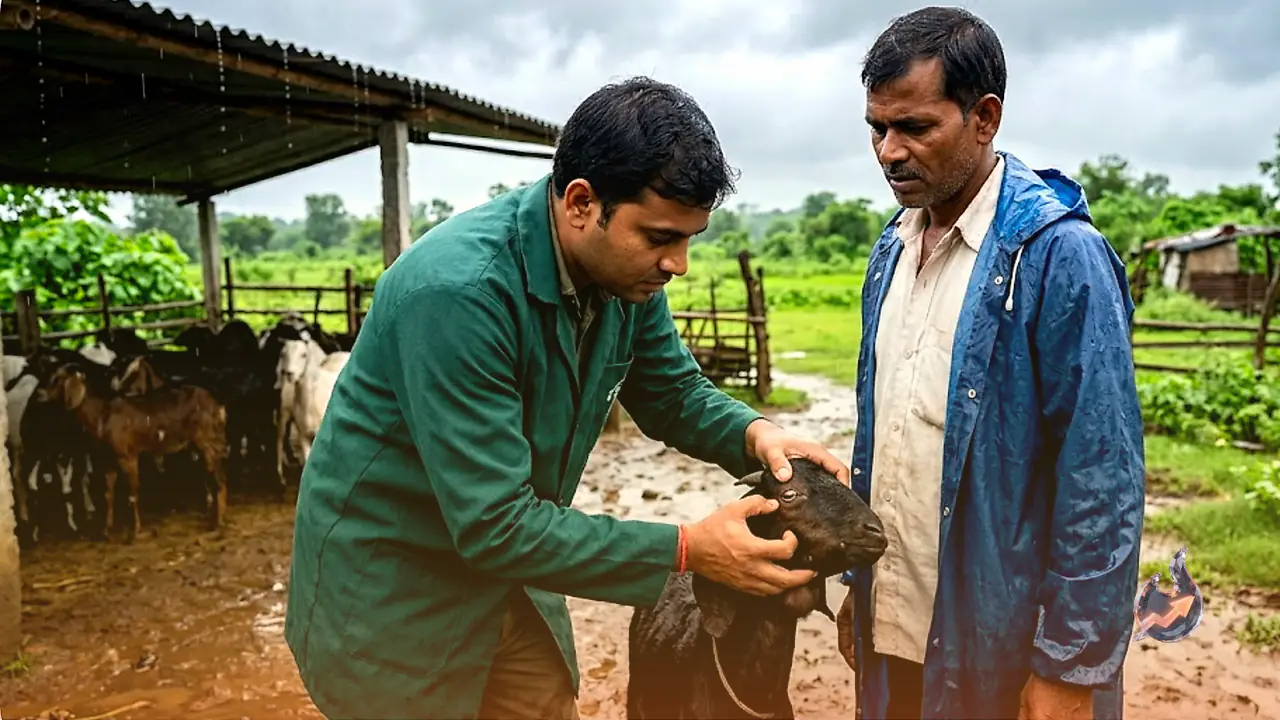

As the monsoon sets in, goat farmers face a fresh set of challenges. Even minor lapses in cleanliness and care can rapidly worsen stomach worm infections in goats. Left untreated, the problem can escalate into serious conditions like anemia, diarrhea and bottle jaw disease, and in several cases the infection turns severe enough to kill the animal. Dr. Anil Kumar, a veterinarian at the Chas Pet Clinic in Bokaro, has shared important guidance on preventing and managing stomach worms in goats during the rainy season.
How rainwater helps parasites thrive
According to Dr. Anil Kumar, goat owners need to pay special attention to feeding and upkeep during the rains. Waterlogging around the shed, flowing water and a lack of cleanliness allow parasitic worms to multiply quickly. Snails also play an important role in the life cycle of these parasites during this period, which speeds up the spread of infection.
Wet grass becomes the root of the infection
During the rains, the larvae of these parasites cling to fresh, wet grass. When goats graze on this grass, they end up swallowing the larvae along with it. From there, the parasites travel to the stomach and intestines and gradually begin spreading infection, making the goats fall ill.
What bottle jaw disease is and how it turns fatal
A severe stomach worm infection can lead to bottle jaw disease in goats. In this condition, the goat's body continuously loses blood and protein, causing fluid to accumulate and settle downward inside the body. This results in swelling under the goat's lower jaw and throat. The swelling makes it difficult for the animal to eat, and it gradually grows weaker.
Diarrhea causes weight loss and growing weakness
When the number of parasitic worms in a goat's stomach and intestines rises too high, they damage the inner lining of the intestines. As a result, the goat is unable to digest food properly and develops repeated loose or watery stools. This diarrhea then causes the goat to lose weight, leaving it weak and eventually sick.
Dr. Anil Kumar's advice on prevention
Dr. Anil Kumar has offered farmers some essential advice. He says goats should always be kept in a dry and clean space during the monsoon, and the shed roof should be built so that rainwater cannot get in. Waterlogging should not be allowed to build up around the shed, and most importantly, goats should be given deworming medicine from time to time. Parasiticide medicines should be used to protect the animals from external parasites. Goats should also always have access to clean, fresh drinking water, and along with green fodder, a balanced amount of dry fodder must be fed to them regularly.