






















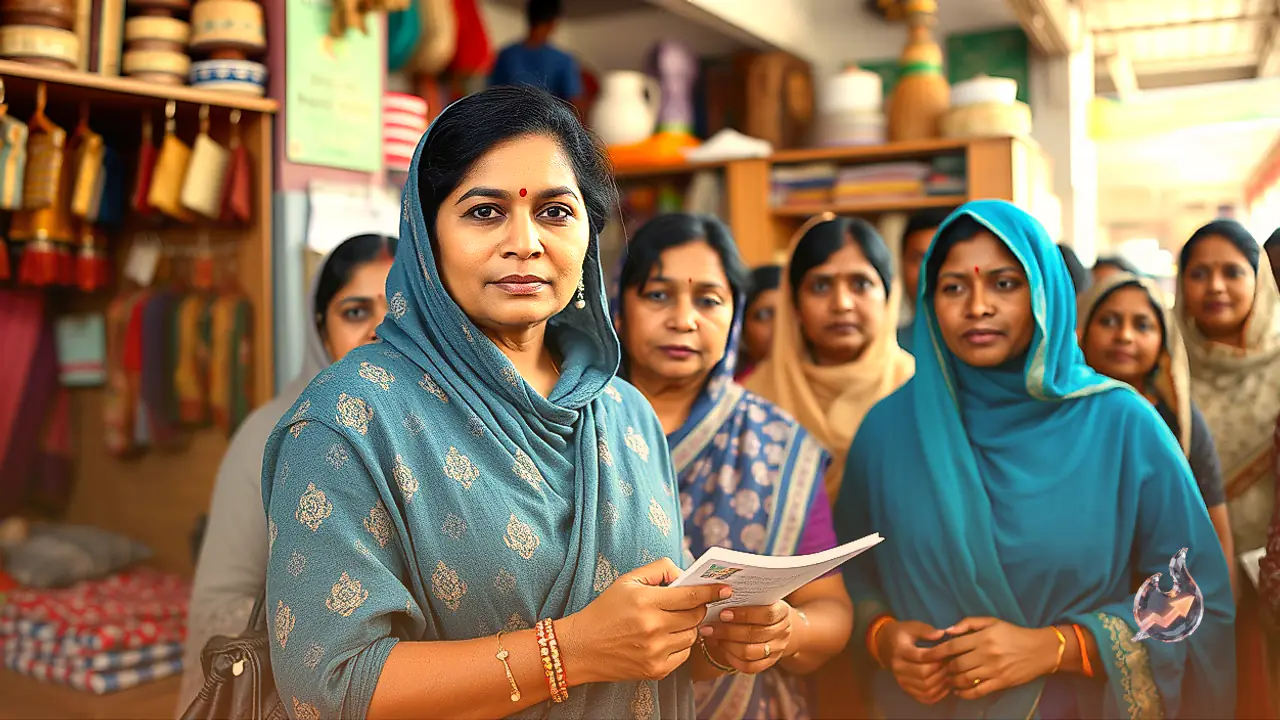

Choosing entrepreneurship over the routine race for salaried employment after completing higher education requires courage and clarity. Mamta Kumari, a resident of Bajrang Nagar in the Jhumri Telaiya town of Koderma district, has exemplified this path. After finishing her postgraduation studies, she decided not to pursue a conventional desk job and instead chose to establish her own enterprise. Today, relying entirely on her craft, she has achieved financial independence while simultaneously motivating other women in her locality to explore self-employment opportunities.
Six Months of Free Training with Khadi Board
The turning point in Mamta Kumari's vocational journey came through an institutional skill development initiative. She enrolled in a six-month complimentary sewing and tailoring course conducted by the Jharkhand State Khadi and Village Industries Board. This skill center operates out of Khadi Bhawan, located close to the Telaiya police station in Jhumri Telaiya. A crucial aspect of this program was its daily financial support mechanism. Trainees were granted a stipend of 150 rupees per day throughout the duration of the curriculum. Over the six-month training period, Mamta accumulated approximately 27,000 rupees in total stipend money.
Rather than diverting this cash reserve toward incidental household expenses, Mamta chose to invest the entire sum into building a sustainable livelihood. She utilized these 27,000 rupees to purchase a sewing machine and set up the foundational workspace required for independent tailoring operations. By converting a government training allowance into working capital, she laid the groundwork for her commercial launch.
Family Encouragement and Spousal Partnership
Upon completing her postgraduate degree, Mamta remained convinced that establishing a self-reliant enterprise was her preferred direction. It was during this phase that she learned about the free tailoring training offered at Khadi Bhawan. She discussed the prospect with her husband, Ravi Paswan, who fully endorsed her ambition and urged her to join the training program.
Her husband's support extended to daily logistical assistance. Every morning, he accompanied her to the training center, and in the evening, after class concluded, he ensured she returned home safely. This consistent backing from her family bolstered her confidence, enabling her to attend the sessions diligently and master the nuances of tailoring and pattern cutting across the entire six-month span.
Establishing Mamta Boutique Center Near the Water Tank
Equipped with formal training and necessary machinery, Mamta launched her business venture under the trade name Mamta Boutique Center, situated near the local water tank in town. Her studio caters to women's apparel requirements, specializing in designer suits, lehengas, blouses, and customized traditional wear. Thanks to neat finishing and responsive service, she steadily built a reliable customer clientele across the surrounding neighborhood.
During typical working periods, she sews between two and three garments each day. However, client requests rise substantially during major festivals and marriage seasons. To remain competitive, Mamta incorporates popular digital trends into her catalog. When patrons come with photographs of viral clothing designs sourced from social media channels such as Instagram, she recreates those contemporary silhouettes according to the exact measurements of her clients.
Balancing Domestic Duties While Earning 15,000 Rupees Each Month
Mamta's schedule offers a practical roadmap for managing domestic responsibilities alongside commercial work. Every day begins with preparing household chores and attending to the routines of her children. Once morning family duties are settled, she transitions to her boutique, where she works through the afternoon before returning home to oversee evening domestic tasks.
At present, she manages every operational facet of the boutique independently. After settling all operating and material overheads, she generates a consistent net profit of roughly 15,000 rupees each month. During peak festival months, this income rises further. She uses these earnings to meet personal requirements, fund the recreational interests of her children, and contribute directly to overall household finances.
Empowering Local Women Through Practical Training
Having stabilized her own commercial setup, Mamta is now focusing on mentoring other young women and homemakers across her locality. To facilitate this, she has installed extra sewing machines within her boutique premises, offering hands-on tailoring lessons to interested candidates. In Mamta's assessment, possessing a practical, marketable skill enables women to establish an independent identity and strengthen their family's economic footing without having to abandon their domestic responsibilities.