






















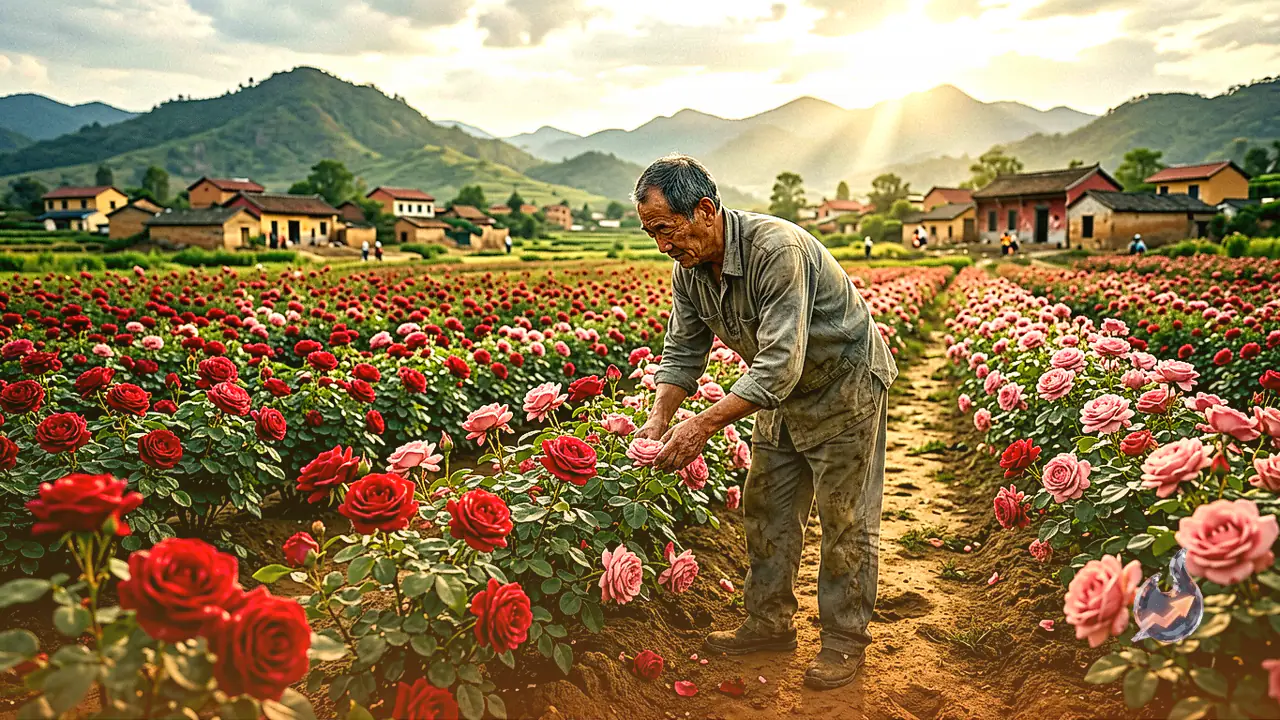

The landscape of agriculture in India is undergoing a rapid transformation, as cultivators move beyond traditional staple crops like paddy and wheat to embrace horticulture. The production of fruits, vegetables, medicinal plants, and flowers has emerged as a reliable pathway to better earnings. Among these floral options, rose cultivation stands out as an immensely profitable choice for growers. Whether it is for religious rituals, wedding seasons, hotel decorations, or the manufacturing of perfumes and beauty products, the demand for roses remains steady throughout the entire year. Consequently, equipped with proper techniques and better market access, rose farming can provide farmers with a strong and sustained income over an extended period.
A Long-Term Profitable Venture
Dr. Rajan Ojha, Senior Agricultural Scientist and Head at the Deoghar Krishi Vigyan Kendra, explained during a discussion that the greatest advantage of rose cultivation is its longevity. Once the saplings are properly planted in the field, farmers can harvest continuous yields for many consecutive years. According to the scientist, a rose plant continues to bloom for a long time, and with proper maintenance, it can remain productive for nearly 20 years. Furthermore, income is not restricted solely to selling flowers; farmers can also generate extra revenue by preparing and selling rose cuttings. This enables growers to establish multiple streams of revenue from a single crop.
Soil Testing Before Cultivation
The most crucial step before initiating rose farming is getting the soil tested. Soil testing reveals which nutrient is lacking in the field and what amendments are necessary before planting begins. Although roses can be grown in various types of soil, loam soil is considered the most superior option. Loam soil promotes healthy root development and rapid plant growth. Additionally, better soil quality contributes to superior flower quality. If the soil requires improvement, agricultural experts recommend applying dolomite. According to Dr. Rajan Ojha, about one and a half quintals of dolomite per acre can be utilized for soil conditioning.
Selecting The Right Varieties
Choosing the correct variety is vital in determining a farmer's earnings. Growers should select improved varieties keeping market demand and cultivation goals in mind. Farmers have several options available, such as Superstar, Raktagandha, Hybrid Tea roses, Floribunda roses, Button roses, and Miniature roses. Different varieties feature different flower sizes, colors, and market values. Therefore, before planting, farmers must gather information about flower demand in their local markets.
Good Yields During The Rainy Season
Excellent yields can also be obtained during the monsoon season, provided the field has a robust drainage system. Rose plants require moisture, but water standing in the field for extended periods can rot the roots. Therefore, farmers should select fields where rainwater drains away easily. Cultivating roses in open fields is considered ideal because the plants need adequate sunlight and fresh air to grow properly and bloom effectively.
A Great Option For Small Farmers
By integrating horticultural crops like roses with traditional farming, cultivators can significantly boost their overall income. Utilizing protected farming methods and modern techniques further increases the potential for higher production and profits. Besides selling flowers, additional income can be earned by selling plant cuttings. Thus, rose cultivation can prove to be an excellent choice even for farmers with limited land holdings, provided they conduct soil tests, select the right varieties, and consult agricultural experts before getting started.