






















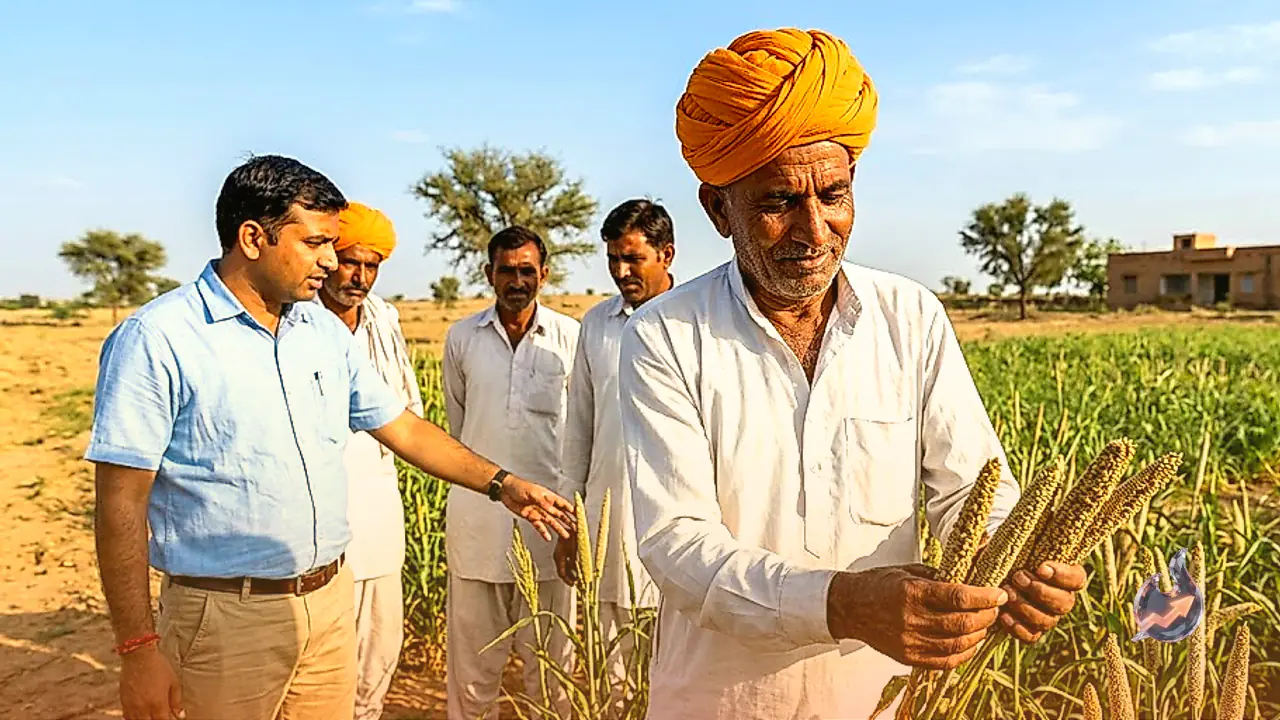

Shifting weather patterns and erratic rainfall across western Rajasthan have created mounting challenges for local farmers. With the monsoon season drawing to a close without adequate precipitation in multiple areas, sowing activities remain severely disrupted, leaving cultivators anxiously watching the skies. Amid the growing impacts of climate change, drought-like conditions are emerging as a major hurdle for regional agriculture. In response to these difficulties, Agriculture University Vice Chancellor Dr. V.S. Jaitawat stated that continuous efforts are underway to provide farmers with better agricultural alternatives suited to changing weather conditions.
Focus on Drought-Resistant Crop Varieties
University scientists are specifically working on developing crop strains capable of withstanding dry spells. Priority is being given to varieties that mature within a shorter duration and demand minimal water resources. Through extensive research on various local crops, the university has successfully bred several useful varieties designed to thrive in the arid climate and low-rainfall environment characteristic of western Rajasthan.
Viable Sowing Options Despite Late Rains
Even if substantial rainfall is delayed until the final days of September, cultivators will still retain viable options for planting. The institution maintains specialized seed varieties for sesame, moong, guar, and pearl millet that can reach full maturity within a shortened timeframe. A key feature of these specific crop lines is their engineered capacity to develop successfully with restricted water availability.
Paving a New Direction for Regional Farming
Agricultural research is being advanced with careful consideration of the geographical realities and dynamic climate trends unique to western Rajasthan. In the coming period, crop strains that combine low water requirements, quick growth cycles, and drought tolerance will prove exceptionally beneficial for the agricultural community. The overarching goal of the university is to bridge the gap between laboratory research and actual farmlands, ensuring growers have practical tools to mitigate weather-related risks.