






















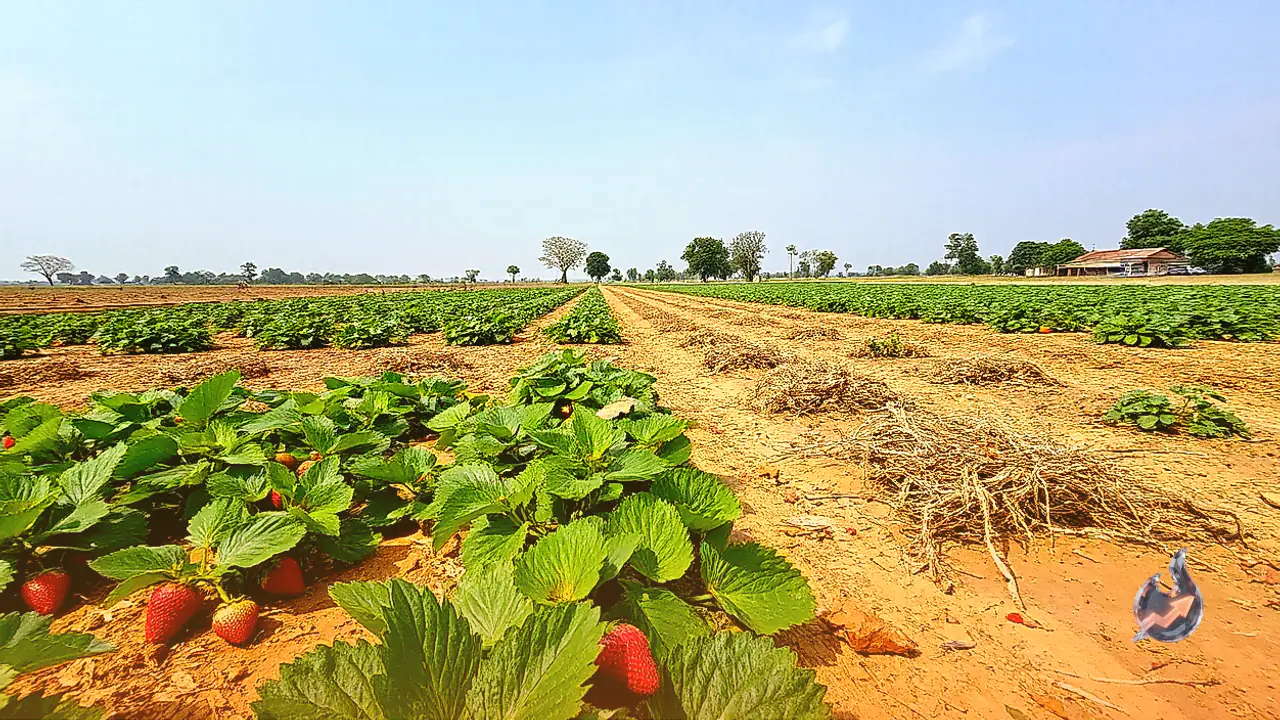

Strawberry farming is emerging as a lucrative alternative for farmers in the Palamu district of Jharkhand. Moving away from traditional crops, cultivators are finding that growing strawberries can significantly boost their earnings. The local climate and suitable soil in Palamu provide a favorable environment for this crop, offering growers a strong avenue to increase their revenue.
Importance of Mulching Technique
Mulching plays a crucial role in strawberry cultivation. According to agricultural scientist Dr Pramod Kumar, the soil around the plants is covered with plastic mulch during this process. This prevents the strawberries from coming into direct contact with the soil, thereby reducing the chances of the fruits getting dirty or spoiled. Additionally, mulching helps retain moisture in the field and effectively controls weed growth. High-quality fruits resulting from this technique enable farmers to command better prices in the market.
Plant Density and Yield Per Acre
The overall yield heavily depends on the number of plants and their management. Available insights indicate that roughly 12,000 to 20,000 plants can be accommodated in a single acre of land. With each plant capable of yielding between 200 and 400 grams of fruit, the total production can be quite substantial. To achieve this, growers must ensure timely irrigation, proper nutrition management, and adequate upkeep of the crops.
Estimated Costs and Profit Margins
Cultivating strawberries on an acre of land is estimated to incur an investment of around 3 lakh to 3.5 lakh rupees. On the other hand, with successful production and favorable market prices, farmers have the potential to earn a net profit of approximately 4 lakh rupees. However, actual earnings fluctuate based on total yield, selling price, weather conditions, and transportation expenses. Therefore, producers should assess market conditions and expenses thoroughly before starting.
Packaging and Long-Distance Transport
Strawberries are delicate fruits, which makes careful harvesting and packaging essential. After picking, the produce is placed in appropriate ventilated packaging to maintain quality during transit. With the availability of proper cold-chain logistics and AC container facilities, these berries can be transported to major markets like Kolkata. This grants growers access to sales opportunities beyond local mandis into other cities.
Government Subsidies and Soil Requirements
To encourage strawberry farming, growers can gather information on available schemes and subsidies from the district horticulture department. Furthermore, installations of drip irrigation systems are eligible for up to 90 percent subsidies under various agricultural department schemes. However, the actual rate of financial aid depends on the farmer's eligibility and scheme guidelines. By utilizing sandy loam soils with good drainage and adopting the right techniques, cultivators can turn strawberry farming into a reliable source of income.