























In Palamu district, animal husbandry officials are urging dairy farmers to watch for a common but damaging illness whenever a cow or buffalo suddenly starts giving less milk. The culprit, they say, is often Foot-and-Mouth Disease, known as FMD, a highly contagious infection that the government has been working continuously to control through vaccination.
Which animals are most at risk
FMD spreads mainly among animals with cloven hooves, meaning hooves split into two parts. Cows, buffaloes and other milk producing animals all fall into this category. The disease does more than make an animal unwell; it directly hits milk output, leaving farmers with a real financial loss.
Spotting the early symptoms
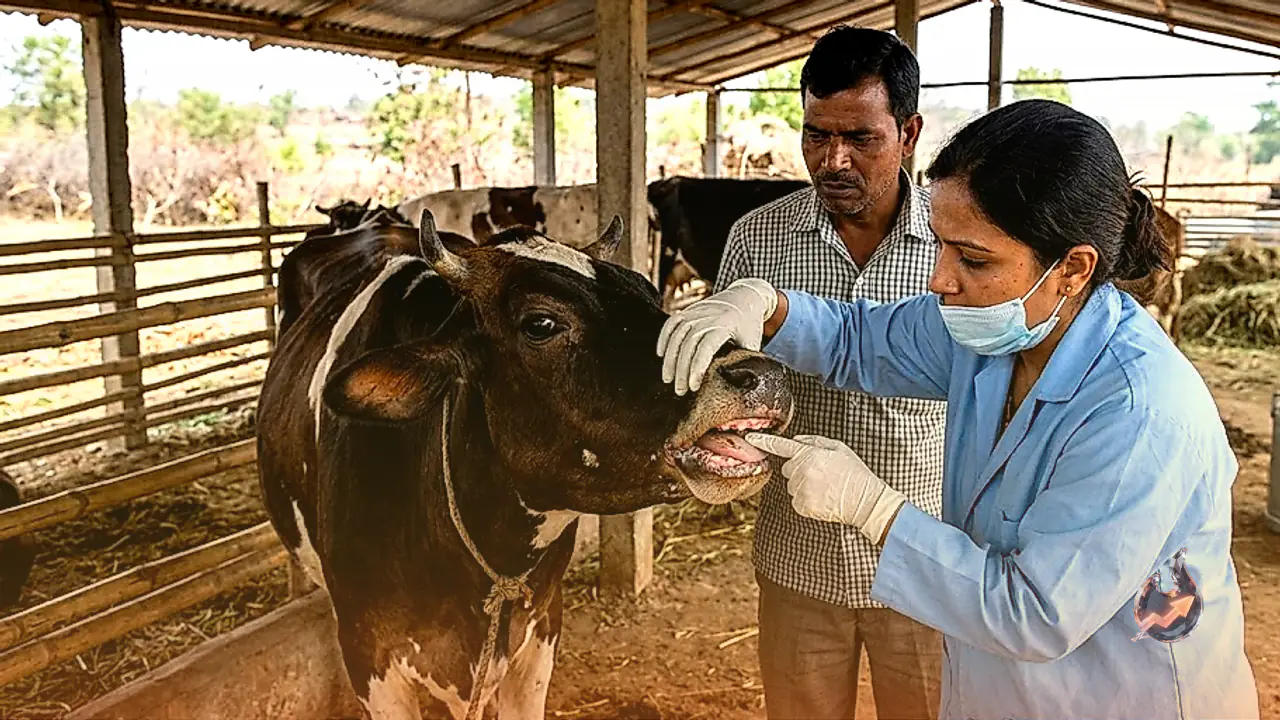
According to Prabhakar Sinha, the District Animal Husbandry Officer of Palamu, an infected animal typically develops mild fever at first, which can climb to between 105 and 106 degrees Fahrenheit in severe cases. Blisters and sores then appear inside the mouth, making it painful for the animal to eat fodder or drink water. Wounds can also form around the hooves, with the skin in that area peeling away. If the condition worsens, these wounds can become infected and even attract maggots. The animal grows progressively weaker, and in milk producing cattle, output drops noticeably.
Keeping mouth wounds clean
Sinha said that once an animal develops mouth ulcers, hygiene becomes critical. A traditional remedy involves boiling neem leaves in water and using the resulting solution to clean the animal's mouth. Owners should also ensure a steady supply of clean water and soft fodder so the animal does not struggle while eating. Home remedies such as alum and turmeric can be used as well.
Caution with hoof and leg wounds
If wounds appear on the legs or around the hooves, the animal should be kept in a clean, dry space. Should the wound become infected or attract maggots, a veterinarian should be contacted without delay. Sinha specifically cautioned against applying turpentine oil or any ointment without expert advice, warning that incorrect use can make the wound significantly worse.
Timely vaccination remains the best safeguard
Sinha said the most effective way to prevent FMD is timely vaccination. Under the government's vaccination programme, animals are given the FMD vaccine at fixed intervals, and farmers are advised to get their animals vaccinated every time such a drive is held. He also stressed that FMD is a contagious disease, so any animal showing symptoms should immediately be separated from the rest of the herd, with a veterinarian consulted right away. Timely identification, proper treatment and regular vaccination, he said, can keep animals healthy while significantly limiting the losses in milk production.