



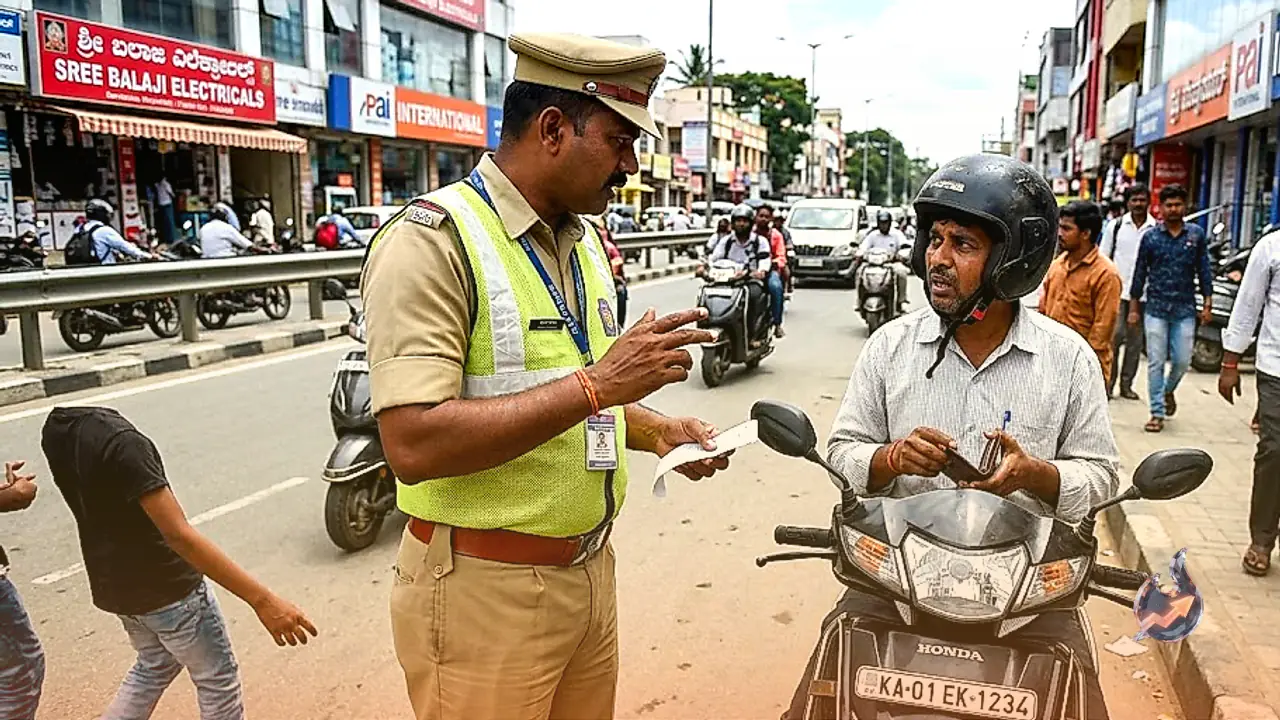















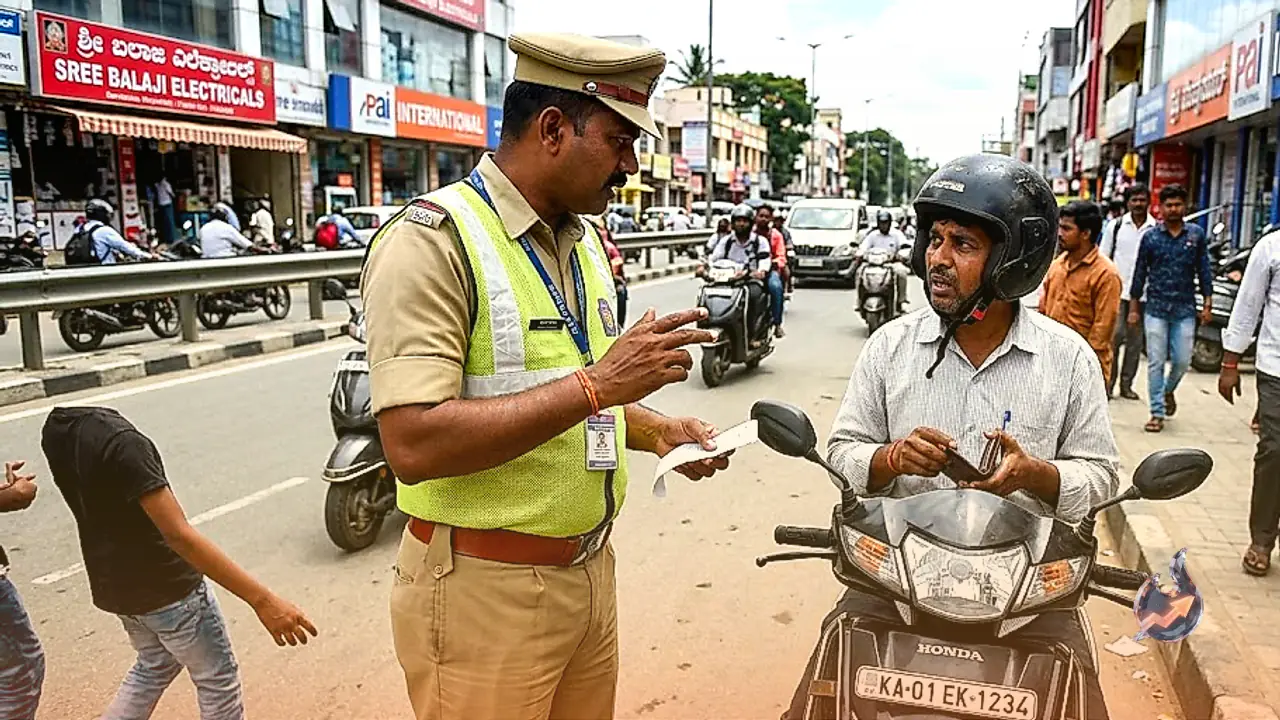

In an effort to curb rising road casualties and restore order on urban corridors, the Karnataka government has initiated a sweeping overhaul of traffic enforcement rules. Authorities are moving decisively against the widespread use and commercial trade of non-standard half helmets that fail to safeguard riders. Alongside equipment standards, a steep deterrent structure has been drafted to penalise motorists who operate two-wheelers on pedestrian pavements, with repeat violators facing financial penalties running up to ten thousand rupees.
Legal Crackdown on Half Helmet Manufacturers and Sellers
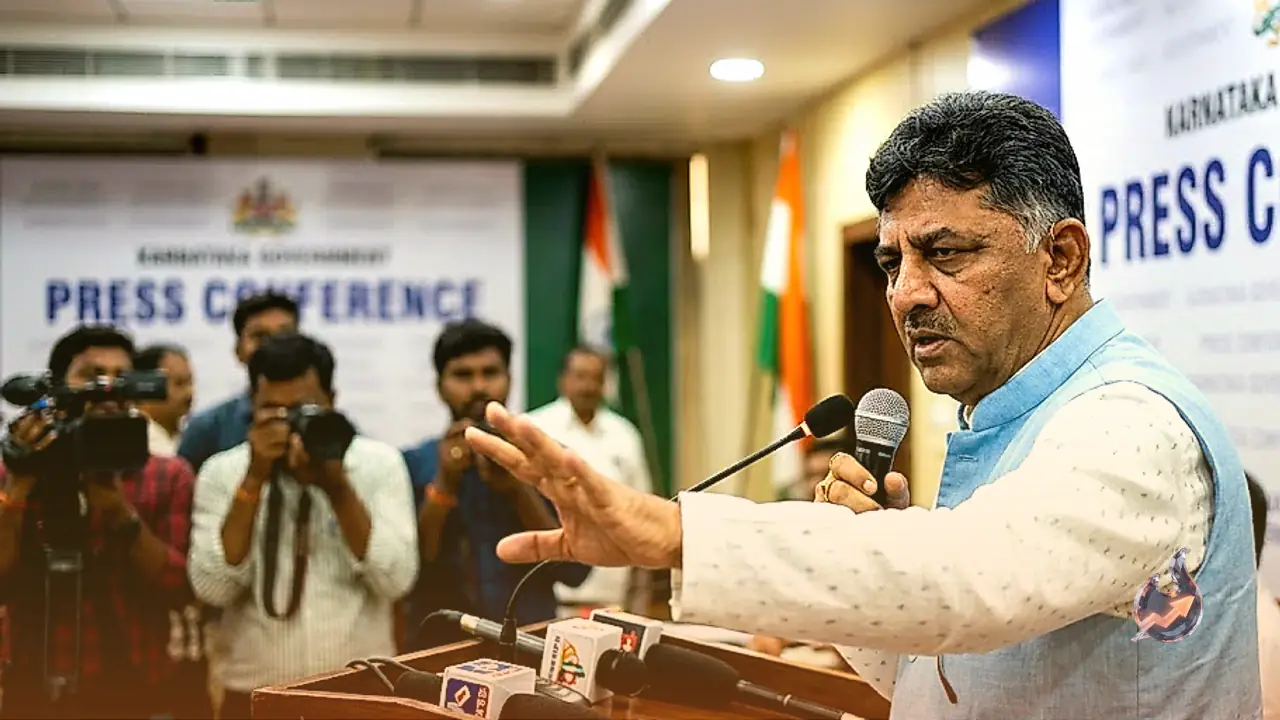
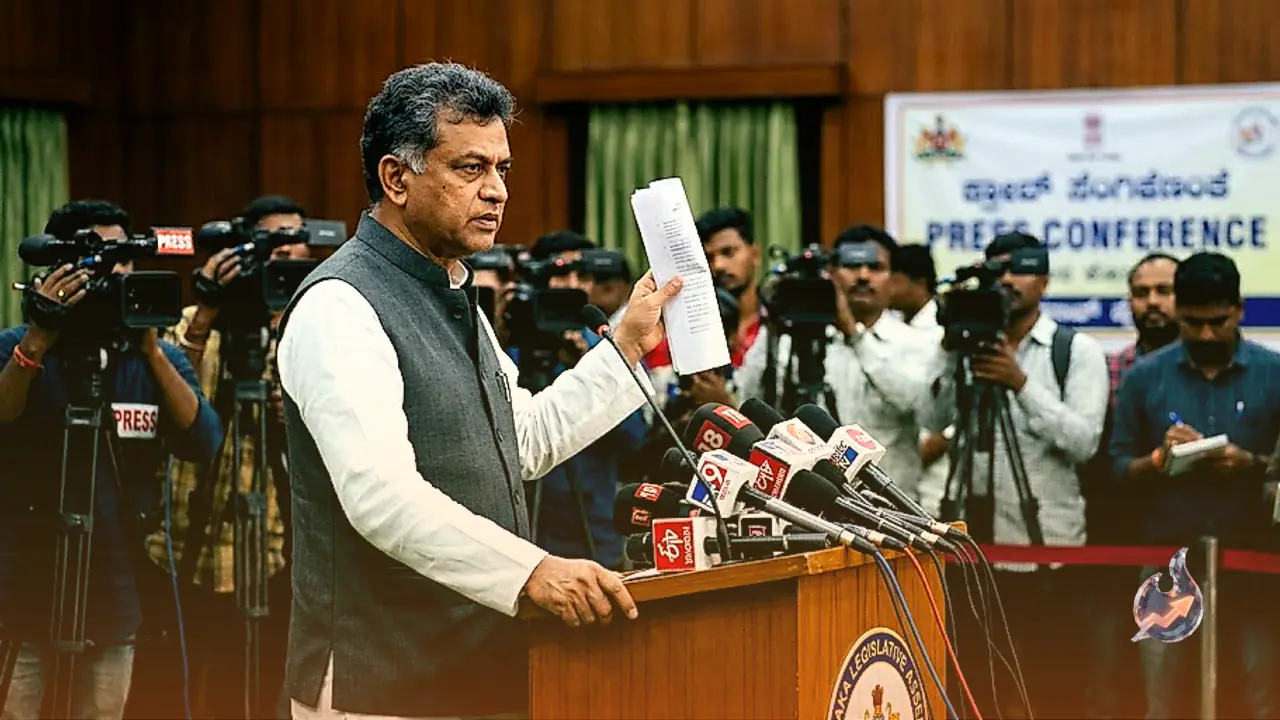
Addressing journalists in Bengaluru, Karnataka Transport Minister B. Suresh pointed out that the number of two-wheeler motorists relying on half helmets has seen an alarming surge. Existing safety and motor vehicle frameworks provide no legal recognition for such minimal headgear, as they fail to protect the rider against lethal impact injuries during collisions. Consequently, the administration has resolved to dismantle the supply pipeline rather than merely flagging individual riders on the streets.
Enforcement teams are preparing to target manufacturing units, wholesale depots, and retail storefronts where these substandard head protectors are stocked and displayed for open retail. Transport Minister B. Suresh explained that legal provisions are actively being evaluated to empower administrative agencies to initiate penal actions and confiscate inventory from commercial establishments. Once the legal department formalises its counsel, stringent statutory measures will be initiated against offending business entities across the state.
Escalating Penalties for Operating Vehicles on Pavements
Pedestrian rights and walkway safety form a central priority within the newly formulated enforcement draft. Pavements designated solely for pedestrians have increasingly been encroached upon by aggressive motorists seeking shortcuts through congested traffic. To counter this menace, the current baseline penalty of five hundred rupees is slated to be raised tenfold to five thousand rupees for a first-time violation. Motorists caught trespassing on footpaths for a second time will face a mandatory fine of ten thousand rupees.
Highlighting the urgent human cost, Transport Minister B. Suresh stated that pedestrian corridors have seen regular intrusions by two-wheelers and four-wheelers, directly endangering people walking on designated public spaces. These hazardous maneuvers have caused severe collisions resulting in fatal casualties and crippling injuries to pedestrians. A joint policy proposal addressing these penalties has already been submitted by the transport and home departments, awaiting formal administrative clearance following statutory legal scrutiny.
Tenfold Jump in One-Way Fines and Point-Based Licensing
Driving against permitted traffic flows on designated one-way routes is also set to become substantially more expensive. The existing statutory penalty of one thousand rupees for one-way violations is proposed to be multiplied tenfold, raising the charge to ten thousand rupees. Unauthorised wrong-way driving remains a prominent contributor to head-on road collisions and systemic traffic gridlocks across municipal zones.
To establish a coherent long-term strategy, Karnataka Home Minister Priyank Kharge and Transport Minister B. Suresh convened a joint administrative review session with senior departmental officials. The panel evaluated immediate urban decongestion mechanisms for Bengaluru alongside a structural shift toward a points-based driving licence regulatory regime. Under this proposed mechanism, precise penalty demerits will be assigned to diverse road infractions. When an offender accumulates demerits exceeding a predetermined threshold, the driver face statutory suspension of their driving credentials.
Integrating Sarathi Network With Police E-Challan Systems
Ground-level enforcement is set to receive technological reinforcement through the planned digital integration of the transport department's national Sarathi database with the Bengaluru traffic police e-challan network. This shared data architecture will grant field officers instant visibility into an operator's real-time licence authenticity, operational history, and preceding infraction tally directly at roadside checkpoints.
Any fresh traffic infraction recorded on the street will synchronize automatically with the driver's centralized digital file, removing ambiguities regarding past non-compliance. The inter-departmental panel also examined heightened financial deterrents for other widespread hazards that disrupt urban mobility and jeopardize civilian safety, including unauthorized parking in no-parking sectors, pavement parking obstructions, dangerous wrong-side navigation, and active red light violations.