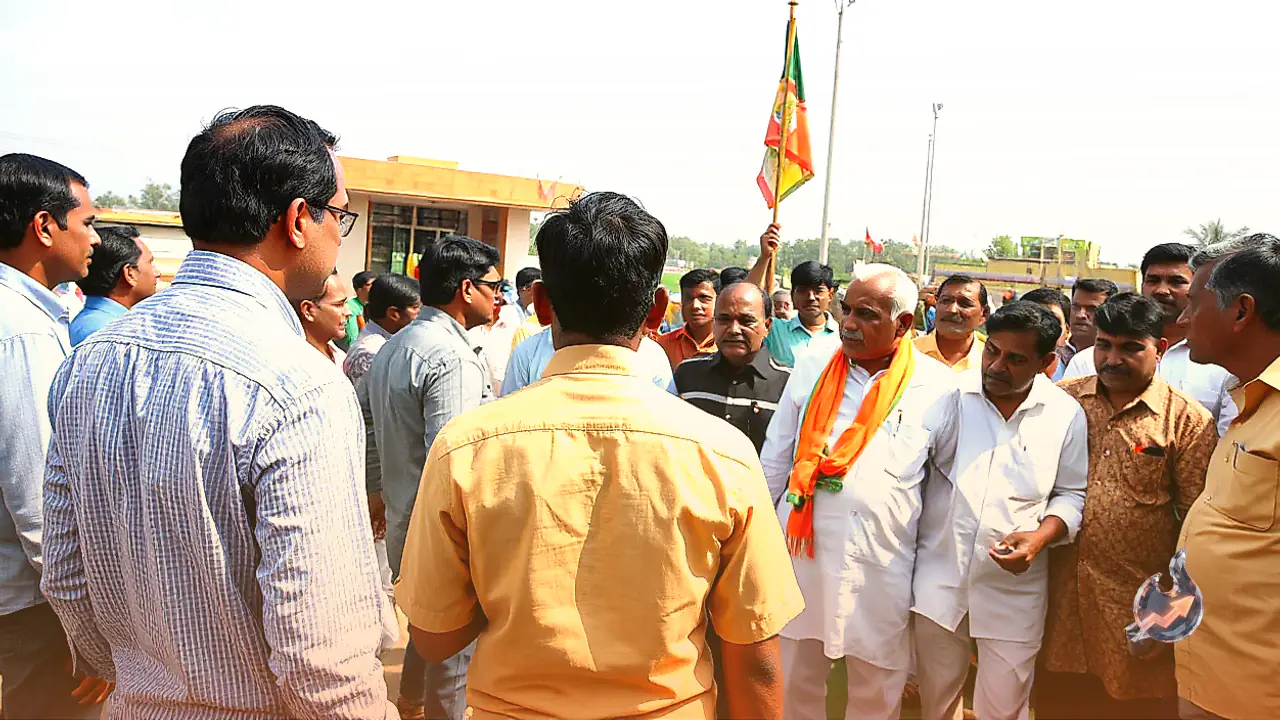






















Karnataka Minister for Home, Information Technology and Biotechnology Priyank Kharge addressed the protocols surrounding the route marches conducted by the Rashtriya Swayamsevak Sangh (RSS) across the state. Speaking to the media in Bengaluru on November 4, Kharge remarked that the organisation had fulfilled the mandated administrative requirements. He pointed out that while the state administration initially lacked specifics regarding the coordinators behind these events, the organisation subsequently provided full details, including the identities of individuals associated with its local operational branches.
Minister Highlights Procedural Compliance
Addressing the conduct of the organisation, Priyank Kharge stated that members of the RSS cooperated with administrative guidelines by submitting route information and formally requesting permission across various locations. In specific areas where official clearance could not be granted due to security or regulatory constraints, the organisers cooperated with the authorities. Kharge noted that prior public discourse had created apprehensions that the group would bypass regulatory frameworks without seeking approvals, but the practical outcome proved otherwise. He observed that despite the adherence to established civic procedures, unwarranted narratives were being circulated regarding the developments.
Verification of Branches and the Call for Transparency
According to the Home Minister, the documentation submitted to the government provided essential clarity on the individuals associated with the respective local units across Karnataka. Commenting on the development, he suggested that this step could lead toward broader structural transparency. Kharge remarked that just as the organisation complied with administrative approval procedures, it could in future consider formal registration and make its financial records public. Such disclosures, he noted, would clarify whether resources are mobilised through domestic contributions or overseas channels, thereby establishing complete operational transparency.
The Distinction Between Seeking Approval and Mere Notification
Kharge specifically underscored the nature of the paperwork submitted to the state authorities. He pointed out that the applications did not merely serve as unilateral intimations to the police department. Instead, the organisation followed proper administrative protocol by applying for explicit permission across Karnataka. Kharge observed that the group has functioned under its established framework for a century, noting that adapting to standard regulatory oversight requires time, though noticeable adjustments in compliance are taking place.
Background of the Vijayadashami Route March Impasse
The administrative contention surrounding the RSS Vijayadashami route marches (path sanchalan) had intensified over legal compliance and municipal security mandates. The issue gathered momentum after the Home Minister publicly asserted that organisers must secure formal police authorisation rather than simply submitting route blueprints as mere notifications. Internal correspondence had previously shown instances where local police stations were only notified for logistics management. The Home Department maintained that given the scale of these events, which involve over two lakh participants traversing hundreds of designated routes, advance formal applications remain indispensable for managing vehicular traffic, safeguarding public infrastructure, and maintaining law and order under uniform public assembly regulations.