























While cleaning the bathroom, most households pay careful attention to scrubbing the floor tiles, walls, and washbasin, but the daily plastic bucket and mug are frequently overlooked. Regular exposure to soap scum, hard water supply, and persistent moisture causes a layer of white mineral deposits, yellow stains, and grime to accumulate on these plastic items over time. Households located in areas with hard or saline water supply notice these stubborn white marks appearing even faster.
Avoid Buying Replacements by Using Cost Effective Home Remedies
As time passes, these accumulated mineral and soap deposits become so severe that ordinary water or detergent fails to clean them. Frustrated by the unsightly appearance, many people choose to throw away their old buckets and mugs to buy new ones, while others spend money on expensive chemical cleaners. However, removing these tough marks does not require purchasing new items or investing in costly cleaning supplies. Simple household items readily available in your kitchen can eliminate these stubborn spots effectively. These methods are economical, highly efficient, and easy to apply.
Dissolve Mineral Deposits Using White Vinegar
White vinegar serves as an excellent natural cleaning agent for household maintenance. The acetic acid present in white vinegar helps break down soap scum, grease, and thick hard water scale stuck on plastic surfaces. If your bucket has developed visible white rings due to hard water, this natural solution works exceptionally well.
To apply this method, mix two cups of white vinegar with a small amount of water. Using a soft sponge or cloth, spread the solution thoroughly over both the interior and exterior of the bucket and mug. Scrub the surface gently and allow the mixture to rest for approximately 5 minutes. After waiting, rinse the items thoroughly with clean water. This straightforward process effectively lifts away trapped dirt and mineral marks.
Eliminate Yellow Stains and Odor With a Baking Soda Paste
Baking soda is a widely trusted household ingredient for stain removal and deodorization. It not only lifts yellowish discoloration from plastic but also neutralizes unpleasant damp odors. Combining baking soda with liquid dish soap and lemon juice creates a potent cleaning paste suitable for tough buildup.
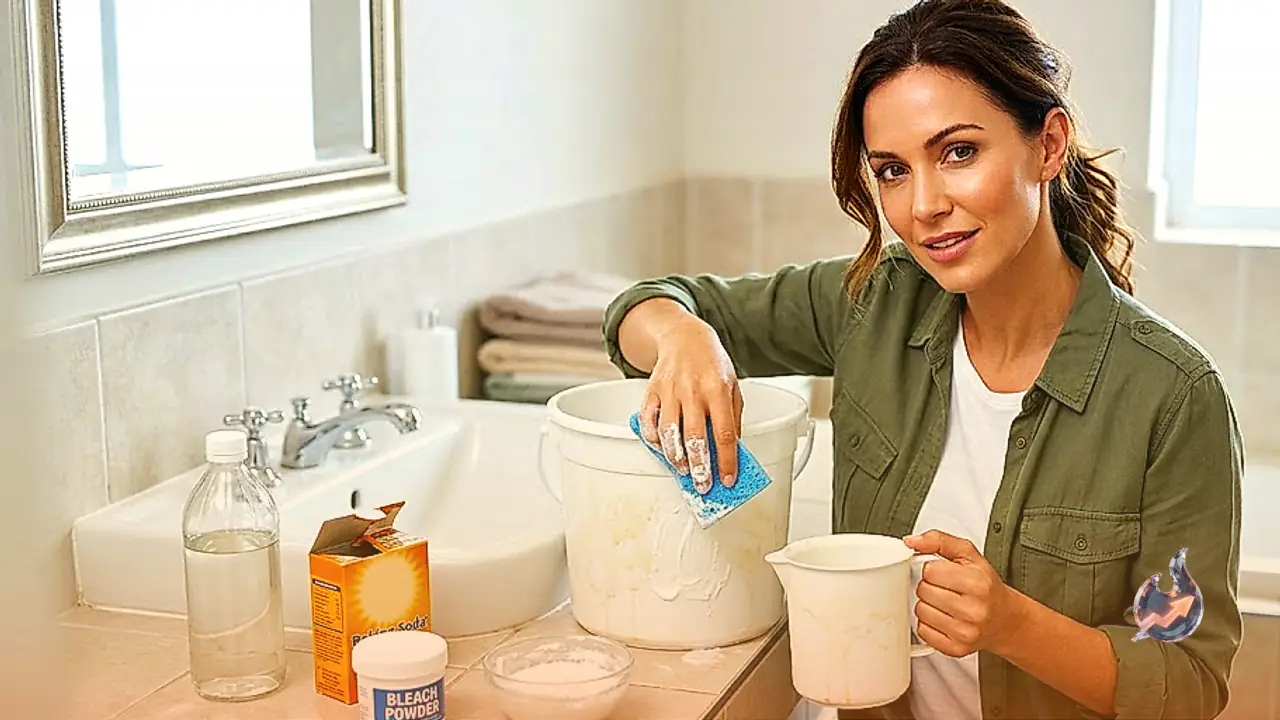
To prepare this mixture, combine half a spoon of baking soda with a little dishwashing liquid and a few drops of lemon juice in a small bowl to form a uniform paste. Spread this paste over the stained areas of the mug and bucket, letting it sit for 5 to 10 minutes. Next, scrub gently using a scrubber or brush before rinsing completely with water. This process tackles yellowing while leaving the plastic fresh and clean.
Tackle Deep and Aged Discoloration With Bleach Powder
For older, deeply set stains that persist after trying vinegar or baking soda, bleach powder provides a stronger cleaning alternative. Bleach powder breaks through tough stain layers while eliminating any lingering foul smells from the plastic surface.
To use bleach powder effectively, mix one cup of bleach powder with a small amount of water to create a thick paste. Apply this thick paste directly onto the heavily stained regions of the bucket and mug. Allow the paste to remain on the surface for 15 to 20 minutes so the active agent can work on the grime. Afterward, scrub thoroughly with a stiff brush and wash the container with plenty of clean water. This treatment restores the original shine, making older buckets and mugs look practically brand new.