







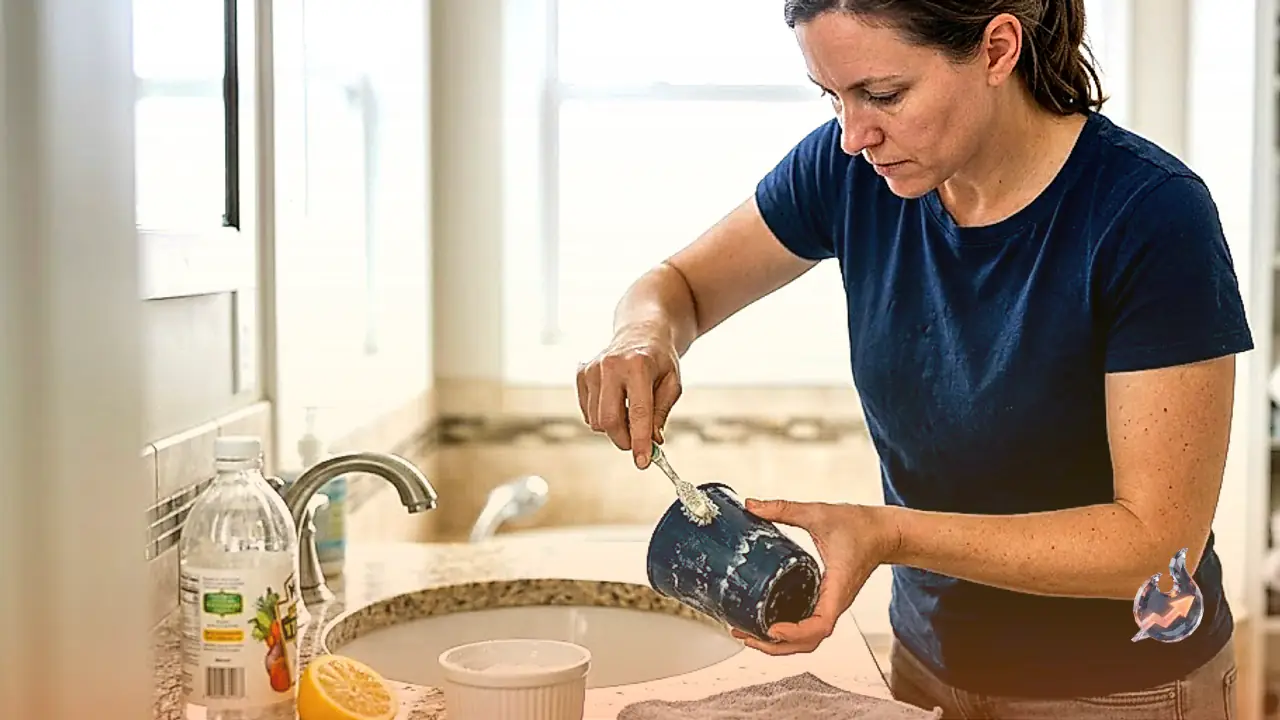















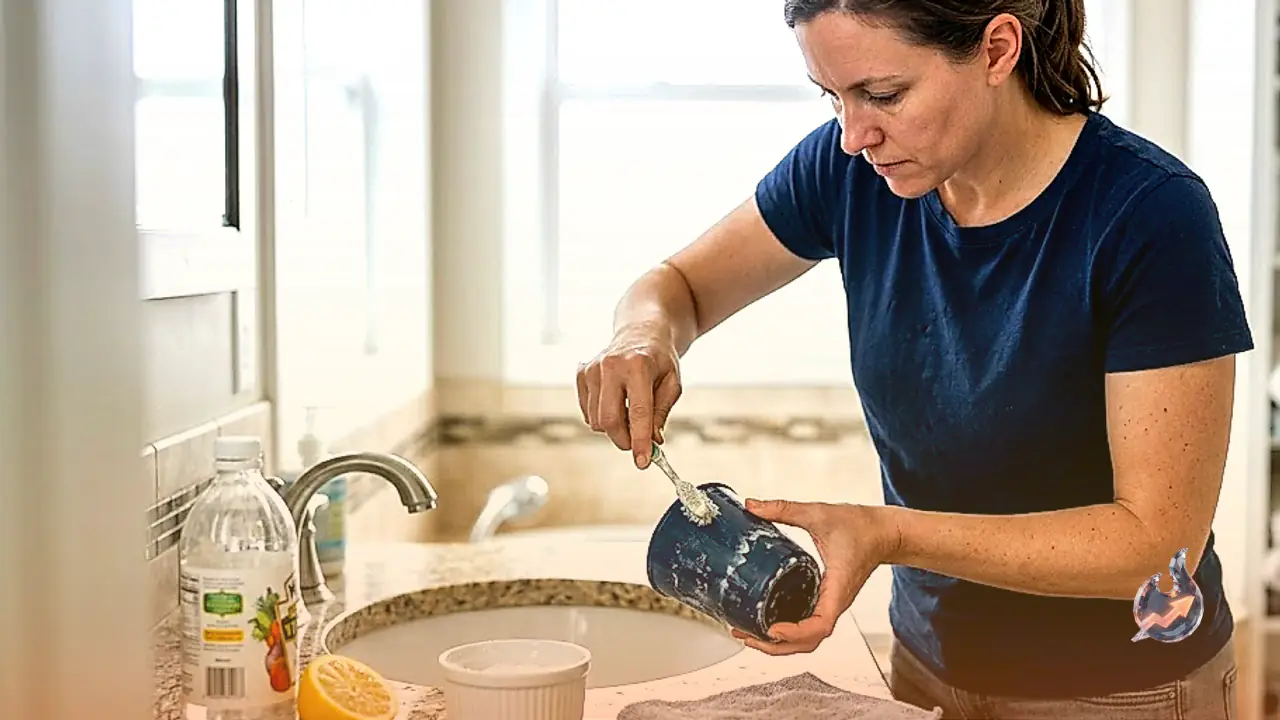

Everyday use quickly strips plastic mugs and buckets kept in bathrooms of their original sheen and color. Constant exposure to hard tap water, soap residues, and bathing products creates a tough, chalky white film across the surface that resists routine rinsing. Many households discard these discolored items or sell them off as scrap under the impression that the plastic has degraded permanently. In reality, replacing these everyday bathroom essentials is unnecessary. Several inexpensive, widely available pantry staples can dissolve built-up scaling and restore old, grimy plastic mugs back to clean condition within minutes.
Baking Soda and Vinegar Treatment
A blend of sodium bicarbonate and plain white vinegar serves as a potent remedy against tough alkaline mineral build-up clinging to plastic. Combining these two common kitchen ingredients triggers an active effervescent reaction that penetrates and loosens stubborn crusts without scratching the container.
To begin this process, sprinkle 2 to 3 spoons of baking soda evenly inside the stained mug. Pour a small amount of white vinegar directly over the powder to set off immediate foaming and bubbling. Spread this active paste across both the interior walls and exterior surfaces of the mug, ensuring all discolored zones are coated, and allow it to rest untouched for 10 to 15 minutes. Once that soaking window has elapsed, take a scouring pad or cleaning brush and scrub the inner and outer surfaces thoroughly. Complete the wash by rinsing with fresh tap water, washing away the dissolved chalky scaling to leave the plastic looking refreshed.
Lemon and Table Salt Scouring Method
Fresh lemon juice combined with ordinary table salt offers an effective natural solution against hard water deposits coupled with greasy soap films. The natural citric acid dissolves mineral binding, while salt crystals provide gentle abrasive friction to lift stuck-on grime.
For this cleaning technique, begin by sprinkling a dry layer of table salt liberally across the mug surface. Slice a fresh lemon into two halves, taking one half to scrub directly over the salted plastic. The acidic lemon juice reacting against the salt grains rapidly cuts through slippery scum and crusty water rings. Continue working the lemon rind across the surface in firm circular motions until the trapped grime releases completely from the plastic base. After loosening all accumulated residue, rinse the mug thoroughly with clean running water to wash away loose grime.
Hot Water and Laundry Detergent Soak
When mugs have accumulated months of neglected, hardened deposits, surface wiping alone may fail to penetrate the deeper layers. For such heavy and persistent grime, an extended soak in hot soapy water provides the most dependable results.
Fill a large container, basin, or tub with enough hot water to fully submerge the mug. Stir in 3 to 4 spoons of standard washing powder or laundry detergent until completely dissolved and frothy. Lower the plastic mug into this soapy liquid, allowing it to remain fully submerged for about 35 to 45 minutes. The sustained heat alongside active cleaning surfactants gradually softens dense layers of grime that have baked onto the container over time. After the soaking period ends, lift the mug out and gently scrub across the surface using a bristle brush. This easy approach eliminates deep dirt and revives dull bathroom plastic without requiring harsh commercial chemicals or specialty purchases.