























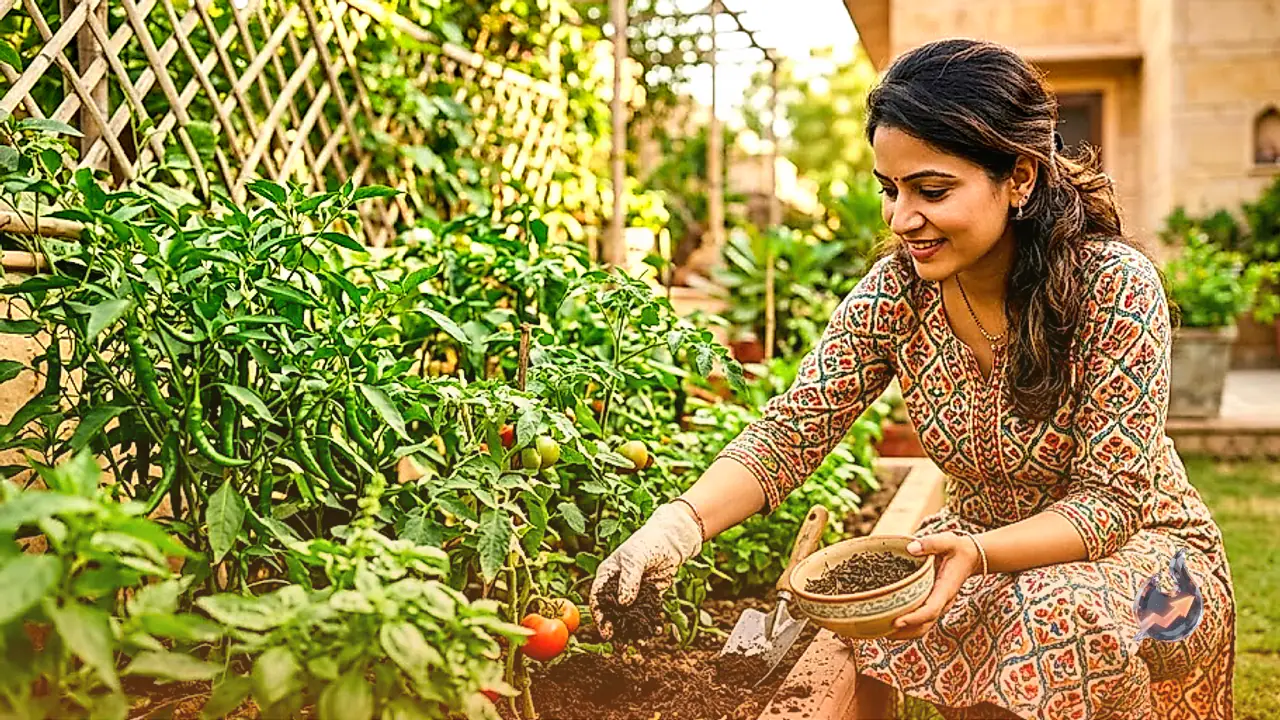

In Bhilwara, people often discard used tea leaves after preparing their daily tea, considering them mere waste. However, many remain unaware that these leftover leaves can serve as a highly beneficial resource for home plants. For those maintaining a kitchen garden, spent tea leaves can easily work as a helpful nutritional supplement. These leaves contain organic matter that, upon mixing with soil, helps improve its overall texture and fertility.
Right Way To Process Tea Leaves
Before applying leftover tea residue to plants, following a proper cleaning process is crucial. First, the used tea leaves must be washed thoroughly to eliminate any remaining traces of sugar and milk. Once washed, spread the leaves out in the sunlight to dry completely for some time. After the leaves are completely dry, a small amount can be sprinkled over the top layer of the pot's soil and gently mixed in.
Improving Soil Quality And Moisture
A major advantage of utilizing tea leaves in a kitchen garden is that they help increase organic content within the soil. This enhancement can noticeably improve soil structure along with its capacity to retain moisture for longer periods. Nonetheless, one must avoid adding excessive quantities, because overly damp tea leaves can attract fungus or trigger other soil-related complications that harm plant roots.
Blending Into Household Compost
Apart from applying the tea residue directly to potted plants, it can also be incorporated into homemade compost bins. Combining the tea leaves alongside discarded vegetable and fruit peels allows them to become a natural part of organic compost. This method ensures an efficient recycling cycle for kitchen waste while enriching the soil with nutrients.
Precautions For Plant Care
Tea leaves should not be treated as a magical fertilizer solution for plants. It is always better to use them in limited quantities alongside standard organic manure. Especially when dealing with leaves from milk-and-sugar tea, direct application must be avoided without prior washing and drying to protect kitchen garden plants from potential damage.